Can A Blocked Bathtub Overflow Fitting Leak In Calgary?
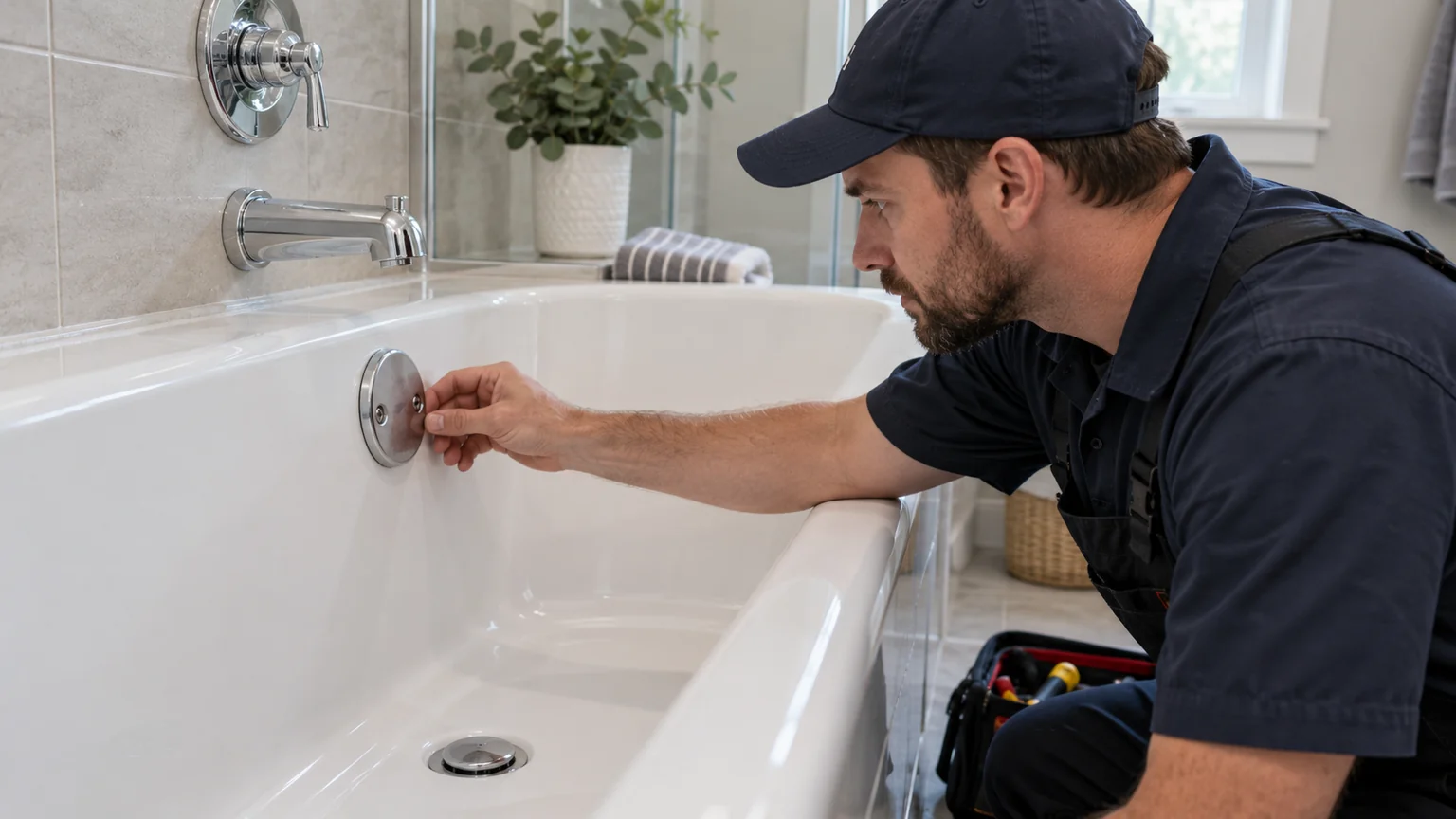
A bathtub overflow fitting can leak if water reaches a defective connection, seal or attached drainage route. A blocked overflow opening may also limit its intended function, but the visible opening alone does not identify the fault. Avoid relying on it to prevent a tub spill, stop using a tub that leaks and arrange assessment of the overflow and drain as separate connections.
The overflow is part of the plumbing route
The opening near the top of a tub connects to an overflow assembly, which joins the drain arrangement. It is not simply a hole through which water disappears safely into an empty cavity. If its seal or connection is defective, water reaching that height may escape outside the intended pipework and enter concealed surfaces.
Tell the plumber whether the leak begins only when the tub is filled high or whether it also occurs during ordinary draining. Those stages load different parts of the assembly. The timing helps focus the examination, but it is not proof that only one component is involved.
An obstruction and a leaking seal are different faults
Material at the opening can interfere with flow, while a failed seal can let water pass outside the assembly. Cleaning a visible opening would not establish that the hidden connection is sound. Equally, replacing a seal does not explain whether an obstruction remains in the connected route. Ask which condition was actually found.
Do not push tools into the opening or remove parts while the tub contains water. The assembly and its access vary by fixture. An improvised attempt to clear a restriction can damage a connection or release water into a concealed space, especially when the existing arrangement is already uncertain.
Do not test the fault by filling the tub again
A second high fill can cause more water to reach the suspected leak. Leave the bath and any connected shower out of use until the source is assessed. Report whether water appears in the bathroom, beneath the tub or in the ceiling below. Take photographs from a dry safe position rather than opening wet finishes yourself.
If a ceiling is sagging or water is close to electrical equipment, stay away from the affected area. Do not puncture a swollen ceiling or enter beneath an unstable surface to catch a drip. The plumbing source and the condition of the room below need coordinated but separate assessment.
The drain and overflow should be considered together
Bathtub overflow assessment can evaluate the fixture sequence and accessible connections. A leak that occurs during draining may require drain connection repair; a leak tied to high water level may lead the inspection toward the overflow. The finding should determine the repair, not the name of the visible part.
Access may be needed to examine a concealed assembly. Ask how the technician will establish the source and what remains outside the visible assessment. Covering the surrounding opening with sealant is not a substitute for evaluating the intended connection and the route beneath it.
An Overflow-Assembly Assessment Checklist
A suspected overflow fitting leak should be tied to the bath's actual sequence and accessible components. The following questions help establish the source before a repair is selected. They do not require filling the tub again or dismantling the opening while water remains inside.
- Water level: Did the leak begin only when water approached the overflow, or during a lower ordinary fill?
- Drain release: Did the same leak occur when the stopper opened? If so, the shared drainage assembly may need consideration.
- Visible route: Where was moisture first noticed, and could it have travelled before appearing?
- Access: Which parts can be viewed through existing access and what further opening would need agreement?
- Component condition: Is there a directly observed seal, connection or obstruction fault, or does the source remain suspected?
- Verification: What controlled check would address the stage that originally produced the leak?
Ask for the findings to distinguish an opening obstruction from an assembly leak. These may need different work, and clearing material at the visible opening does not establish the condition of the concealed connection. A fitting repair should likewise explain whether the connected drain was assessed where symptoms pointed to it.
Keep Bath Overflow and Concealed Leakage Distinct
| Observed event | What to clarify |
|---|---|
| Water crossed the bath rim | Was this an overfill event, and did any other fitting also leak? |
| Water reached the overflow opening without a rim spill | Does the overflow assembly contain that water as intended? |
| A leak appeared during draining | Which connection in the shared waste route was assessed? |
| Moisture appeared below after use stopped | Is retained water emerging, or is another source still supplying it? |
The visible ceiling route does not settle these questions. If several stages were involved, state them separately rather than reduce the incident to one assumed overflow fault. The technician can select tests appropriate to the identified fixture and access conditions.
After repair, retain the access notes and component finding. A future bath leak may involve another connection, so the record should say exactly what was corrected. Keep any separate recommendation for affected ceilings or flooring alongside it without presenting the plumbing check as a material clearance.
Where a bath is used by several household members, make the restriction clear until the investigation is complete. A working drain at a low water level should not be interpreted as permission to test an unresolved overflow connection by filling higher.
If a previous repair altered the overflow cover or concealed assembly, include that history in the call. The current leak still needs direct assessment, but knowing which components changed can help avoid treating a visible new part as the entire installation or assuming it proves the hidden connection is sound.
Verification should reflect the component that failed
After repair, the plumber can choose an appropriate controlled check of the overflow, drain or both. Ask how the original leak trigger was addressed and whether any other connections were assessed. A tub that drains once without a visible spill does not automatically establish the overflow's condition at a higher water level.
After the overflow fitting is examined, ask whether the visible connection, gasket or drain path caused the leak and how the repair was checked. Keep any ceiling or wall moisture assessment separate from that plumbing result. A working overflow is still no reason to leave a filling tub unattended. The City of Calgary home maintenance guidance offers general upkeep guidance; for a Calgary tub connection leak, call (587) 333-7742 or request service.