Can Sewer Line Repair Avoid A Full Dig In Calgary?
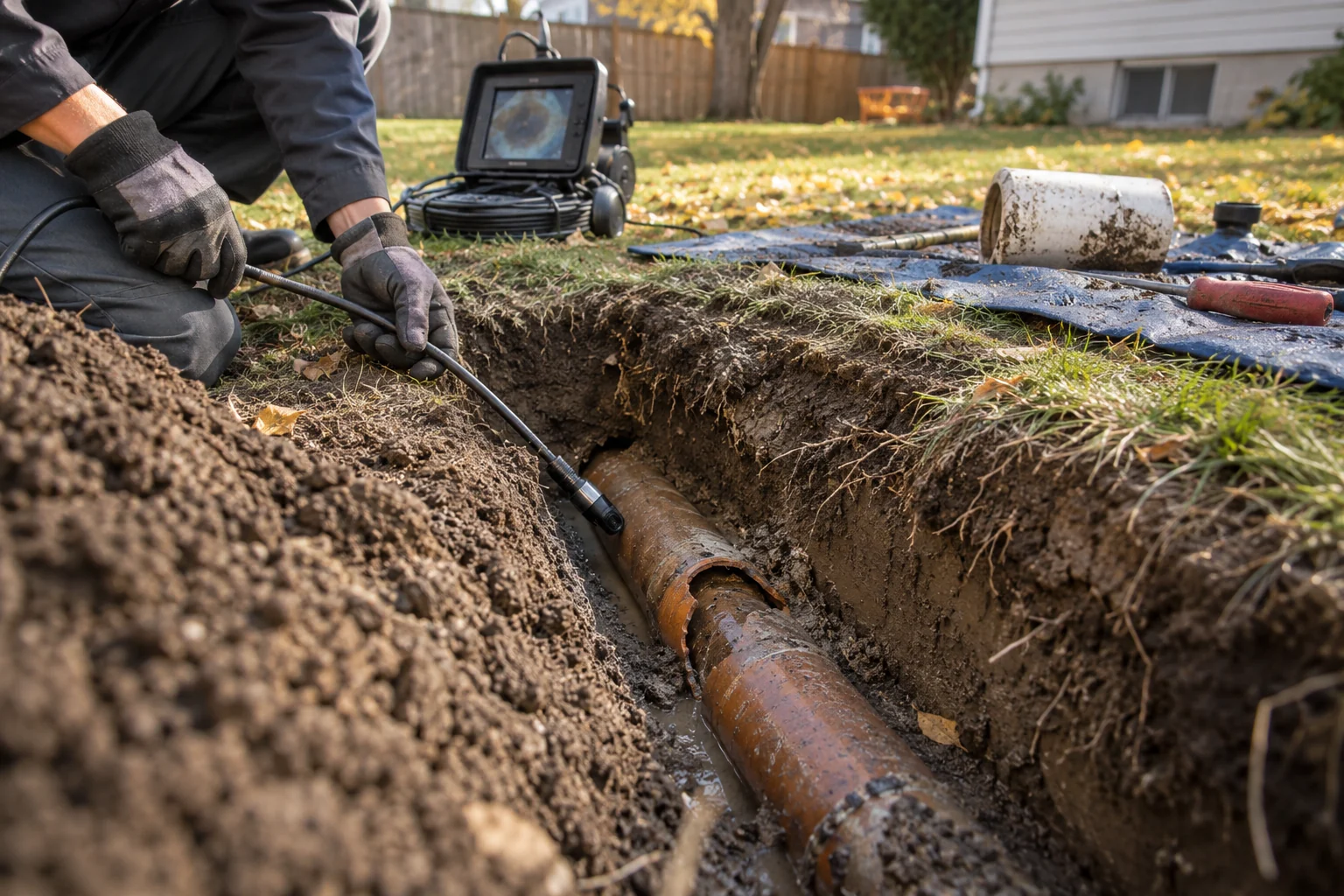
Some broken sewer lines can be addressed with a localized excavation or a suitable trenchless method rather than opening the entire yard. The choice depends on the defect, pipe alignment, access and condition of the remaining route. A collapsed or severely displaced section may rule out some methods, so inspection should come before promises about avoiding excavation.
Define the defect before comparing methods
A small leaking joint, an offset connection and a crushed section require different solutions. The important question is not simply whether a technique uses a trench. It is whether that technique can correct the observed problem and leave the sewer functioning as intended. A method that preserves landscaping but leaves the drainage fault unresolved is not a successful repair.
Start with documented camera findings where access and visibility allow. Ask how far the line was inspected and where the defect is located. Footage obscured by standing sewage or debris may need further work before it can support a decision. A distance shown on a camera is useful, but the proposed excavation point also needs an appropriate location assessment.
A targeted excavation can still be a limited job
When a defect is confined to an identifiable section, exposing that section may avoid disturbing the whole route. Access, depth, nearby utilities and what lies above the line influence the practical scope. A patio, retaining feature or addition can change what a localized repair involves even if the underground defect is short.
Ask what the plan includes for reaching the pipe and restoring the affected surface. Distinguish the length of pipe being repaired from the area needed for safe access. Neither a short pipe section nor an attractive method name establishes a price, duration or restoration scope without an assessment of the property.
Trenchless options have their own suitability limits
Some techniques rely on an existing pathway that can be prepared and accessed. Their suitability depends on pipe material, diameter, bends, connections and the condition being corrected. A line that has lost its shape or alignment may need a different approach. Do not assume every blocked or broken sewer can receive the same treatment.
Discuss how branches and connections would be protected and how the finished result would be checked. Ask what happens if preparation reveals more damage than the initial footage showed. A sewer repair assessment should explain the available options and their limitations in terms of your actual pipe rather than offering a universal method.
Emergency flow control may precede the final repair
If sewage is entering the home, the immediate task is reducing exposure and additional wastewater use. Pause fixtures connected to the affected route and keep people out of contaminated areas. A temporary opening or controlled clearing may help an investigation, but it should not be mistaken for correction of the structural fault.
The City of Calgary sewage backup guidance explains the role of 311 in considering private versus municipal causes. Report whether other properties are affected and keep any City findings. Responsibility for the obstruction and the repair approach need to be established before assuming that all work belongs within the homeowner's yard.
A Comparison Checklist for Repair Proposals
Compare proposals using the observed defect rather than the marketing name of the method. Two approaches may differ in access, preparation and what surrounding pipe they address. Ask each proposal to explain how it would correct the same documented condition so the comparison is meaningful.
- Correction: Does the method restore the problem actually seen, including alignment or structural condition where relevant?
- Preparation: What must happen before the method can be used, and could that work reveal a different scope?
- Access: Which areas must be reached even if a full trench is avoided? Include connections and equipment access, not just the repaired length.
- Limitations: Which pipe materials, bends or defects make the option unsuitable for this route?
- Verification: What inspection or controlled flow check will document the completed result?
If a proposal depends on information not yet available, ask for that condition to be stated. A conditional option is different from a promise that the yard will remain untouched. Keep the limits visible until the pipe and access requirements are established.
Account for the Surface and the Building Connections
A sewer repair affects more than the buried component. Equipment access, landscaping, paved areas and the connection at the building can influence the work. Identify those features during assessment and ask which restoration tasks are included. Avoid inferring the scope from the advertised length of the pipe repair alone.
| Property feature | Planning question |
|---|---|
| Patio or driveway over the route | What access and surface work are needed for the selected repair and its verification? |
| An addition near the service | How was the current route established, and is access to the connection available? |
| Previous sewer repairs | Which sections were changed, and does the current finding involve that repair or adjacent pipe? |
| Shared or municipal connection questions | Who must coordinate assessment before private work is assumed to address the whole problem? |
Discuss unexpected findings in advance. If preparation reveals a second defect or an inaccessible connection, know how the recommendation will be revised and communicated. This is a scope-management question, not a reason to accept unsupported cost or duration claims before the route is known.
Finally, retain the original footage and completed-work record together. A future owner or technician should be able to tell which defect was repaired, by which method and with what inspection limits. The clearest result is not simply a claim that little digging occurred; it is a documented correction of the identified drainage condition.
Questions that make a proposal reviewable
Ask which defect the proposed method corrects, what inspection limits remain, what access is required and how the repaired line will be verified. Also ask how unexpected conditions will be communicated before the scope changes. Written findings help compare alternatives without relying on vague assurances about an untouched yard.
Keep pre-repair and post-repair documentation, along with any restrictions or maintenance recommendations. The goal is a functioning drainage route with a clearly explained repair, not simply the smallest visible excavation. If a Calgary sewer problem is active or recurring, the first step is assessment: call (587) 333-7742 or request service.