Can A Shower Drain Leak Damage A Ceiling In Calgary?
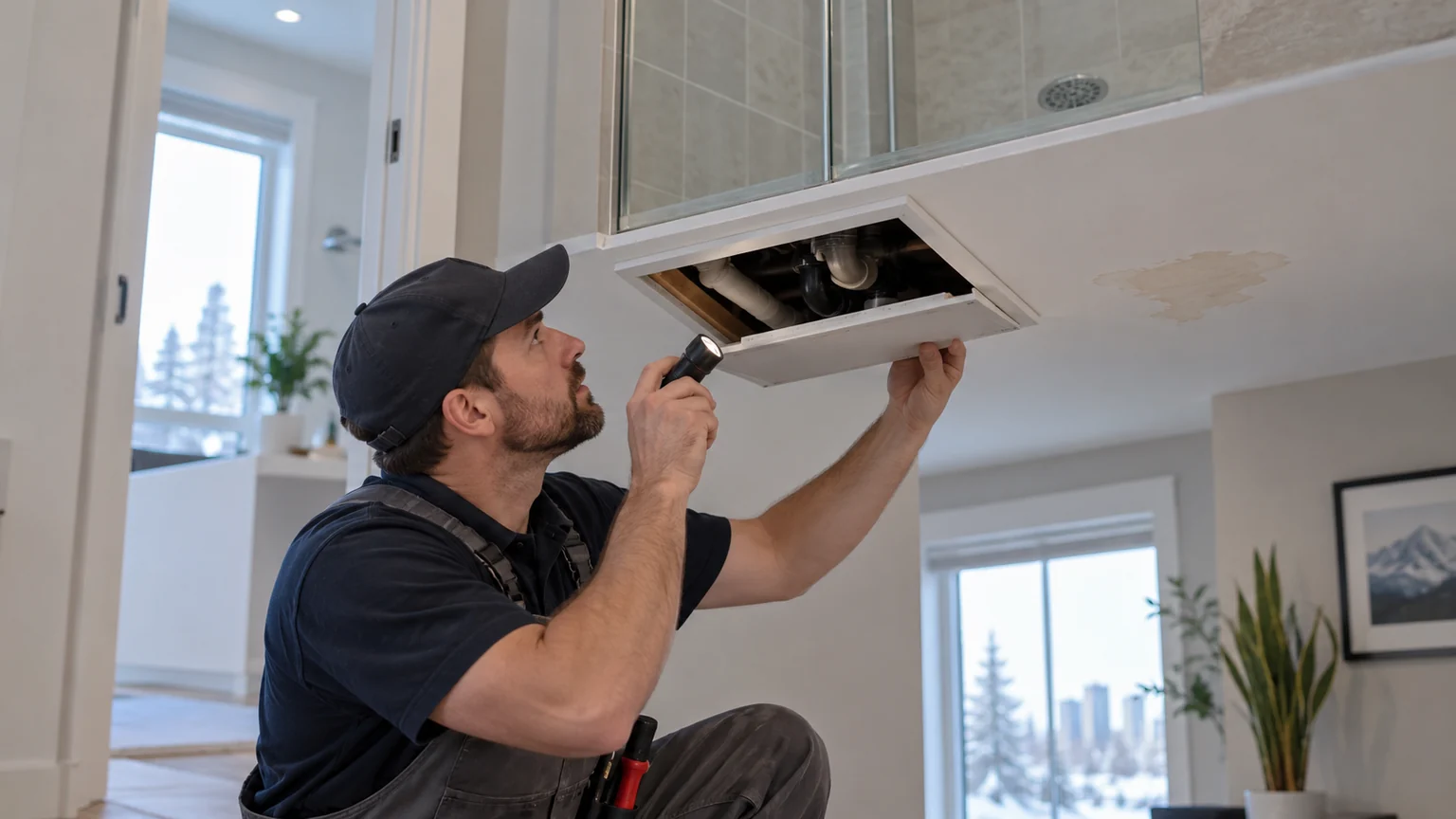
A concealed shower drain leak can wet the ceiling below, but supply plumbing, shower seals or water escaping the enclosure can create a similar stain. Stop using the shower and report whether leakage occurs during spraying, draining or after use ends. The source needs assessment before repair; a ceiling drip's location alone does not identify the failed connection or show the extent of hidden moisture.
The shower has several possible water paths
A shower supplies water under pressure, directs it across surfaces and then drains it away. A leak can occur at different points in that sequence. Water reaching a ceiling may have travelled along framing, so the stain can appear away from the actual fault. Tell the plumber what was happening when the first drip was observed.
Include whether the ceiling mark enlarges between showers, since that observation can affect source investigation. Mention recent work on the drain, enclosure, controls or finishes. Those details can influence the starting point for assessment without proving that the new work is responsible. Do not run another long shower or flood the base yourself to isolate the cause; controlled testing belongs with the source investigation.
Protect the lower room before inspecting the plumbing
Keep people away from a sagging ceiling, water near light fittings or any unsafe electrical condition. Do not puncture swollen finishes or stand beneath unstable material to catch water. The lower room may need an assessment of its own even if the upper bathroom remains visibly dry.
If moisture continues after shower use stops, explain that timing. Retained water can emerge later, while a pressurized source may continue supplying it. The observation is useful but does not distinguish those causes on its own. Leave the shower out of use until clear instructions are provided.
Access should follow the likely route
Drain leak assessment can examine the connection where the evidence points toward drainage. A leak associated with the control or supply side may call for water leak source assessment. The plan should explain which component is being tested and why.
Concealed fittings may require access to establish the source. Ask what can be seen from existing openings and how further access would be agreed before work proceeds. Randomly removing finishes or applying sealant along every visible edge can obscure the investigation without correcting the hidden connection.
Separate source repair from water impact decisions
A repaired fitting can stop new water while damp materials remain in a cavity. The plumbing result therefore does not establish that a ceiling, insulation or flooring is dry and suitable to retain. Describe the route and duration of the observed leak to the people assessing those materials.
Keep records of what was directly found and what was inferred. If the investigation identifies enclosure leakage rather than the drain, the repair scope should reflect that distinction. Avoid labelling all shower-related moisture as a drain failure, because that can lead to repeated work on a sound component.
A Shower-to-Ceiling Timeline Checklist
A concealed leak investigation benefits from the order of events. Write down the sequence already observed rather than running water through the shower again. This gives the technician a clearer starting point while preserving the distinction between directly seen water and a suspected hidden connection.
- Before use: Was the lower ceiling already damp, or did a new mark appear only during this shower?
- During spraying: Did water appear while the shower was running, and was any external control or enclosure visibly wet?
- Drain stage: Did water collect at the shower base or drain slowly before the lower room became affected?
- After stopping: How long did dripping continue, and were other fixtures being used?
- Recent work: Note changes to the controls, drain, enclosure or finishes without assigning a cause before inspection.
Water can travel within a cavity, so the ceiling mark and drain position should not be treated as an exact map of the source. Ask how the proposed access will follow the investigation and what can be evaluated before another opening is made.
Separate the Source Paths Under Consideration
| Path | Relevant question |
|---|---|
| Pressurized supply or control connection | Does water escape before reaching the intended shower surfaces? |
| Drainage connection | Does the drain assembly contain the water entering it? |
| Enclosure or surface escape | Is water leaving the intended wet area without a pipe fault? |
| Retained water in a cavity | Does delayed dripping reflect earlier exposure rather than a source still supplying water? |
The table is a way to structure questions, not a remote diagnosis. Several paths can be involved, and a test that addresses one may leave another unresolved. The repair record should identify what was directly established and which possibilities were ruled out by appropriate checks.
For the lower room, keep a separate list of ceiling, insulation, flooring or equipment exposure. Source repair does not answer whether those materials can remain or whether the room is safe to occupy. Ask the relevant assessor to state that scope so the plumbing result is not mistaken for a broader clearance.
After work, retain photographs and access notes with the component findings. A future stain at the same location can have a different origin, so the record should say which route was repaired and how it was checked. That evidence is more useful than remembering only that the shower once leaked.
Where the shower shares a wall or floor with another wet fixture, mention that layout without assuming the nearest fixture is responsible. The investigation should follow the source evidence. A similar stain can reflect more than one water path, particularly when concealed connections are inaccessible at the first visit.
Confirm the correct stage of shower use was checked
After repair, ask how the relevant source was tested and whether any other suspected path remains unresolved. A control leak, a drainage connection and water escaping the enclosure can require different observations. The verification should address the trigger from the original event, not merely show that the bathroom looks dry at one moment.
Give the plumber the shower-use timing and the first visible ceiling mark, and keep people away from a wet or sagging ceiling. A shower cartridge assessment is relevant only if the controls also drip or fail to close; it does not diagnose a concealed drain connection. Arrange a separate material assessment where the ceiling was wet. The City of Calgary home maintenance guidance covers general upkeep. For this Calgary shower leak, call (587) 333-7742 or request service.