
Can A Small Water Leak Wait Until Morning In Calgary?
A small leak in Calgary may be able to wait for a planned visit only if it is safely and reliably isolated, contained and away from vulnerable materials or electrical equipment. Its current size is not enough to judge urgency. If it continues into a wall, ceiling or floor, changes suddenly, or cannot be stopped, arrange prompt plumbing advice. A changing meter reading can help with a less visible problem; see how a water meter may identify a hidden leak.
Identify where the water is going
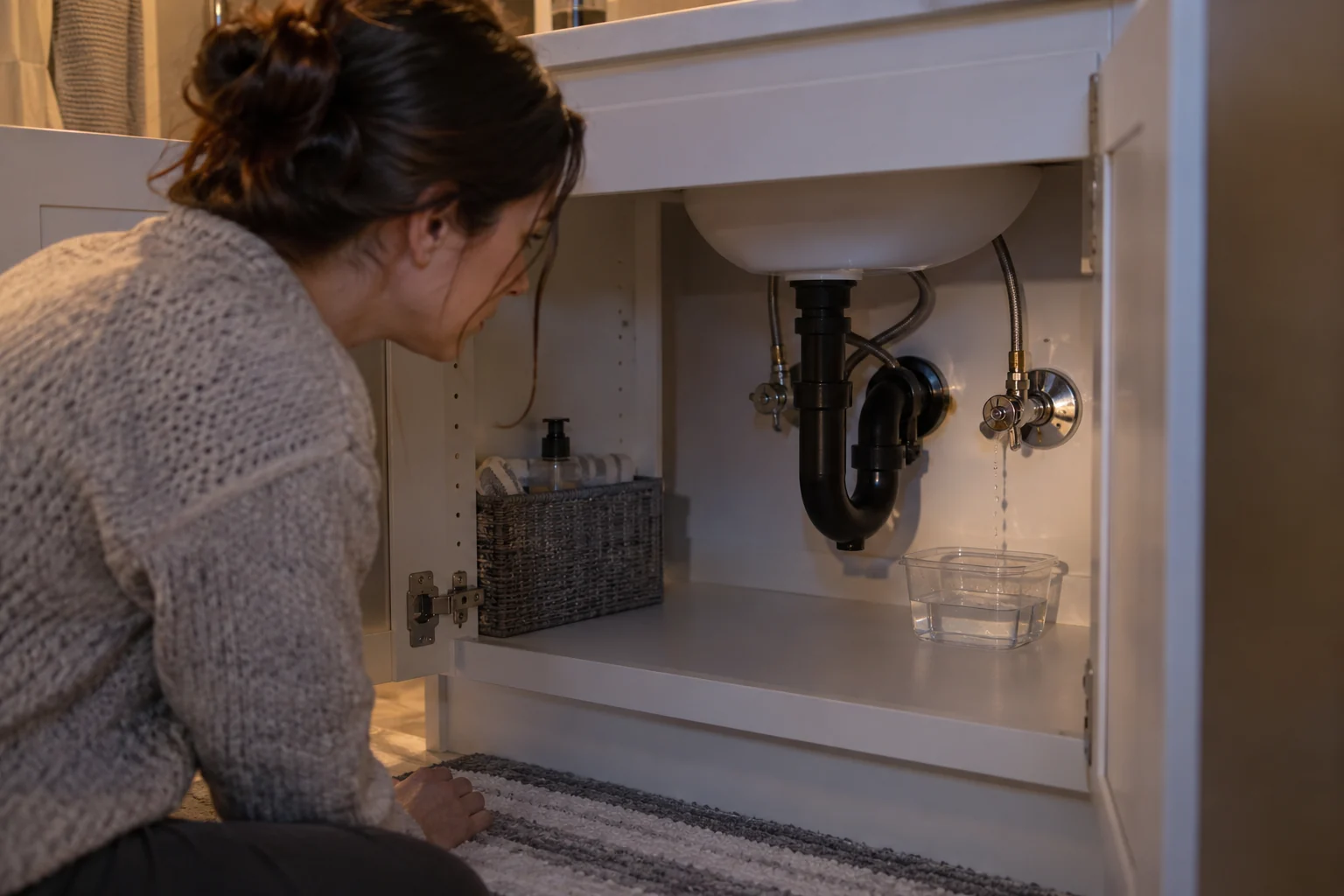
A drip into an empty sink is not equivalent to a drip disappearing behind the sink cabinet. Look for the visible water path from a dry position. Is the water entering a container, travelling along a pipe into a wall, soaking cabinet panels or appearing on the ceiling below? Where it ends up determines how well the situation is contained.
Avoid using a dry surface as proof that concealed materials are unaffected. A leak can show intermittently or evaporate between uses. For recurring unexplained wetness, leak detection is more appropriate than repeatedly wiping the area and waiting for a larger puddle.
Check whether the fixture can remain out of use
If the leak occurs only when a basin drains, not using that basin may limit further release. If a supply connection continues leaking when the fixture is off, it needs a working isolation point. A fixture valve that closes smoothly and leaves the area dry can change the immediate situation; a stiff or leaking valve cannot be assumed to provide dependable isolation.
Put a clear note beside an isolated fixture so another household member does not use it by mistake. Do not rely on memory overnight, especially in a busy home. In a rental or shared building, notify the responsible property contact and follow the building's access arrangements.
Recognize when waiting is a poor decision
A stain that grows, dampness beside a socket, water reaching another floor or a container filling faster than expected all mean the conditions are changing. The same applies to sewage or drainage water that is escaping from a blocked fixture. These are reasons to seek immediate advice rather than make an overnight observation plan.
A sagging ceiling or an unsafe route to a shutoff is a safety concern. Stay away from the area and explain the hazard to the person you contact. Do not put yourself beneath a damaged ceiling to protect the carpet or obtain a close-up photograph.
Do not use a bucket as the only safeguard
A bucket has a capacity limit and can be tipped or forgotten. A slow leak also may become faster as a connection moves or another fixture changes pressure in the system. If you cannot stay safely aware of the area, you should not consider the leak contained simply because the first container is catching it.
Temporary materials applied to a pipe are not a substitute for identifying the fault. Avoid tightening fittings aggressively, applying sealants inside a fixture or opening a concealed pipe connection. Those actions can worsen the release and make the original symptom harder to assess.
Explain the overnight decision clearly
When contacting Calgary water leak repair, say whether the water is stopped or still moving, what you have isolated and which finishes are affected. Tell the plumber whether the property will be unattended. These facts are more useful than describing the leak as tiny, minor or probably nothing.
If you can safely observe the visible area, note the pattern: continuous dripping, water only during use, or wetness returning after another appliance drains. The repair assessment can then distinguish a supply fault from a drainage issue without relying on an assumed cause.
Plan the follow-up even if the dripping stops
A temporary stop does not establish that a valve, hose or drain joint is healthy. Arrange assessment of the actual faulty component rather than leaving a fixture unused indefinitely. Ask what needs replacement or adjustment and whether the nearby material damage should be evaluated separately from the plumbing.
The City's home maintenance guidance provides context for looking after plumbing systems. A homeowner can record symptoms and maintain access, but the overnight decision should remain tied to the current conditions and reliable isolation, not a general rule that all small leaks are safe.
An overnight decision checklist
- Is the release stopped by a known control? The relevant fixture or supply must be reliably isolated, not merely quiet at the moment because no one is using it.
- Is the surrounding area safe? Wet electrical components, sewage, unstable ceiling materials or unsafe access make an overnight waiting plan inappropriate without the correct advice.
- Can water reach hidden materials? A drip travelling into a wall or floor can create consequences that a visible container does not capture.
- Will the property be unattended? A bucket or observation plan depends on someone being available and able to respond safely if conditions change.
- Could another person restart the source? Shared bathrooms, appliance cycles and unclear labels can defeat isolation that seemed effective during the first check.
- Is essential use affected? Discuss practical household needs with the professional rather than opening a faulty fixture to restore convenience.
Compare two contained-looking leaks carefully
Imagine a fixture with a drip visible over an empty basin. Its dedicated valve is known, closes smoothly, and the visible area remains dry afterward. That description can support a conversation about a planned repair, but it still leaves the failed component to be assessed. The fact that the fixture can remain unused is part of the decision, not proof that its plumbing is healthy.
Now consider an equally slow drip appearing on the ceiling below a bathroom. The visible water is caught, but the source is unknown and water may be moving through finishes before reaching the container. The amount caught does not show what is retained above it. This situation has a different access and material-risk question even though both occupants might describe the leak as one drop at a time.
The comparison is illustrative, not a promise that either situation belongs to a fixed urgency category. Actual isolation, current spread and safety conditions determine the advice. When calling, describe those facts and say if you intend to sleep, leave the property or use another connected fixture.
Do not judge the outcome only by whether the visible puddle becomes larger. A leak that temporarily disappears can remain intermittent, while a closed valve can leave a fixture unavailable. Keep the follow-up arranged and retain the original pattern so the repair visit addresses the cause rather than simply confirming that the room looked dry in the morning.