Can A Water Line Be Fixed Without A Full Trench In Calgary?
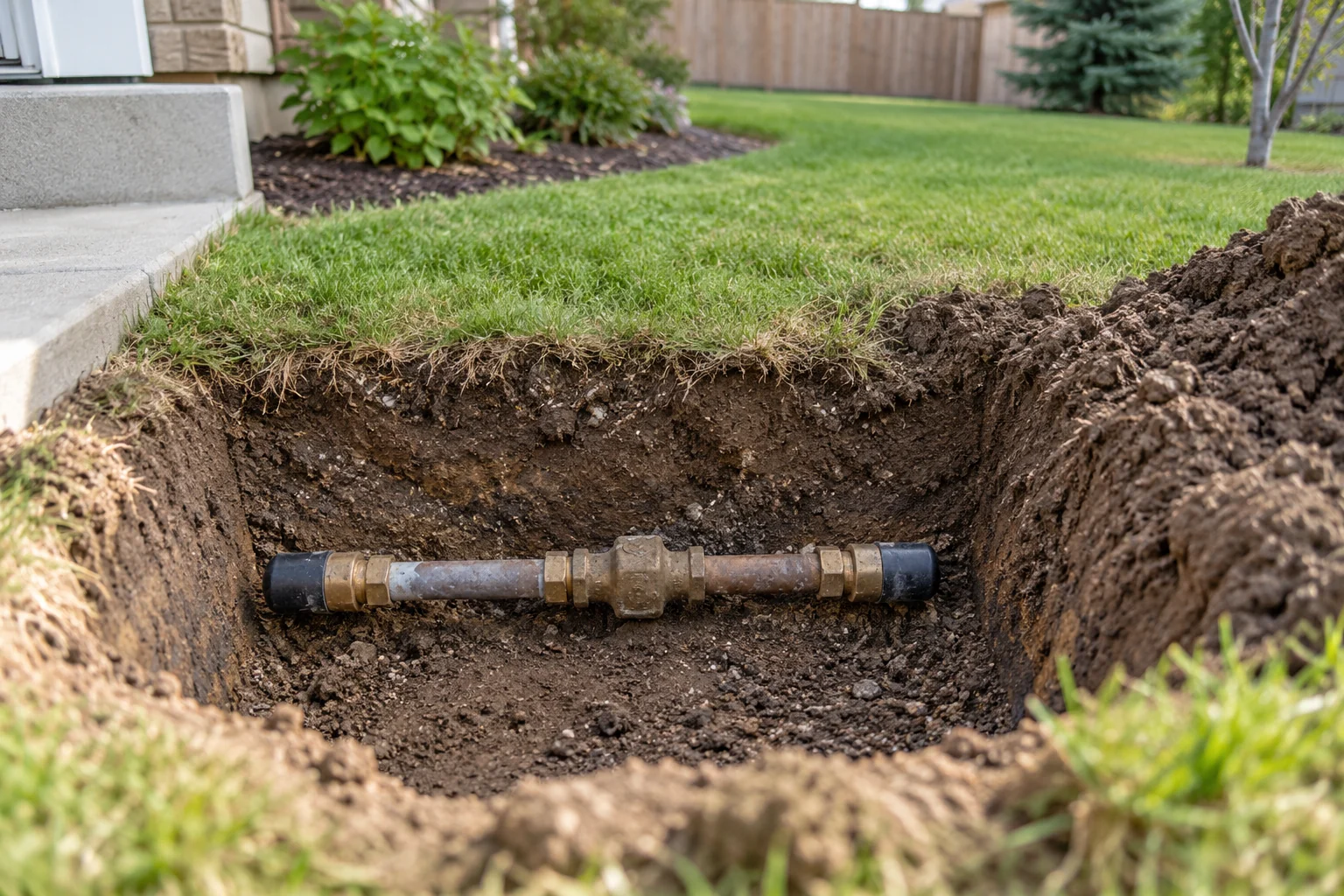
Some Calgary water service repairs can use methods that avoid a continuous full-length trench, but suitability depends on the line, defect and site conditions. Access points or localized excavation may still be needed. Have the leak and service section assessed, then compare defined repair options rather than assuming every buried leak can be fixed without digging. The underground line location process helps explain why the repair method cannot be chosen from the surface alone.
Read the City options in their proper context
Calgary's water service line leak guidance describes repair options including service pulls and localized access for a spot repair. These descriptions concern the service-line context. They should not be copied automatically to an under-slab pipe or a sewer defect. Ask which system and section have been identified so a method is discussed for the right problem rather than selected by the general word trenchless.
Require a source finding before comparing methods
A wet yard or pressure drop may suggest a service issue without establishing the exact defect. Investigation and route information help define what needs repair. For underground water line assessment, ask what is confirmed and what still depends on access. A method chosen before those facts are available may be only a possibility. The estimate should preserve that distinction rather than promise an outcome based on the first symptom reported by phone.
Understand that reduced digging is not zero disruption
Access may still be needed at selected points, and equipment requires a suitable site arrangement. Existing landscaping, paved areas, building entries and other buried services can affect the work. Ask which locations would be opened and what reinstatement is included. A statement that a method avoids a continuous trench should not become a guarantee that no surface, interior space or neighbouring access will be affected. Compare the actual proposed arrangement instead of only the marketing label.
Compare localized repair and broader replacement
A spot repair responds to a defined defect, while replacement can address a different scope. Ask why either is appropriate for the assessed line and what condition information supports the choice. A localized option should not be assumed durable for every wider deterioration issue, and replacement should not be treated as necessary in every case. For Calgary water line repair, the meaningful comparison identifies what each option resolves and what remains in the existing system.
Clarify utility planning and supply interruption
Work around buried infrastructure requires appropriate coordination even when the chosen method reduces excavation. Ask what utility information, site controls and water shutoffs are required. If City service controls are involved, establish who coordinates them. Do not start a small homeowner trench to save a supposed access step. Limited digging still has hazards and should follow the actual plan. Shared drives, restricted parking and occupied-building requirements also belong in the site description before work is authorized.
Make reinstatement and follow-up visible
Discuss who handles openings, disturbed surfaces and any interior access after the pipe work. Those responsibilities may differ from source repair. Ask what checks will support restored service and whether additional assessment remains. Our article on Calgary repair estimates helps make exclusions explicit. A method with fewer surface openings is not automatically the best value if the quoted outcomes, reinstatement or limits are different from another proposal.
Choose the method after the line is assessed
The appropriate repair depends on findings, feasible access and the work required for that line. An article cannot establish a site-specific method, final cost or timeline. Keep the assessment and accepted scope with the repair record. If a condition changes during access, ask how the proposal changes and why. The useful question is whether a limited-excavation option fits the confirmed problem, not whether every Calgary service leak can be assigned a no-trench solution before inspection.
Questions for a limited-excavation proposal
- Confirmed fault: ask which line and section need work, and whether further access is still required to establish the final defect.
- Method purpose: clarify localized repair, replacement or another arrangement instead of using trenchless as the whole scope.
- Access points: identify where openings or interior access are expected and what site constraints affect them.
- Retained piping: ask what remains in place and how its assessed condition relates to the proposed outcome.
- Coordination: understand utility planning, supply interruption and any applicable approval responsibilities.
- Reinstatement: specify disturbed areas, excluded recovery work and who handles them after the source repair.
- Changed conditions: confirm how findings during access will be explained before a revised scope proceeds.
Compare disruption in concrete terms
One proposal may reduce the length of surface opening while still needing substantial space for equipment and selected access. Another may use localized exposure at a confirmed defect. Ask what each requires at this property instead of comparing only whether the word trenchless appears in the estimate.
Keep the pipe outcome equally clear. A spot repair and a wider replacement can address different conditions. Less digging does not automatically mean the same portion of line is being corrected, and a wider scope is not automatically necessary. The assessment should explain why the option fits the identified defect and surrounding condition.
Discuss practical site restrictions before authorizing the work. A shared driveway, occupied entrance or limited yard access can affect the proposed arrangement. The responding provider needs those facts, but should not promise every constraint can be overcome before reviewing the property.
Do not interpret reduced excavation as reduced utility risk. Work still takes place around buried infrastructure, and homeowner trial digging can encounter another service while failing to expose the source. Appropriate coordination remains part of the plan.
Finally, ask what completion means: the repaired or replaced section, restoration checks and any remaining surface work. Record those outcomes separately. A neat yard after reinstatement does not establish the condition of every retained pipe, and a completed pipe stage may leave another recovery task. Clear scope comparisons are more useful than universal promises about no damage or no disruption.
Where the proposal changes the pipe arrangement rather than repairing the same point, ask which requirements and connections apply to that change. Retain the explanation with the scope so later maintenance understands the installed route rather than assuming the original line remained unchanged.