Can An Idle Ice Maker Supply Line Leak In Calgary?
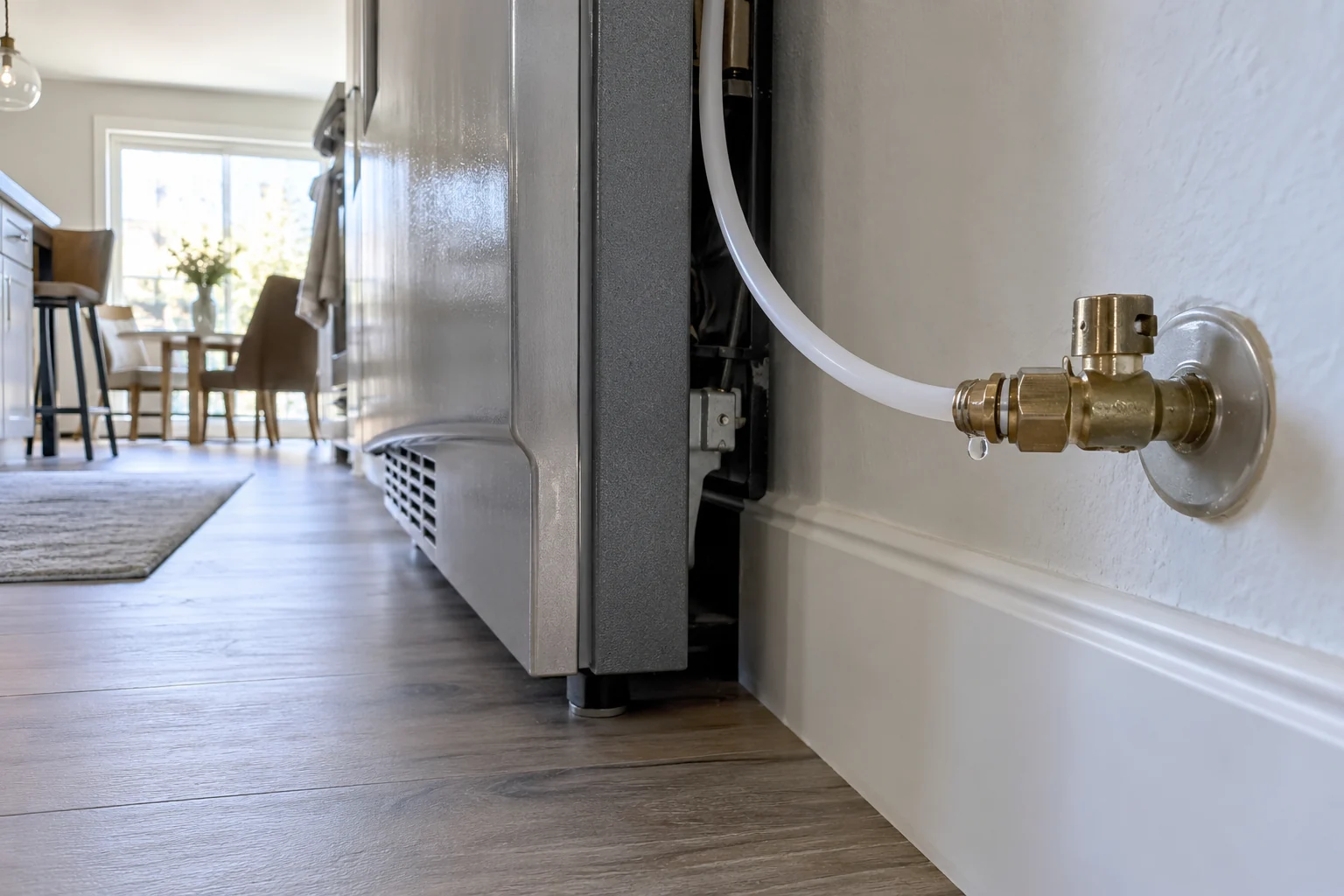
Yes. An ice maker supply line can remain under water pressure when the refrigerator is not making ice, so a damaged line or connection can still leak. Turning off ice production does not necessarily isolate that supply. Use only a safe identifiable water shutoff and arrange assessment if water continues.
Understand The Pressurized Connection
Think of the external supply as connected plumbing, not as a function that exists only while ice is being made. The appliance can be idle while water remains available at its inlet. A split or loose connection on that side can therefore release water between cycles. Report the continuing pattern, but let the inspection determine whether the external line or an internal component is actually involved. Other causes of water pooling behind a refrigerator may require a different repair from an external supply-line fault.
Distinguish An Appliance Setting From A Valve
Tell the contractor whether you changed an ice-maker setting, a dispenser setting or an identifiable water valve. Those are different actions and can have different effects on the supplied water. Do not report that the supply is off if all you did was stop ice production. If you do not know what a control serves, describe its location rather than give it an assumed name.
Describe Water During Idle Periods
Include whether someone discovered water before breakfast, after a trip away or during normal daytime use. Duration can be uncertain when a concealed connection leaks unnoticed. Do not guess the amount released from the final puddle alone. Explain which rooms or materials are visibly affected so the source response and any separate moisture work can be planned from the facts available.
- Treat an unused ice maker as still supplied until the connection is assessed.
- Note whether water continues while the appliance is idle.
- Avoid moving the connected refrigerator to reach a wet tube.
- Ask which valve, tube or connector failed and how isolation was confirmed.
Avoid Moving The Fridge To Chase A Hidden Valve
A valve behind the refrigerator may be known but not safely reachable during the incident. State that distinction when requesting help. Avoid pulling the machine forward until a hidden hose becomes taut, and do not reach behind wet equipment. If there is another known accessible appropriate control, explain its location and obtain advice when unsure about operating it.
Report Previous Installation Or Filter Work
Record who performed the recent work and what was changed, if known. Moving the refrigerator or working in an adjacent cabinet may be relevant to a tubing route, while a filter replacement may involve another interface. The chronology guides inspection; it does not prove responsibility. Keep receipts and model information without trying to undo the work during the active leak.
| Visible clue | What to report | What not to assume |
|---|---|---|
| Ice production switched off | Name the setting changed and whether water continues. | Do not describe an appliance setting as confirmed supply isolation. |
| A valve has been operated | Report which valve was used and the effect observed. | Do not loosen a connector to test whether pressure remains. |
| No one used the dispenser overnight | Explain when water was discovered and which areas are wet. | Do not assume idle equipment cannot have a supplied connection leak. |
An idle appliance leak may need refrigerator water-line repair even without an ice-making cycle. If the source is another supplied pipe, compare the separate scope in the service overview.
Ask For The Supply And Appliance Boundaries
The handover should distinguish the building’s supplied connection from components inside the refrigerator. If one side has been repaired and another remains unexamined, ask which restrictions continue. This avoids an unsafe assumption that an external line repair automatically clears every appliance function. Equally, an appliance setting change should not be treated as a repair of a visibly damaged supply line.
Do Not Reconnect An Unassessed Line
A drip stopping under isolation is useful source-control information, not proof that the line can be returned to pressure. Leave the restriction in place until the repair is complete and the checks have been explained. Tell other occupants not to reconnect or reopen it out of habit. A label or direct message is particularly useful if someone returns home after the incident.
An idle ice-maker line can continue releasing supplied water into a cabinet or floor. Alberta’s flood cleanup and utility-safety guidance offers cleanup and utility-safety guidance once the source is controlled.
Document Water Travel Beyond The Fridge
Describe the actual water route: behind the refrigerator, beneath the adjoining cabinet, across the kitchen or into the level below. Each observation helps explain what needs checking beyond the connection. Where an owner or insurer must be notified, use the factual sequence and avoid assumptions about coverage. Keep the source finding separate from the evaluation of wet building materials.
Record The Idle Leak Without Treating A Setting As Isolation
Use separate fields for appliance settings and plumbing controls. A useful note could say: “Ice production disabled at the appliance; water continued behind the refrigerator; external valve not safely accessible.” This example explains why the release remains unresolved. It does not require the household to move the machine or find a hidden connector.
| Information | Specific detail to keep |
|---|---|
| Discovery | When water was found and the first visible area. |
| Appliance setting | Ice or dispenser setting changed, if any. |
| Water control | Known valve used and whether release stopped, slowed or continued. |
| Access limit | Hidden valve, wet floor or short connected line preventing safe approach. |
| After repair | The confirmed tube, connector or other component addressed. |
Give the contractor the report as observations rather than a diagnosis of the refrigerator. The idle timing is useful, but another nearby supplied connection can still need checking. If the first release was not seen, say that the source remains hidden.
At handover, ask whether the water supply is restored and which refrigerator functions, if any, remain restricted. Keep those instructions distinct. Other occupants need to know whether the line is repaired or merely isolated so they do not reopen a valve while trying to restore ice production.
When arranging help, give the crew whether moisture appears continuously and which line or valve is accessible. Ask which finding, test and remaining restriction will be recorded. Request service or call (587) 333-7742.