
Does A Warm Floor Mean A Pipe Leak In Calgary?
A warm floor patch in Calgary can be a clue to investigate, but it does not prove a pipe leak. Heating arrangements, nearby equipment and ordinary temperature differences can also matter. Look for associated wetness, unexpected water use or changes over time, and have the relevant system assessed rather than opening flooring or concrete based on warmth alone.
Describe the patch and its timing
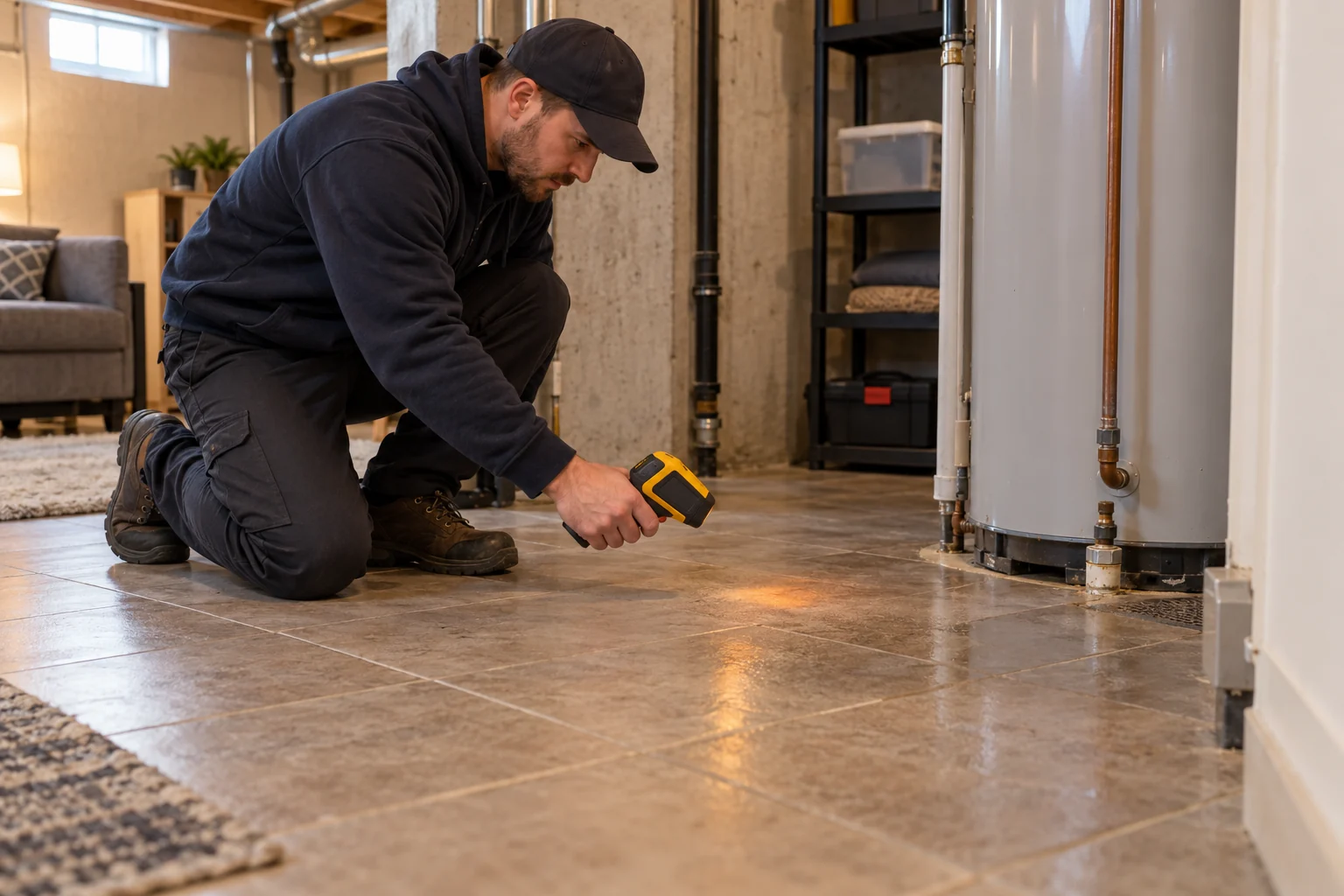
Note where the warm area is in relation to heating equipment, fixtures and visible pipe routes. Record when it is noticeable and whether it changes with hot water use or the heating cycle. A single impression from touching the floor is not a measured diagnosis. Take notes without altering the equipment to create a stronger example. If flooring is also wet or lifting, describe that as a separate observation. The relationship between warmth and moisture needs assessment rather than being assumed from their proximity.
Consider heating before narrowing the source
A home may have floor heating or other warm services near the location. Their presence does not automatically explain a new symptom, but it changes what needs to be reviewed. Ask which system serves the area and whether recent work or operating changes are relevant. Do not adjust boiler controls or valves by guesswork. For hydronic pipe leak assessment, report known heating symptoms separately from domestic water use so the different systems are not conflated.
Add water-use observations cautiously
A meter reading that changes during an understood quiet period can support investigation of unexplained use, but it cannot locate an under-floor leak. A running toilet or appliance cycle may be responsible instead. Calgary's household leak information explains ordinary checking context. A warm surface and a consumption increase may be connected or separate. Retain the timing and normal-use details rather than announcing that the combination conclusively identifies a hot-water pipe failure.
Treat wetness and hazards as their own concerns
If the area is actively wet, spreading into another room or close to electrical equipment, the response should address those conditions without waiting for a temperature explanation. Keep clear of hazardous water and unstable finishes. A safely accessible known household shutoff may help a supply release, but forcing a valve or entering a wet utility space is inappropriate. Explain the active conditions when seeking help. The practical emergency decision depends on water movement and safety, not how warm a patch feels.
Ask how concealed piping will be assessed
For Calgary slab leak repair, the assessment should establish what system might be involved and what evidence supports access. A floor observation does not justify drilling at that point without further investigation. Ask which findings are confirmed, which remain uncertain and how access would be selected. Some layouts allow different repair options, while others have limitations. Do not interpret a general description of a method as a promise that it suits every floor or concealed run.
Keep repair scope separate from floor recovery
If a leaking component is found, ask what repair will resolve it and what checks will support restoring use. Floor materials may need separate assessment after source control, particularly when moisture has entered concealed layers. A repaired pipe does not certify that every affected material is dry. Our article on possible slab leak warning signs in Calgary explains the broader symptom context. Preserve the records so the warmth observation and confirmed plumbing findings remain distinguishable.
Use a new baseline after assessment
Once the relevant professionals explain the cause and work, record any expected operating condition or follow-up restriction. If unusual warmth or wetness returns, compare its timing with those findings rather than assuming the original diagnosis applies unchanged. A surface can be warm for more than one reason, and a recurring symptom may need another look. Useful documentation includes the location, associated water symptoms and assessment limits. It avoids either dismissing every change as normal heating or labelling every warm patch a hidden leak.
A warm-floor observation checklist
- Location: describe the room and nearby known fixtures or heating equipment without tracing concealed piping by assumption.
- Change: explain whether the warmth is new, recurring or newly noticed; those are not necessarily the same observation.
- Operating context: note household hot-water use or heating activity already occurring, without changing controls to make a test.
- Moisture: record visible wetness or material change separately so warmth is not treated as proof of escaped water.
- Consumption: include unexpected use only with its meter and normal-use context; a separate running fixture can affect it.
- Access: identify safe visible areas and any restriction around equipment or finishes.
- History: mention known floor heating, recent work or a prior assessment while preserving what remains unconfirmed.
Separate an operating feature from a new symptom
A room with known floor heating can have a legitimate temperature pattern, but that fact does not establish that every new wetness or change is normal. Tell the assessor what the homeowner recognizes as ordinary and what differs. The assessment can then consider the actual system rather than choosing either everything is heating or every warm patch is a leak.
Where no floor-heating arrangement is known, warmth still does not locate a failed pipe by itself. Nearby equipment, concealed services and other conditions may need review. Ask which system should be assessed and what findings support opening a surface. A diagnosis based only on touch would leave those questions unresolved.
If another symptom is active, such as water spreading into a room, do not wait for a detailed temperature explanation before seeking advice. The water path and safety conditions determine the immediate response. Conversely, avoid creating a release by adjusting unknown valves or equipment in an attempt to make the warmth easier to explain.
After assessment, preserve the distinction between an expected operating condition and the confirmed fault, if one was identified. Record which work occurred and whether material recovery remains. A future change can then be described against that baseline without automatically repeating the original assumption.
This is particularly useful when several systems occupy a utility area. A heating loop, domestic supply and appliance connection can be close together while requiring different work. Accurate symptom descriptions help the relevant professional assess the right arrangement rather than treating all warmth and wetness as one presumed hot-water leak.