
Can A Burst Pipe Damage Other Rooms In Calgary?
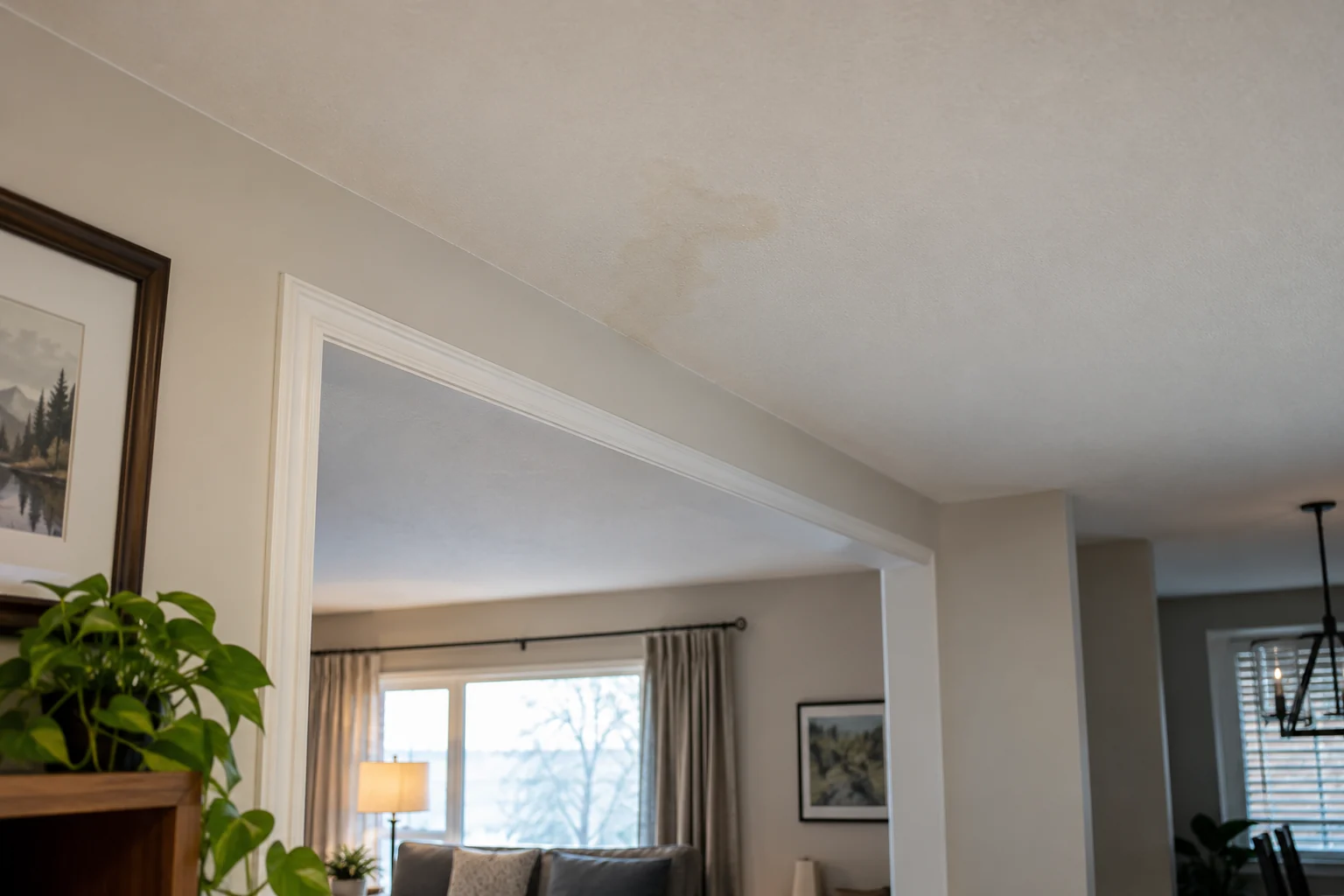
A burst pipe in Calgary can affect rooms beyond the visible leak because water travels along piping, framing and surfaces before becoming visible elsewhere. Floors, ceilings or adjoining spaces may be involved even after the source is stopped. Record visible changes safely and arrange appropriate assessment; the size of the source puddle does not establish the extent of affected materials. The professional burst pipe repair process covers the source work that should be documented separately from drying.
Follow visible changes without tracing a hidden route
Note where water first appeared and which other areas changed afterward. The sequence is useful, but it does not prove every connection between those spaces. A ceiling stain can be downstream of the source, and a dry-looking room can still have an unresolved concealed question. Do not remove wallboard or flooring to follow the water yourself. The assessment should establish what can be observed and where justified access may be needed. Describe the rooms and timing rather than presenting a guessed path as a map of confirmed damage.
Consider rooms above below and beside the source
Water may move vertically or along accessible surfaces, so the room with the failed pipe is not the only relevant observation point. Look only from safe ordinary positions. In a shared building, notify management if another suite or common area shows symptoms; do not enter someone else's space to complete your record. For Calgary burst pipe repair, explain both the visible rupture and other rooms showing wetness. Those facts can affect access and the handoff without requiring the plumber to certify all material recovery.
Water can travel farther than the visible pool
A container catching remaining drips shows what reaches that point during observation. It does not measure water already released before discovery or water retained in other materials. Similarly, a puddle becoming smaller after isolation does not show that concealed layers are dry. Avoid declaring the incident minor solely because little water is left at the pipe. The relevant recovery assessment considers actual affected conditions and limits, while the plumbing record identifies the source, control and repaired component. Keep both outcomes distinguishable.
Seven areas to describe in a safe incident record
- Source room: identify the visible pipe failure and surrounding accessible layout.
- Adjacent surfaces: note wet cabinets, wall bases or flooring without lifting materials to inspect beneath them.
- Lower rooms: record visible ceiling or wall changes from a safe position.
- Shared areas: notify the responsible contact about symptoms outside the suite rather than investigating independently.
- Electrical proximity: state equipment or fittings near the water without touching them.
- Unstable finishes: report sagging or bulging material and keep access restricted.
- Assessment limits: retain concealed or inaccessible areas as unknown until the appropriate professional evaluates them.
Treat access hazards before documentation detail
A room affected indirectly can have its own electrical or ceiling hazard even if the original pipe is safely isolated. Do not walk beneath compromised finishes to compare stain sizes or enter water to retrieve an appliance. Alberta's cleanup guidance gives safety context for wet utilities and materials. If people are in immediate danger, contact emergency services. Documentation can be limited by safety; a clear explanation of inaccessible areas is more useful than a risky photograph taken to prove the spread.
Use the repair record to support recovery assessment
Ask the plumber to record the identified source, repaired section and any restriction. That gives material-recovery professionals context about the plumbing event without pretending the repair assessed every layer. Our leak repair versus restoration article explains these distinct stages. If the source remains uncertain or only temporarily isolated, preserve that status. An affected-material assessment should not assume the water event has definitively ended merely because a pipe visit occurred. Clear records help coordinate work without merging different professional responsibilities.
Do not turn room symptoms into a coverage conclusion
Photographs and repair findings can support an insurer conversation, but do not establish which materials or costs are covered. Ask the insurer or broker using the actual policy and incident information. A visible stain may require assessment without proving the complete extent or source duration. Keep approximate times honest, and add confirmed findings as they become available. Do not describe every room as damaged in the same way or assume every wet assembly requires an identical recovery method before its condition is evaluated.
Confirm restrictions across the affected spaces
A repaired pipe can restore supply while another room remains unavailable for safety or recovery. Tell occupants which fixtures, paths and rooms have restrictions. In a multi-unit property, management should coordinate the shared handoff so one person does not interpret restored pressure as permission to use a restricted area. For water leak repair, ask which source work is complete and what remains outside that scope. A practical instruction names the actual area and next contact instead of a general statement that the whole emergency is resolved.
Keep a room-by-room handoff rather than one all-clear
Use a short record naming each visible affected space and the corresponding assessment or unresolved question. A source room may have completed plumbing work while a room below needs material evaluation. The record should preserve that difference instead of describing the property as uniformly recovered.
If symptoms appear later, add their timing and location rather than rewriting the original event. New wetness can have more than one possible explanation and should be assessed from current conditions. The earlier repair record remains useful without becoming a guarantee about all concealed piping or materials.
Finally, keep the limits of observation clear. A homeowner's safe record and a professional assessment can both be valuable while leaving some hidden areas uncertain. The goal is coordinated source control and appropriate recovery decisions across the actual affected rooms, not tracing every drop or declaring the entire home dry from the original puddle.
If multiple rooms show symptoms, assign each a plain location label in the record so photos and instructions remain distinguishable. A downstairs ceiling assessment should not be silently applied to an upstairs cabinet or common hallway. Ask the responsible professional which areas were actually evaluated and which still need attention, then share those boundaries with occupants instead of issuing one property-wide all-clear based on the repaired pipe.