Can A Commercial Leak Be Isolated By Unit In Calgary?
A plumber may isolate a commercial leak without shutting down every Calgary tenant when the affected section has a suitable working control and the pipe route can be confirmed. The option depends on the actual building, not the leak's room alone. Management should provide reliable system information and coordinate affected users. If local isolation cannot safely control the release, a wider interruption may be necessary; it should not be avoided through an improvised bypass or an unfamiliar valve.
Establish which system and section are leaking
A water-supply branch, a heating loop and drainage can need different work. Water on the floor does not identify the system by itself. The contractor should locate the source and understand the relevant route before choosing an isolation point. Building drawings, earlier reports and labels can help, but their accuracy must be checked against the present installation.
Describe the first visible water and any known equipment involved. Mention renovations that may have changed routes or controls. Do not tell the plumber a valve serves only one tenant unless reliable information supports it. In an older or altered building, a label or remembered shutdown can be incomplete. An isolation plan needs the actual connections, including any effect outside the room where water appears.
Use local controls only when they are appropriate and effective
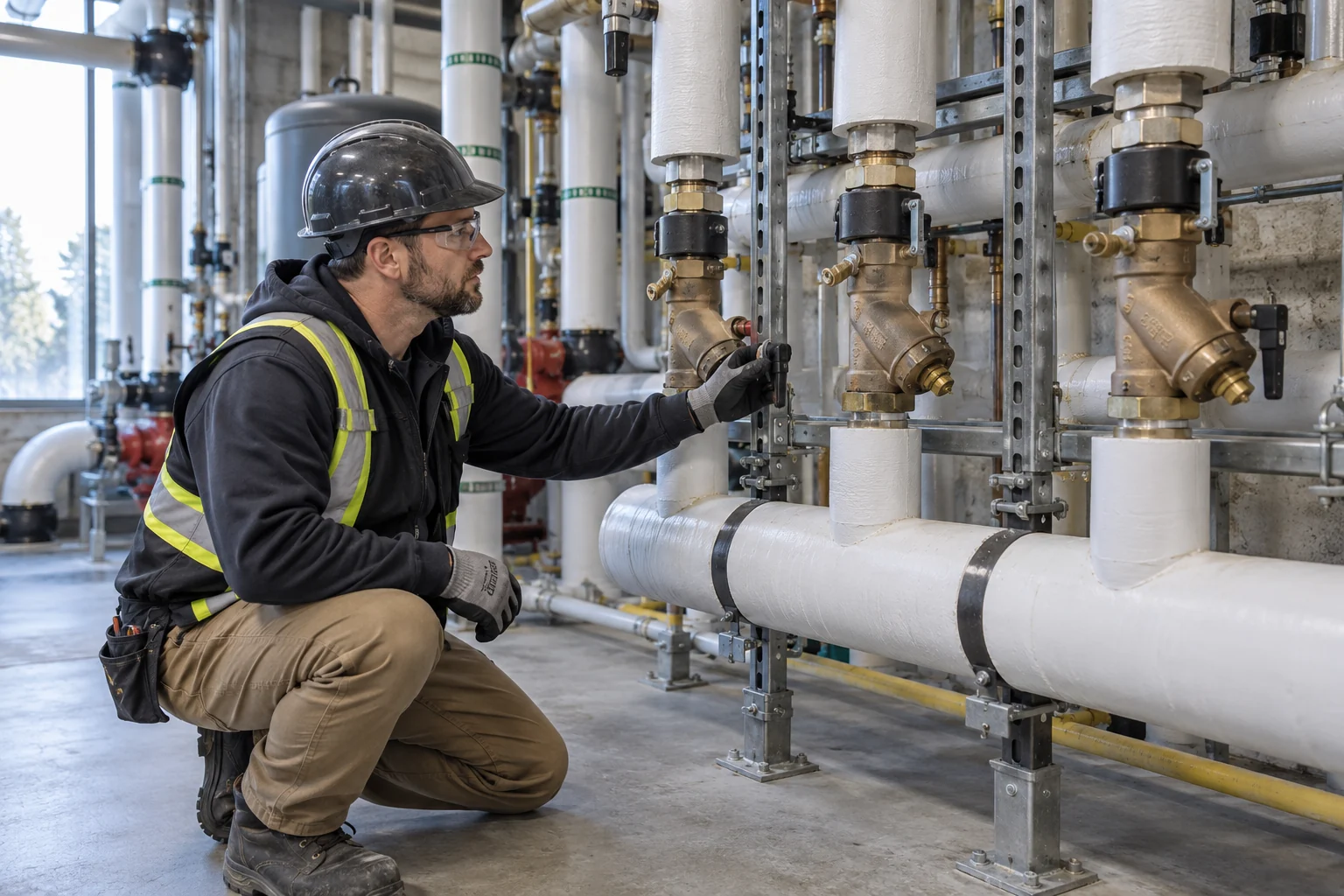
A fixture or branch valve can make local source control possible, but it must be the correct control and function properly. A valve that resists movement, leaks itself or fails to stop the release changes the plan. The contractor needs to evaluate that condition rather than have staff apply more force. A handle position is not proof that the affected section is isolated.
Our Calgary commercial leak repair service can assess the source and available control. Building staff should provide access to known service points under their authority, not operate every nearby handle to find one that works. Unfamiliar common or life-safety controls must be left to the responsible qualified people and building procedures.
Identify who and what the proposed control affects
Tenant impact includes more than sinks and toilets. Water-fed equipment, common facilities and activities relying on service may also be involved. Ask each relevant responsible contact for reliable information rather than assume a quiet unit has no dependent equipment. A control serving a branch might still affect several rooms or users. In a leased unit, access and authorization for shared plumbing should be agreed with the building contact before a wider shutdown.
Management should coordinate this information with the plumber. A tenant cannot promise uninterrupted service to another business on the basis of where the leak is visible. If the proposed interruption extends beyond the local fixture, notify the affected users and establish what must remain off until restoration. The operational decision needs to fit the system and the actual equipment, not only the shortest possible shutdown.
Prepare the isolation discussion with building records
- System: identify whether the suspected source is supply, heating or drainage, and note uncertainty.
- Route: provide current drawings or explain known alterations.
- Controls: identify reliable labels and previous isolation findings without guaranteeing their present condition.
- Users: list known tenants, common rooms and equipment served by the relevant section.
- Access: name the person who can open controlled mechanical areas.
- Approval: identify who can authorize a local or wider interruption.
- Restoration: assign communication before controls return to ordinary operation.
Keep the document short enough to use during the incident. If a route is unknown, mark it unknown. The plumber can explain what must be checked. A confident but inaccurate diagram can create more trouble than an honest record with gaps, especially when several tenants assume a control affects somebody else's equipment.
Do not promise a local shutdown before the source is checked
A business understandably wants to avoid interrupting neighbours. But the need to control an active leak can outweigh that preference if the local valve is ineffective or the damaged section sits before the branch. Ask the contractor to explain what determines the boundary and what alternative remains if local control does not work.
A temporary measure also needs clear limitations. Do not arrange an improvised cross-connection or bypass to preserve water use. Calgary's cross-connection information for businesses explains why connections to the drinking-water system require proper protection. Any proposed equipment or alteration must fit the actual system and requirements rather than serve as a hurried workaround.
Coordinate the repair access with the water interruption
An isolated branch may still require a wall or ceiling opening to reach the failed component. Clarify who authorizes that opening and who handles finishes afterward. If the source is in another tenant's space, management should arrange entry rather than expect the affected tenant to gain access independently. The repair's physical location and the isolation boundary are related but different parts of the plan.
For wider work, discuss the written scope and the permit requirements relevant to the proposed alteration. Calgary's plumbing permit guidance provides the approval context. The contractor should explain which part of the job is source repair and which part is a new control or other system change. Calling the incident urgent does not answer every approval question.
Verify the repair before announcing service restoration
Ask what checks were performed on the repaired component and how affected equipment should return to operation. A closed valve can stop visible water without fixing the source. Management needs to know whether the repair is complete, temporary or awaiting another part of the work. Keep that status clear in communications to tenants.
Use our commercial emergency plumbing page when arranging the private work and explain the shared-building impact. Do not announce that every tenant is unaffected until the actual scope is known. A restoration message should identify which services are available and which restrictions remain, especially where equipment needs a separate qualified check after exposure to water.
Keep the confirmed route and control information for next time
Record the failed section, control used, users affected and work completed. Update labels or drawings through the responsible building process where the investigation revealed inaccuracies. Do not add a new label based only on an employee's guess. Confirmed records can make the next emergency faster to explain without relying on someone who remembers the last shutdown.
Review whether access or approval delays made the incident harder. Keep responsible contact details current and known service points reachable in ordinary conditions. A well-planned Calgary building may be able to isolate a local leak, but the useful promise is a competent investigation and clear coordination. Whether every tenant avoids interruption depends on the actual pipe route, working controls and safe repair conditions.