Should My Leaking Sink Trap Be Fixed Or Replaced In Calgary?
Whether a leaking sink trap needs repair or replacement depends on the source and condition: a misaligned or unsuitable connection may need correction, while a cracked, damaged or deteriorated component may need replacement. The puddle alone does not answer that question. Stop using the sink, note when water escapes and have the trap and adjacent drain connections assessed before tightening everything indiscriminately.
Establish which connection is actually wet
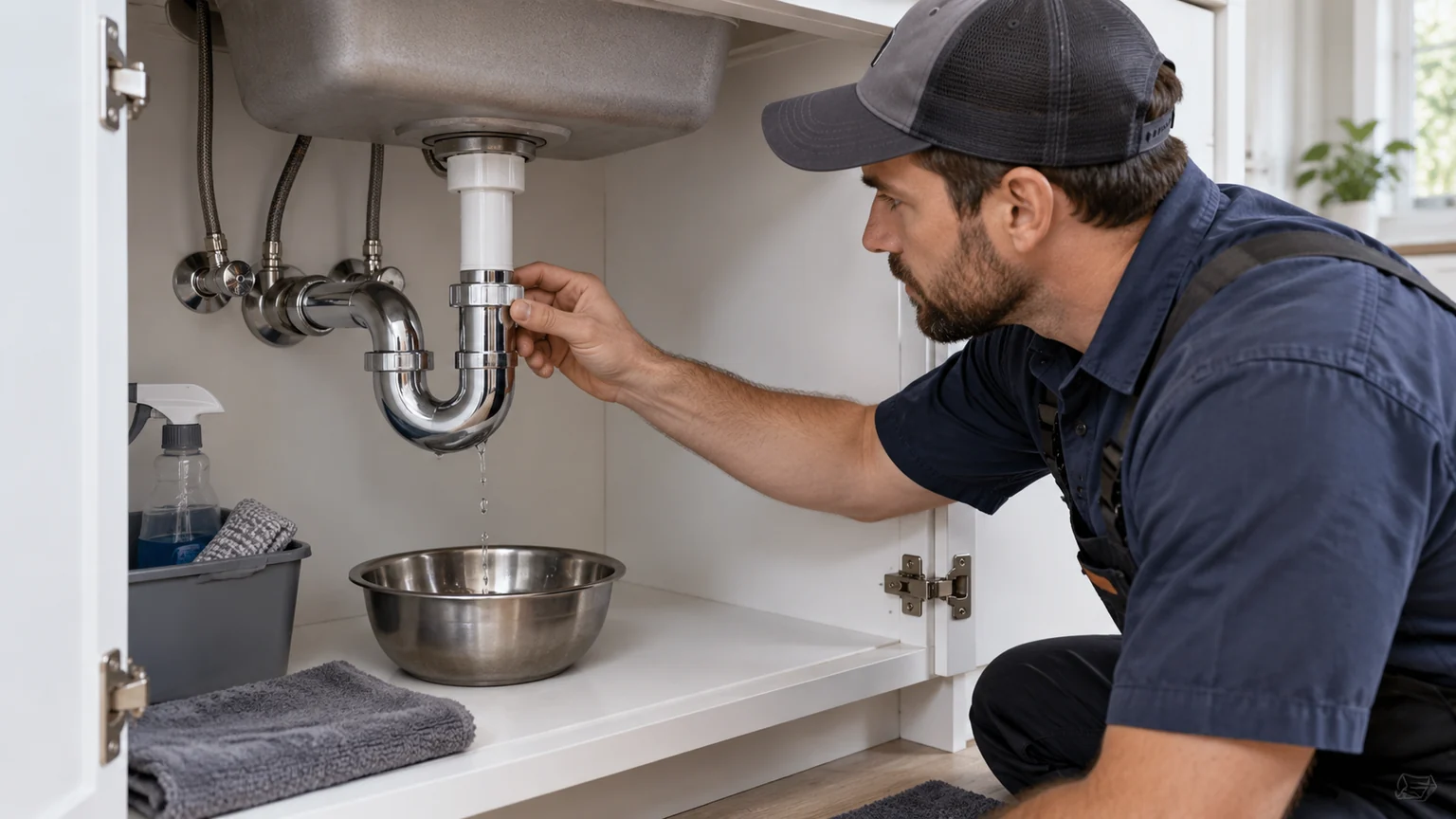
The trap is the curved section beneath a basin, but nearby supply hoses, the drain body and other joints can also leak. Water can travel along a pipe or fitting before dropping, making the lowest wet point misleading. Tell the plumber whether the leak appears at a joint, from a crack or from a component above the trap.
A leak during draining suggests a different route from one that persists while the basin is unused. Observe the timing without deliberately emptying another full bowl. If the cabinet remains wet despite no fixture use, include that detail because the pressurized supply or retained water may need consideration too.
A connection problem is not the same as damaged material
Some leaks arise because parts are misaligned, incorrectly matched or not assembled appropriately. Others involve a damaged wall or deteriorated component. The proposed repair should identify which condition is present. Replacing an undamaged trap without addressing the connection arrangement can leave the same stress or mismatch affecting the new part.
Avoid forcing joints tighter. Excessive force can damage fittings or alter alignment, and the appropriate assembly depends on the material and design. Do not assume that tape, sealant or a generic washer is suitable for every joint beneath the sink. Ask why the chosen parts match the existing drain arrangement.
A slow drain may be part of the same visit
If the sink also empties slowly or backs up, tell the technician. A restriction can change how water reaches a weak connection, and repairing the drip alone may not resolve the drainage symptom. The common route should be considered where the timing and fixture pattern indicate a blockage.
Drain leak repair concerns the leaking connection, while sink overflow assessment may be needed for a bowl that rises or spills. The eventual explanation should account for both observations instead of treating them as unrelated merely because one is visible under the cabinet.
Protect the cabinet without hiding the source
Leave the fixture out of use and keep stored belongings clear where it is safe to remove them. Do not disconnect a trap holding wastewater or chemical cleaner yourself. Report any products already used and whether the cabinet base, flooring or adjacent wall has been affected.
A container under a drip is a temporary way of noticing water, not a repair or a reason to resume regular sink use. If water reaches electrical equipment or another room, stay clear and arrange appropriate assistance. Stopping the plumbing leak does not establish that concealed finishes are dry.
A Repair-or-Replacement Comparison for the Trap
| Finding | Question for the repair decision |
|---|---|
| A joint is misaligned or unsuitable | How will the connection arrangement be corrected so a new or retained part is not stressed? |
| A component is cracked or deteriorated | Which matched replacement addresses the actual damaged section? |
| Water runs from a higher fitting | Is the trap the source, or simply where moisture drops into the cabinet? |
| Slow drainage also occurs | Does a restriction remain in the route beyond the leaking connection? |
The table helps compare explanations, not choose parts without examination. A sound component with an unsuitable connection and a damaged component require different remedies. Ask the technician to identify the condition directly observed rather than give a universal answer based on the age or appearance of the trap.
If the source cannot be established while the drain is loaded, access and controlled testing may be needed. Keep that uncertainty in the scope. Replacing several parts speculatively can make the result harder to interpret if the original leak path was never identified.
A Sink-Trap Service Handover Checklist
- Source: Name the failed joint or component and distinguish it from adjacent supply or drain parts.
- Arrangement: Explain any alignment, matching-part or support correction made during the repair.
- Drainage: Record whether the slow-drain symptom was assessed and which route was included.
- Check: State the controlled use that verified the repaired connection, reflecting the original leak timing.
- Limits: Identify any inaccessible section or wet material requiring another assessment.
Keep the handover with the kitchen or bathroom's maintenance records. If a future fixture change requires disturbing the trap, the previous arrangement and parts can be identified accurately. Do not assume that every component was renewed merely because one connection was repaired.
For a double sink or connected appliance, make the scope clear. A repaired trap may still receive wastewater from another source, so any temporary use restriction should include those connected inputs. This is especially important where a dishwasher can run while nobody is actively using the sink.
Finally, separate the repaired plumbing from the cabinet's condition. A dry connection after a controlled check is one result; swelling, retained moisture or contamination in the surrounding materials is another question. Describe the actual exposure to the relevant assessor instead of treating the absence of a current drip as proof that all hidden finishes are suitable to retain.
Mention whether the trap has been disturbed during cleaning or retrieving an object. That history is useful without proving the latest action caused the leak. The current source and alignment should be checked directly, and any recommendation should describe how the repaired arrangement will remain appropriate for the connected fixture.
Ask for a component-specific result
A useful report identifies the failed connection or part, explains repair versus replacement and records how the sink was checked afterward. Testing should account for the original stage of use, such as a controlled basin drain, and any known restriction. Ask what remains unassessed if access is limited.
Ask the plumber to name the leaking joint or damaged part, then record whether it was reseated, repaired or replaced. If the sink also drains slowly, mention that symptom before a repaired trap is tested with normal flow. This avoids treating a dry cabinet after one short test as proof that the full problem is gone. The City of Calgary home maintenance guidance covers general upkeep. For a Calgary sink-trap leak, call (587) 333-7742 or request service.