
How Do Tree Roots Damage A Sewer Line In Calgary?
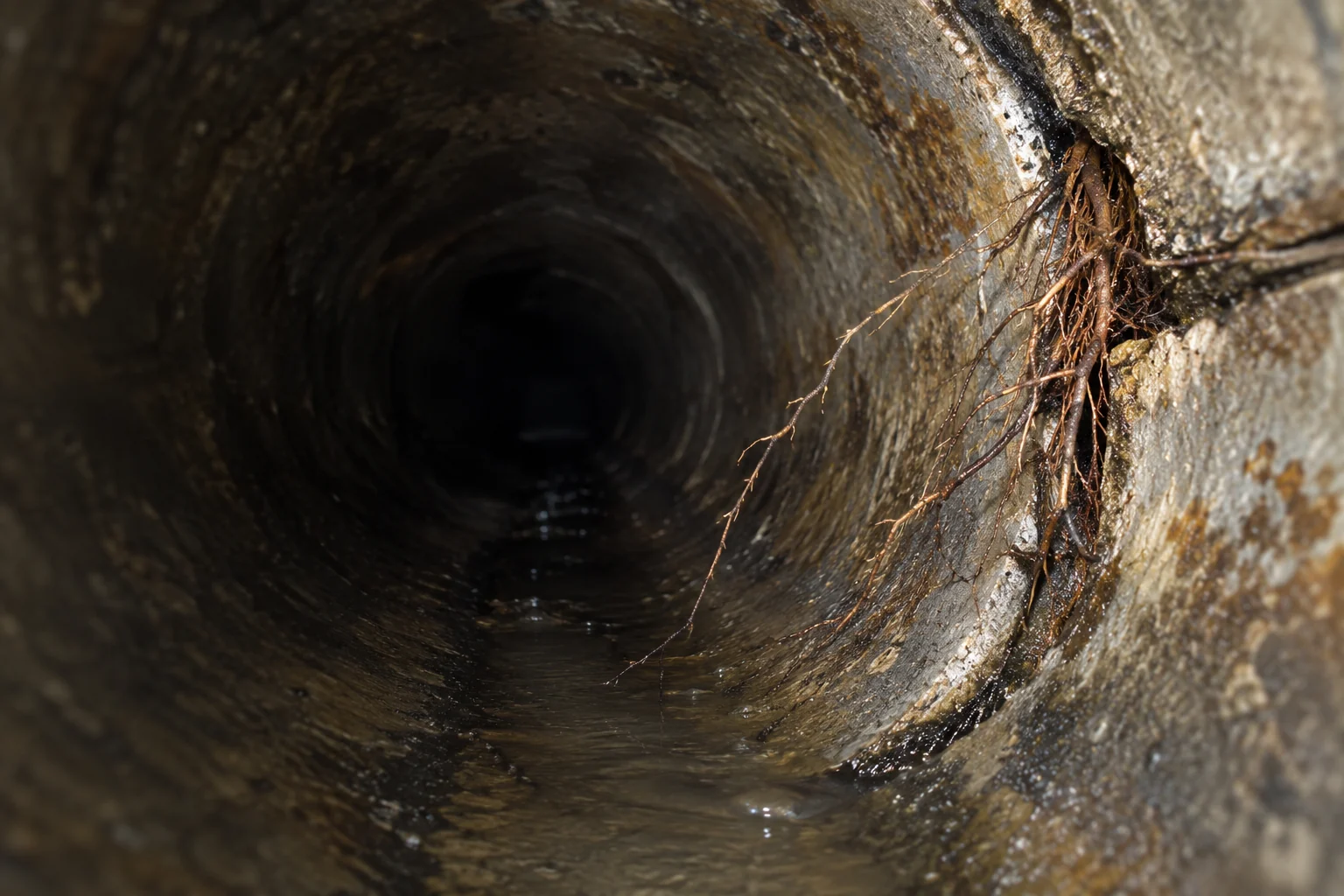
Tree roots can enter a sewer through an existing opening such as a defective joint or crack, then grow within the pipe and catch solids. Their presence does not prove that a nearby tree caused every drainage problem or that the whole line needs replacement. Inspection should identify the entry point, extent of growth and condition of the surrounding pipe.
Roots need an entry path into the drain
A sewer is intended to contain wastewater. Root growth inside it indicates that there is some route through the pipe or its connections. The opening may be small compared with the root mass eventually visible. A root-filled joint and a crushed pipe are different findings, even though both can result in a backup at a low fixture.
The location of a tree above ground is only a clue. Root systems and underground service routes do not follow a simple straight line from the trunk. Avoid choosing a repair location from landscaping alone. Ask how the affected pipe was located and what inspection evidence connects the roots to that particular joint or section.
Recognize the pattern without diagnosing it yourself
Recurring slow drainage, gurgling and backups involving several fixtures warrant investigation of the shared route. Those symptoms also occur with grease, objects, settlement and other defects. A single slow sink may have a local cause that has nothing to do with a tree outside. Report the actual sequence of symptoms rather than labelling the problem as roots before it is examined.
An active backup calls for reduced water use and sewer backup assistance. Keep away from wastewater and avoid exposing a cleanout yourself. The City of Calgary sewage backup page provides local guidance on reporting the event and distinguishing private plumbing from possible municipal infrastructure problems.
What a camera can reveal about root growth
A camera inspection can show where growth enters, whether roots occupy one joint or a longer section, and whether other pipe defects are present in the visible footage. An initial camera pass may not see through dense material. Cleaning and a follow-up inspection may be needed to understand the underlying pipe surface.
Ask whether the footage covers the entire relevant route and includes a distance reference. A still image of roots without their location is difficult to use for a targeted repair. The report should distinguish directly observed defects from areas that could not be viewed and should explain whether standing water or debris limited the assessment.
Clearing roots and repairing their entry are separate choices
Removing growth can restore a passage, but the opening that allowed it to enter may remain. That is why a successful clearing is not proof that recurrence is impossible. The appropriate cleaning method depends on access, pipe material and condition. A weakened or separated pipe needs different handling from a sound pipe containing deposits.
If the inspection identifies a localized defect, discuss whether a targeted sewer repair is feasible and how the result will be verified. Broader damage may change the scope. Avoid selecting excavation, lining or any other method solely because roots were found; each option has suitability limits that should be assessed against the actual line.
Questions to Ask About a Root Finding
A root diagnosis should produce more than a photograph of growth. Use the questions below to connect that image to a property-specific decision. The answers should describe the inspected pipe and observed entry, not simply the presence of trees near the building.
- Where do the roots enter? Ask whether the footage shows an individual joint, crack or other opening and how the location was established.
- How much of the route was visible? Dense growth can limit the initial view. Ask whether the surrounding pipe was examined after preparation and what remains beyond the inspected section.
- What did clearing accomplish? Distinguish an opened passage from removal of material and from correction of the entry defect. These are different results.
- Why is the proposed method suitable? Pipe condition, access and connections should support the recommendation, including any limitations of a non-excavation option.
- What will be checked afterward? Ask how the repaired location and restored drainage will be assessed and which remaining sections are outside the work.
If the entry point cannot be viewed, the report should say that rather than guess a specific joint. An uncertainty can justify another diagnostic step, but it should not be presented as an already confirmed replacement location.
Keep Landscaping Decisions Separate From Sewer Evidence
Removing a tree is not automatically the same as repairing the opening in a sewer. The pipe defect, root growth and landscaping decision involve different questions. Ask the plumber to identify the drainage condition and avoid making a tree-removal decision solely because a trunk is near the suspected route.
Provide any plans or photographs showing past additions, trenching and previous sewer work. A repaired section may be followed by older pipe, and roots observed at one location do not establish the condition of every other joint. Those records can help determine whether the current issue is at a known repair or elsewhere along the service.
- Note paved surfaces and structures that may affect access without assuming they make repair impossible.
- Keep the footage with the location notes, not as an isolated image forwarded without context.
- Ask what remaining pipe condition could affect recurrence even after the identified entry is addressed.
- Discuss maintenance against the actual finding rather than accepting a universal schedule unsupported by the inspected route.
Prevention guidance should remain specific. Avoiding unsuitable waste helps the drainage system, but it does not seal a root entry. Conversely, addressing a joint does not make a kitchen branch immune to grease buildup. Keeping those causes distinct helps make later service decisions based on fresh symptoms instead of attributing every blockage to the same tree.
Protect the yard while planning the underground work
Provide information about landscaping, additions, paved areas and any previous sewer repairs. These features can affect access and the practical implications of exposing a line. Utility locations and required permissions must be addressed before excavation. Do not dig to look for roots or pour treatment products into the sewer without a professional assessment.
After the work, keep the footage and written recommendations. Ask whether future inspection or maintenance is warranted for the remaining pipe and what symptoms should prompt another call. A tree-related diagnosis should lead to a specific explanation of the sewer defect, not a blanket recommendation to remove landscaping. For Calgary plumbing source assessment and repair planning, call (587) 333-7742 or request service.