How Does A Backwater Valve Limit Sewer Backup In Calgary?
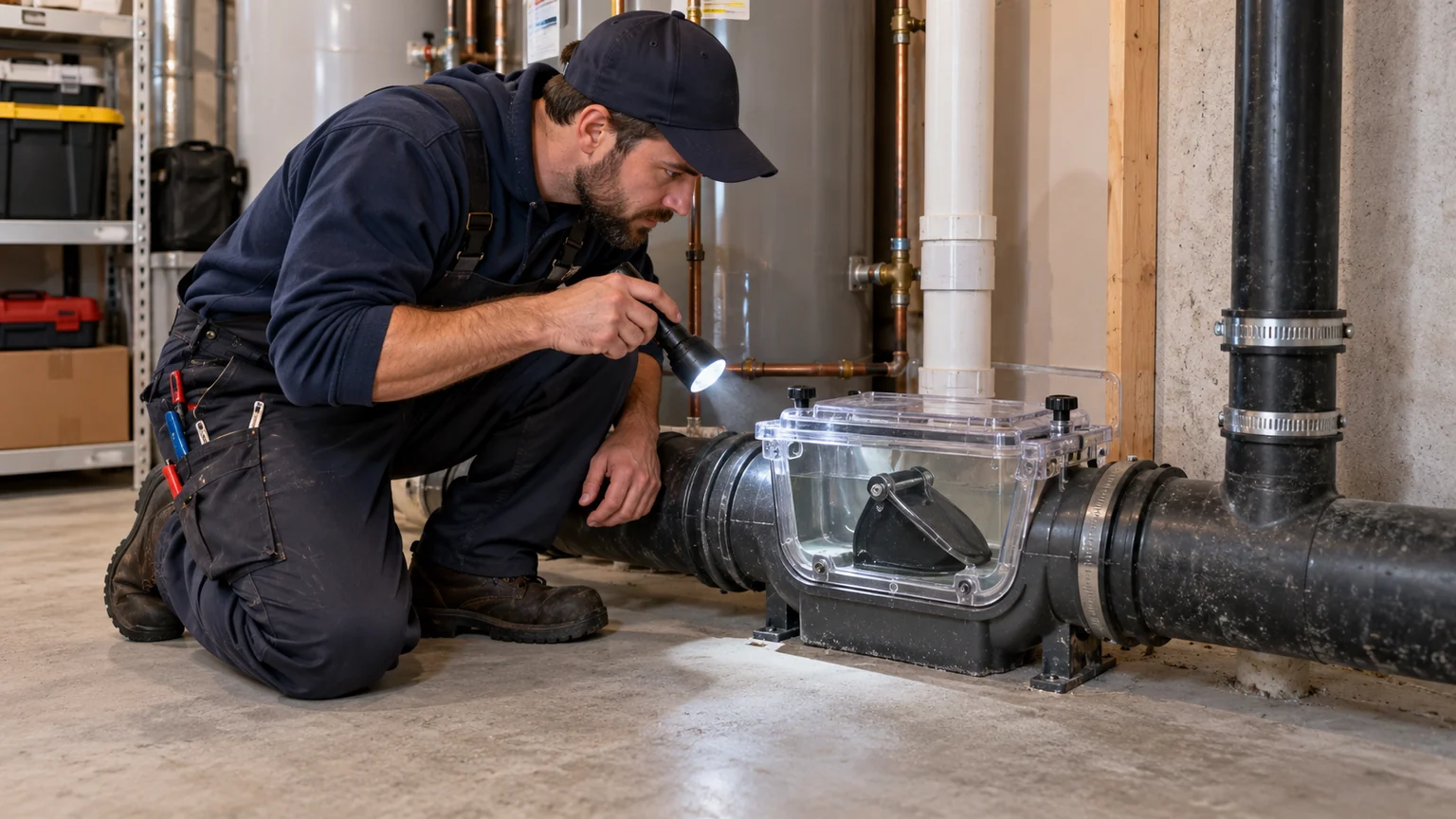
A backwater valve is designed to limit reverse wastewater flow through the drainage connection where it is installed. It can help protect suitable below-grade fixtures, but its operation, placement and maintenance matter. It does not clear a household blockage or guarantee protection from every water event. If a backup occurs, the valve and the drainage route both need assessment.
Understand which direction the valve controls
In normal use, wastewater needs to leave the building through the connected drain. A suitable backwater valve allows that intended direction and is designed to close against reverse flow. The protection depends on how the building drainage is arranged and what fixtures the valve serves. Knowing that a valve exists is not enough to establish that every low fixture is protected.
Ask for the location and the part of the drainage system it controls. Older renovations or added basement fixtures can complicate assumptions about the route. A plumber should assess the actual arrangement rather than relying solely on a homeowner's recollection that a valve was included years ago.
Closed protection does not make continued water use harmless
If reverse flow causes a valve to close, household wastewater may be unable to pass through that protected route. Continued fixture use can then create another problem within the building. During an active backup or a suspected closed valve, reduce water use and ask for specific instructions about the affected fixtures.
Do not repeatedly flush or run laundry to see whether the system has recovered. A valve is not a pump and does not dispose of water added behind a closed barrier. Explain what activities were occurring when the backup began so the assessment can distinguish reverse sewer flow from a restriction on the building side.
Access and condition affect reliability
A valve needs appropriate access for inspection and maintenance. Debris or a mechanical problem can interfere with operation, and a buried or concealed access cover makes evaluation more difficult. Do not open equipment exposed to backed-up sewage yourself. Tell the technician about its location and any previous service records.
Backwater valve assessment should consider the device and the surrounding route. A valve fault can coexist with a blockage elsewhere. Replacing a component without investigating the event history may leave the actual restriction unresolved, just as clearing a pipe does not establish that the valve operates correctly.
Use local guidance without assuming every home needs the same installation
The City of Calgary sewage backup guidance includes backwater valves among measures relevant to below-grade fixtures. That general guidance is not a design for every building. Pipe arrangement, installation requirements and maintenance access need property-specific evaluation before choosing or altering a valve.
If wastewater has entered the home, arrange sewer backup investigation and contact 311 where a possible municipal issue needs consideration. Report whether nearby properties or other units are affected. A valve's presence should not cause the investigation to overlook broader drainage conditions.
A Backwater Valve Information Checklist
Knowing the device's location and scope makes an emergency assessment more useful. Gather existing installation or maintenance records without opening a chamber exposed to wastewater. If the information is missing, say so; do not guess the served fixtures from where the cover happens to sit.
- Device identification: Record the model or type from available documents so the correct instructions can be used.
- Served route: Ask which below-grade fixtures and connections the installation protects.
- Access: Tell the technician whether the cover is accessible or hidden by flooring or stored items.
- Maintenance history: Provide dates and findings from earlier inspections without assuming that old service establishes current operation.
- Event pattern: Describe whether household water use continued and which fixtures backed up while the valve was suspected closed.
The device needs to be understood as part of the drainage system. An installation suitable for one route may not protect a later added fixture, and the existence of a valve does not settle whether the latest event involved reverse flow or a local obstruction.
Compare What the Valve Can and Cannot Address
| Situation | Relevant distinction |
|---|---|
| Reverse flow along the protected route | The valve's placement and operation matter to its intended protection. |
| Household discharge behind a closed valve | Continued use can add water that cannot leave through that route. |
| A local branch blockage | The valve does not clear material trapped elsewhere in the household drain. |
| Water from a supply leak or another source | Backwater protection does not isolate pressurized plumbing or every kind of water event. |
Ask the assessor to explain which situation fits the observations and what evidence supports it. A valve fault and another restriction can occur together, so an isolated component change may not answer the entire backup history.
After service, keep the maintenance instructions with the device information and make sure access remains practical. Do not introduce a generic maintenance interval from a different model when the appropriate instructions are available. Ask how the household should respond if the valve is suspected closed again.
For shared buildings, coordinate these instructions through the party responsible for the common route. Residents need consistent guidance about water use; a valve assessment does not help if connected fixtures continue discharging during an unresolved restriction. Clear records also help a future plumber distinguish device maintenance from a previous sewer repair.
Keep the valve record separate from invoices for general drain clearing so its actual inspection and maintenance history remains identifiable.
Keep the device in the home's maintenance records
Ask for a description of the valve type, location, served fixtures and maintenance instructions appropriate to it. Retain any manufacturer information and inspection notes. Do not use a generic online procedure to dismantle a different model or enter a contaminated chamber. A written record helps a future technician understand the installation and any recurring concern.
After the event, clarify whether the work restored drainage, repaired the valve or both. Also separate plumbing work from assessment of contaminated finishes. Those outcomes answer different questions. If a Calgary basement backup raises concern about a backwater valve, arrange an assessment and obtain clear limits on fixture use: call (587) 333-7742 or request service.