Is It A Hydronic Leak Or A Water Line Leak In Calgary?
A hydronic pipe leak in Calgary involves the fluid circulated through a heating system, while a domestic water leak involves the building's ordinary fixture supply. The fluids, controls and equipment can differ, so the same shutoff or repair procedure may not apply. Have the system and source confirmed, keep people away from hot fluid and wet utilities, and use only the instructions appropriate to the actual equipment rather than treating every pipe as a cold-water line.
Identify the system before assigning the repair
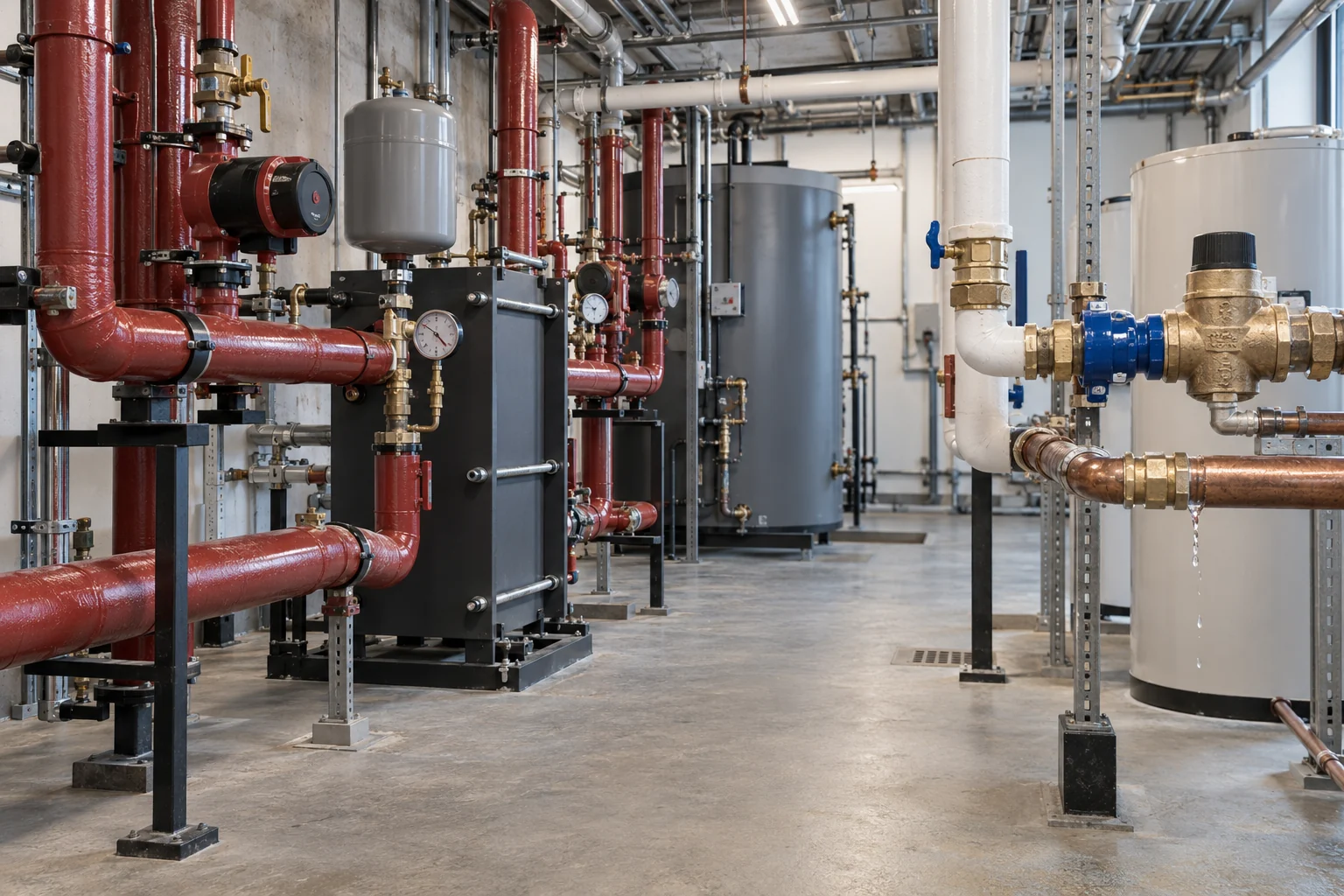
A pipe near a boiler may belong to heating, domestic water or another connection. Its location alone does not prove the role. Building labels, drawings and equipment information can help a qualified technician establish the route. Report visible water, relevant alarms and the affected location without turning those clues into a diagnosis staff cannot confirm. Building staff should also know which hydronic controls to leave alone during a leak while the heating contractor investigates.
For Calgary hydronic pipe leak repair, explain the building arrangement and known heating equipment. Mention whether other heat or water symptoms occurred at the same time. A plumber may need to coordinate with the equipment's appropriate service provider. Repairing an accessible connection and checking the heating equipment are related tasks, but they are not always performed by the same person.
Do not assume the fluid is ordinary cold tap water
Heating systems can circulate fluid under operating conditions different from a domestic fixture supply. Temperature and any fluid treatment need to be known for the actual system. Staff should avoid contact with a release and provide available equipment records to the technician. An unfamiliar liquid should not be handled based on its colour or presumed source.
Manufacturer Caleffi's basic hydronic circuit explanation shows why heating circuits have their own components and requirements. It is technical background, not a universal shutdown instruction for a Calgary building. The technician must use the installed equipment and its applicable documentation. Do not copy a control sequence from a diagram that does not represent the property.
Understand why pressure information needs operating context
Heating-loop pressure can be influenced by system conditions and components. A changed gauge reading is useful information, but it does not identify a leak location on its own. Record a reading only where the display can be seen safely, along with the time and known operating state. Do not adjust equipment to make the number resemble a value found online.
The contractor can decide which checks are relevant. They may need to distinguish an actual release from a pressure or component problem and determine which system boundary applies. Do not refill repeatedly, vent components or change a pressure control as an experiment. Those actions can hide the pattern the technician needs and may introduce other problems without resolving the source.
Keep heating and drinking-water protection separate
A heating circuit may have a connection used for filling or makeup, with protection relevant to the drinking-water supply. Calgary's business cross-connection guidance explains the water-protection context. An employee should not bypass a protective device or create another connection to restore heat during a leak.
Tell the technician about any recent filling, service or equipment change. Provide records where available. If staff do not know the fluid or connection arrangement, say so. An emergency should not turn uncertainty into an improvised hose connection. The appropriate professional can establish what is installed and what work is suitable before the building changes how it feeds the heating system.
Use a heating-loop incident checklist
- Location: room, pipe or equipment area where fluid first appeared.
- System information: available labels, equipment models and current diagrams.
- Operating symptoms: heat loss, alarms or changed readings already observed.
- Fluid: known treatment or service information, with uncertainty stated.
- Controls: normal actions or authorized isolation already used and their effect.
- Hazards: hot fluid, wet electrical equipment or unsafe access.
- Recent work: filling, maintenance or alterations relevant to the system.
- Approval: the building contact authorized for access and interruptions.
Keep the report factual. A gauge reading photographed safely can help, but a guessed diagnosis of expansion-tank failure may not. The technician needs the building's history and observations so testing can establish the actual condition rather than start with an employee's internet troubleshooting conclusion.
Coordinate the interruption with the building's needs
Heating restrictions may affect several rooms or occupants. Management should coordinate the interruption and any necessary temporary arrangements through the responsible professionals. Staff should not disable an alarm or restart equipment to maintain ordinary operations while the source remains unresolved. The availability of domestic tap water does not establish that the heating loop is safe to operate.
Our Calgary commercial emergency plumbing service can discuss the private source work with management. Explain critical equipment or occupied areas and who handles building operation. Do not assume a local leak creates a local shutdown boundary. The actual valves and system arrangement determine which restrictions are suitable and which users need notice.
Repair the source and address the released fluid separately
Ask what component failed, which section was repaired and what checks were performed before the system returned to use. Where an alteration is proposed, clarify relevant approvals through Calgary's plumbing and hydronic permit information. The word emergency does not answer every approval question for wider system work.
Cleanup needs to account for the actual fluid and affected materials. Give the cleanup provider the known system information and any uncertainty. A pipe repair does not automatically clear flooded equipment, dry concealed materials or determine whether an affected room is ready for occupation. Keep those scopes and the responsible parties visible in the incident record.
Keep the distinction in the maintenance record
Record the identified system, failed component, repair boundary and remaining recommendations. Include relevant fluid or service information supplied by the technician. Do not describe a local heating-loop repair as checking every domestic supply line, or the reverse. Accurate scope helps future staff understand which part of the building changed.
If another leak appears, report its location and operating pattern rather than assume it belongs to the same system. Both types can cause building damage, but diagnosis and controls depend on the actual source. A Calgary facility's practical first step is to identify the system with qualified help and protect people, not apply a familiar household water shutoff routine to unfamiliar heating equipment.