Is Pumping Water Out The Same As Fixing A Flood In Calgary?
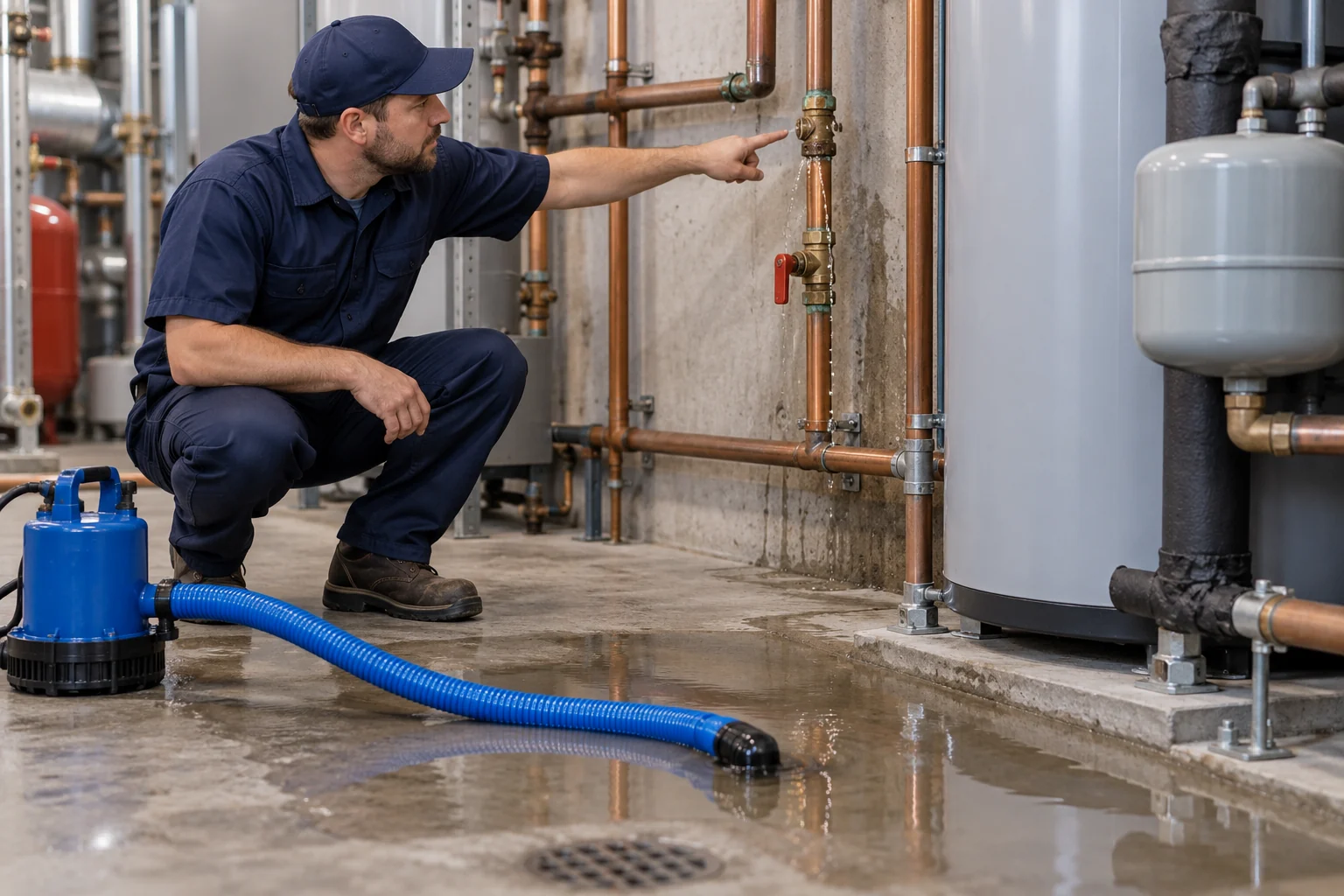
Pumping removes water already collected in an area; source repair addresses why it arrived or could not leave. Both may be needed, but neither should be assumed to complete the other. Tell the contractor whether inflow continues and ask who is responsible for the identified pipe, drainage or other source before normal property use resumes.
Ask the pump truck crew to define the removal task separately from the plumbing work needed to stop new water entering.
Name The Two Different Results
Use two entries in the incident notes: standing-water removal and source work. Add separate cleanup or equipment entries where needed. This prevents a message such as “The pump truck finished” from being interpreted as “The pipe is repaired.” Each contractor’s finding should be tied to its actual scope so the building manager can tell which operations remain restricted and who is handling them.
Describe What Is Still Entering
An active supplied leak can keep adding water, while a drainage restriction can cause another release when fixtures are used. Describe the pattern already observed and keep affected use stopped as advised. Do not run equipment to demonstrate the difference. The response team needs to establish the current source condition without staff creating another discharge into an unresolved area.
Ask Who Establishes The Cause
Ask the first contractor who is responsible for identifying the cause and what information is being passed to that person. If the source remains unknown, record it as under investigation. Do not allow a visible pool to be assigned automatically to a familiar explanation. The proper repair can depend on a finding that removal equipment alone does not establish.
- Record whether water is still entering and what changed after a supply or fixture was isolated.
- Ask who will diagnose and repair the pipe, drain or external source that caused the flood.
- Use pumping to make the assessed area manageable without calling a lower water level a completed repair.
- Keep drying, contamination and equipment assessments on separate handover lines.
Coordinate Work Without Inventing A Universal Sequence
The sequence needs to account for electrical exposure, material, access and continuing water. Appropriate professionals may coordinate tasks, but a general article cannot authorize a particular pumping arrangement. Tell each contractor about work already done and restrictions still in place. Keep the site contact available so a change in one stage is communicated to the people handling another.
Keep Safety Checks With Each Work Area
Source control can prevent new water while leaving equipment that was wetted earlier unexamined. Similarly, removal can reduce the visible pool while a utility concern remains. Tell the relevant technician what became wet and obtain the appropriate handover before reuse. Do not touch wet plugs or restart equipment simply because the room now looks less affected.
Record The Repair Scope And Tests
The record should name the fault, components addressed and checks made by the repair contractor. Keep any further recommendation separate from completed work. A repair quotation is not the completed result, and equipment running is not a general drainage test. If another stage remains necessary, assign it rather than end the incident notes at the first improvement.
Plan Material Drying And Cleanup Separately
Describe moisture in floors, walls or contents from safe access and keep contamination concerns reported. Absorbed water does not disappear when the standing level falls. Ask the appropriate cleanup or drying provider what scope remains and how it will be verified. That work should not be assumed to be included in a plumbing connection repair or bulk-removal visit unless explicitly agreed.
Once water is pumped, the pipe or drain that supplied it still needs a finding. Alberta’s flood cleanup and utility-safety guidance covers affected materials and utilities; record these alongside source repair as separate tasks.
Communicate The Actual Current Status
A useful update might state that the visible liquid was removed, the source repair is complete and a particular room remains restricted for equipment checks. Use the actual findings rather than that example as a stock message. Name the next contact and keep the update available to incoming staff. Different milestones can be accurately reported without presenting them as a premature all-clear.
At the site briefing, ask for two separate completion statements: the volume or area pumped, and the finding on the source that supplied the water. If the second answer is still unknown, leave the water-use restriction in place until the plumbing investigation explains it. Give the next shift the same distinction so a clear floor does not lead to premature fixture use.
Compare A Controlled Source With A Continuing Source
Consider two illustrative situations. In the first, a supplied connection has been isolated and the contractor confirms no new water is arriving at the assessed point. Removal can then be described as collecting the standing water in the named area. In the second, water continues to arrive while removal is arranged. The task is managing that current condition alongside source investigation; it cannot be described as a completed source repair.
| Milestone | Record that supports it |
|---|---|
| Standing pool reduced or removed | Collection area and any inaccessible liquid reported by the removal crew. |
| Source controlled temporarily | Action, observed result and restriction retained. |
| Source repaired | Confirmed component work and relevant test from the repair provider. |
| Area ready for its intended use | Responsible decision based on the remaining equipment, contamination and material findings. |
Do not copy either situation into the record without the relevant observations. An unseen continuing source stays unknown, and a truck attendance record alone cannot answer it.
At the site briefing, assign a contact to every milestone still open. The removal team needs the source status; the source contractor needs to know what collection has happened; the recovery team needs the affected-material account. Sharing those findings keeps the stages coordinated while preserving what each provider actually completed.
If floodwater is still arriving, tell the Calgary team what isolation has changed and what remains open. Ask for separate plans for pumping and source repair. Request service or call (587) 333-7742.