How Does Hydro Jetting Differ From Drain Snaking In Calgary?
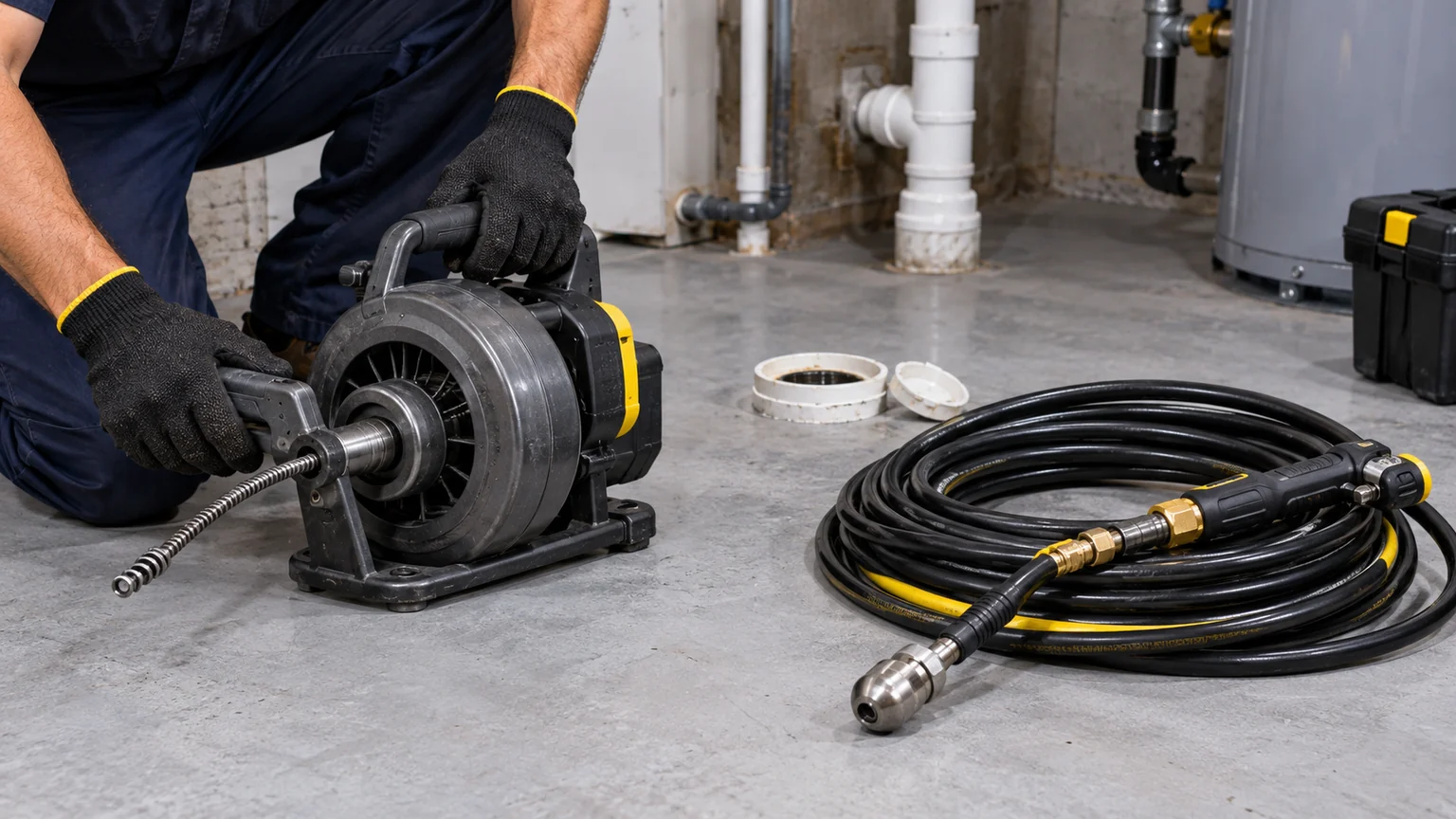
Drain snaking uses a cable and an appropriate head to work through a restriction, while hydro jetting uses directed water to clean material from a suitable drain or sewer. Either may help restore flow, but they do different work and are not interchangeable in every pipe. The right choice depends on the blockage, access and condition of the drainage route.
Opening a passage differs from cleaning a surface
A cable may break through or retrieve a localized obstruction. That can establish flow and help investigate an urgent backup. Depending on the head and material involved, it may not remove every deposit from the pipe wall. A restored passage therefore does not automatically mean a long grease-coated branch has been thoroughly cleaned.
Hydro jetting can address deposits along accessible surfaces, but its use requires an assessment of suitability. Pipe condition matters, especially when damage or displaced joints are suspected. Avoid choosing equipment solely because it sounds more powerful. The objective is effective drainage work without treating an unknown damaged line as if it were a sound one.
The fixture pattern helps select the investigation
A kitchen sink repeatedly slowing after washing dishes suggests a different starting point from several fixtures backing up at once. Tell the plumber where the problem appears and which activities trigger it. Also describe the previous cleaning method and whether flow improved briefly or remained restricted immediately afterward.
If wastewater is actively returning, pause affected fixtures and arrange sewer backup assessment. Keep away from contaminated water. The City's sewage backup guidance provides reporting information when public infrastructure may be involved; choosing a cleaning method does not settle whether the underlying problem lies on private or municipal plumbing.
Inspection can change what is suitable
Camera inspection may help identify deposits, roots or structural conditions once the line can be viewed. An initial backed-up line may need controlled clearing before its surfaces are visible. Ask whether the proposed cleaning is based on a known pipe condition or whether further assessment is needed first.
A broken section is not repaired by washing it. If the pipe is damaged, discuss how that affects cleaning and whether repair should take priority. A method may restore temporary flow while leaving a defect that catches material again. The distinction between clearing, cleaning and structural repair should be explicit in the recommendation.
Different materials call for different expectations
Soft deposits, objects and root growth are not one category of obstruction. The equipment, access and follow-up inspection need to fit the finding. Tell the team about anything flushed or poured into the drain and any chemicals already used. This information can affect handling and prevents a technician from assuming the line contains only ordinary household wastewater.
For recurring kitchen buildup, ask whether the accessible branch and downstream connection were both assessed. Cleaning only the nearest section may leave the route that receives dishwasher or laundry discharge restricted. Hydro jetting and drain cleaning should be discussed in relation to the whole affected path, not just the fixture that overflowed.
Compare Methods by the Work They Need to Do
| Question | Why it matters |
|---|---|
| Is the aim a temporary opening, material removal or inspection preparation? | The intended outcome affects the equipment choice and how success should be checked. |
| What material or defect was identified? | An object, deposit and structural fault are not interchangeable cleaning problems. |
| What is known about pipe condition? | A damaged route may limit a method that is suitable for a sound accessible section. |
| Which branch and downstream connection are included? | Work near the fixture may not address a restriction farther along the common route. |
This comparison avoids assuming that one method is universally superior. A cable can be useful for a particular restriction or access task, while directed water cleaning may be appropriate for another assessed condition. The explanation should connect the method to the finding and the practical limits of the route.
If the line has already been treated, share what was done and the result. A short-lived improvement can indicate that further diagnosis is needed, but it does not prove the previous equipment was wrong. Ask whether the new information changes the recommendation rather than repeating the same service by default.
A Before-and-After Cleaning Checklist
- Before work: Explain the affected fixtures, trigger activities, previous clearing and any chemicals used.
- Source and scope: Ask which route is restricted and what part the planned work includes.
- Suitability: Discuss the pipe condition and any reason the chosen method needs limits or further inspection.
- Result: Ask what material was removed or what passage was restored, using the actual observations.
- Verification: Record the controlled flow check and any follow-up footage appropriate to the work.
- Remaining decision: Note whether structural assessment, another branch investigation or maintenance advice remains outstanding.
For a shared building, include management in restrictions affecting other units. Another resident can keep feeding a common line while one suite believes it has stopped all water use. Coordination is part of practical source control even though it does not identify the obstruction itself.
Keep the equipment description in the report, but do not let it replace the finding and outcome. If a later blockage occurs, the useful comparison is what route was treated and what remained uncertain, not simply whether the last invoice named snaking or jetting. That record supports a more precise next investigation.
Record whether the original symptom involved one fixture or several, since that affects the scope of any future recurrence investigation.
Compare the verification plan, not just the equipment name
Ask how flow will be checked after the work and whether follow-up footage is appropriate. A controlled test should be matched to the route and the problem being addressed. No single brief water test proves that every future blockage is impossible, but a documented check is more useful than relying on the disappearance of standing water.
Keep service notes describing the access point, material removed and any remaining limitations. If the symptom returns, that information helps decide whether another cleaning approach or a repair investigation is needed. Calgary Emergency Plumbing can assess the drainage fault and explain suitable next steps: call (587) 333-7742 or request service.