Is It A Sewage Ejector Pump Or Sump Pump In Calgary?
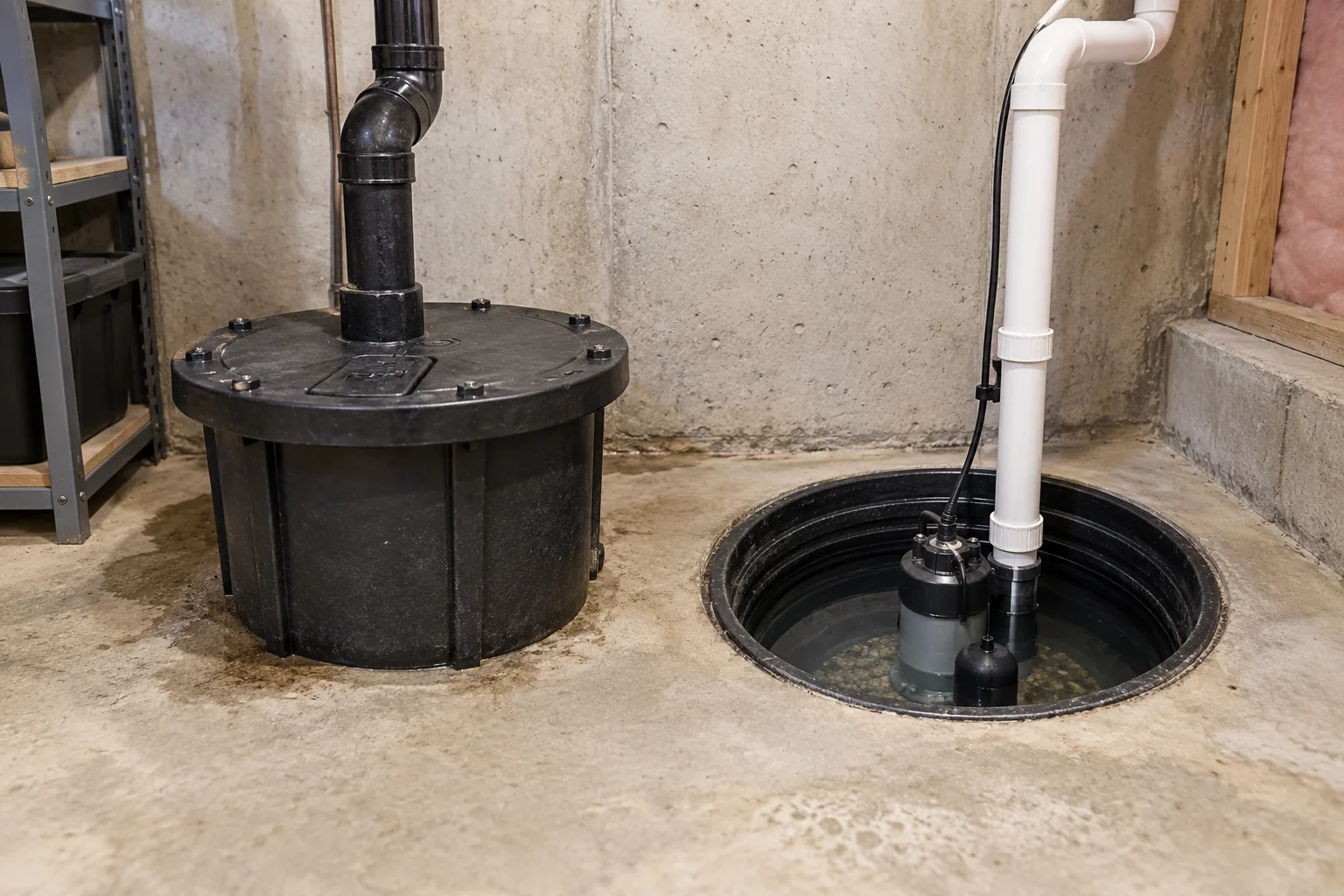
A sewage ejector system moves wastewater from connected fixtures, while a typical sump system removes collected groundwater or other water appropriate to its installation. They serve different drainage duties and are not interchangeable simply because both contain pumps. Identify the actual system, its connections and manufacturer specifications before choosing service or replacement.
Start With What Enters The Basin
A building may have both basins in the same basement, but that does not make their contents or connections the same. Use drawings, equipment labels and a contractor’s findings to identify each system. Do not lift a cover or run a toilet to determine where it discharges. If the records are missing, report the uncertainty and arrange identification as part of the service visit. For the wastewater system, see how ejector-pump failure affects basement washroom drainage.
Compare The Drainage Purpose
The discharge destination is part of the difference. Ask how the installed pump connects to the property’s intended drainage route rather than assume every pumped outlet belongs in the same place. A contractor should establish the actual arrangement before proposing changes. The fact that two systems both remove water from a basement is too broad to guide installation or emergency restrictions.
Do Not Treat Pump Labels As A Swap Permission
Equipment selection can involve the material handled, operating duty, discharge conditions and manufacturer requirements. Request the model and reason for its suitability in the quotation. A product described generally as a water pump does not establish that it can serve sewage fixtures. Leave replacement to the appropriate installation process and ask what surrounding controls or connections are included.
- Identify whether the basin receives plumbing fixtures or groundwater drains.
- Keep sewage fixtures out of use if their basin is rising.
- Report the alarm and pump operation without opening a sealed sewage basin.
- Ask which pump and discharge route the proposed service covers.
Recognize Different Household Restrictions
For a sewage problem, communicate which connected fixtures must remain unused. For a sump concern, report the visible water condition and affected areas without assuming fixture use caused it. If both systems show symptoms, include both locations. A shared power interruption may be relevant, but it does not establish that their subsequent faults or repair needs are identical.
Keep Covers And Electrical Components Undisturbed
Keep staff and occupants away from wet cords and equipment. A comparison article can explain duties but cannot authorize anyone to open or service a basin. Provide the technician with safe access and existing information instead. If a cover or control was disturbed before help was arranged, disclose that action so the current installation is not mistaken for its original condition.
A failed sewage basin belongs in sewage-ejector pump repair; a sewer restriction producing backup requires a separate sewer-backup repair. Name the actual basin before selecting either scope.
A Running Motor Does Not Identify The Drainage Duty
Start a service request with the system's existing description: foundation-water collection or wastewater from named fixtures. Include the location and model rather than ask for a replacement “basement pump.” If neither description is confirmed, request system identification. Ask the contractor to show which inlet sources and outlet route support its finding. Staff should use drawings and the technician's explanation rather than introduce water into the basin to discover where it goes.
Use The Installed Model Documentation
Use manufacturer documents matched to the model. A Liberty or other pump manual may cover a specific system and include requirements that should not be transferred to another arrangement. Ask the contractor which documents apply. The model information supports the repair conversation, while the on-site connections and condition still need to be checked before a part or procedure is selected.
Ask About The Outlet And Connected Systems
A motor running is one observation; removing the intended material through the correct route is the required function. Ask what was examined beyond the motor when symptoms involved poor drainage or rising water. Record any downstream work still needed. Do not reopen a connected washroom merely because the pump can be heard, or dismiss incoming sump water because equipment has power.
A sewage ejector and a groundwater sump serve different plumbing arrangements. If work changes their connections, Calgary’s plumbing and gas permit guidance provides Calgary's permit framework for the proposed installation.
Check model-specific pump manuals for the installed pump before applying a procedure meant for a different type of basin.
Keep Two Systems Distinct In Building Records
Use labels such as “sewage ejector, basement washroom” and “sump, foundation drainage” only after the systems are correctly identified. Keep their model, service date and repair finding separately. That distinction helps a later shift or owner report the right issue. A clear record is especially useful when a contractor new to the building responds to an urgent call.
Compare System Records Before Selecting Service
| Record detail | Sewage ejector discussion | Sump discussion |
|---|---|---|
| Known inflow | Connected wastewater fixtures and any use restriction. | Collected water route and current level or inflow observations. |
| Equipment identity | Installed sewage-duty model and system documents. | Installed sump model and collection-system documents. |
| Discharge route | The wastewater route examined by the contractor. | The intended collected-water outlet examined by the contractor. |
| Incident report | Fixture backup, alarm or basin symptoms already observed. | Level, pumping and outlet symptoms already observed. |
A fictional asset record might distinguish “Ejector E-01, basement washroom” from “Sump S-01, foundation drainage.” Use those descriptions only after the building's own systems have been identified. Two basins beside each other can otherwise receive each other's service notes, leaving the next contractor uncertain which pump was replaced.
Ask the contractor to match the repair report to the asset identifier and duty. Retain the proposed replacement model and the reason it suits that system. This helps prevent a general pump quotation from becoming an assumption that either application can use the same equipment.
If neither duty is confirmed, arrange identification before selecting parts. Tell the provider what records exist and what remains unknown; the source does not need to be guessed to make the first service call.
When arranging help, give the crew the basin served, water type, alarm and affected fixtures. Ask which finding, test and remaining restriction will be recorded. Request service or call (587) 333-7742.