Is It A Sewer Backup Or A Clean Water Leak In Calgary?
A sewer backup brings wastewater back through plumbing fixtures or drains, while a clean water leak starts from a drinking-water supply component. In a Calgary building, they can need different source repairs and cleanup precautions. Clear-looking water does not establish its safety: the source may be uncertain, and supply water can contact dirty materials after release. Keep people away from hazardous water and have the source confirmed rather than judging by colour or smell alone.
Identify how the water entered the room
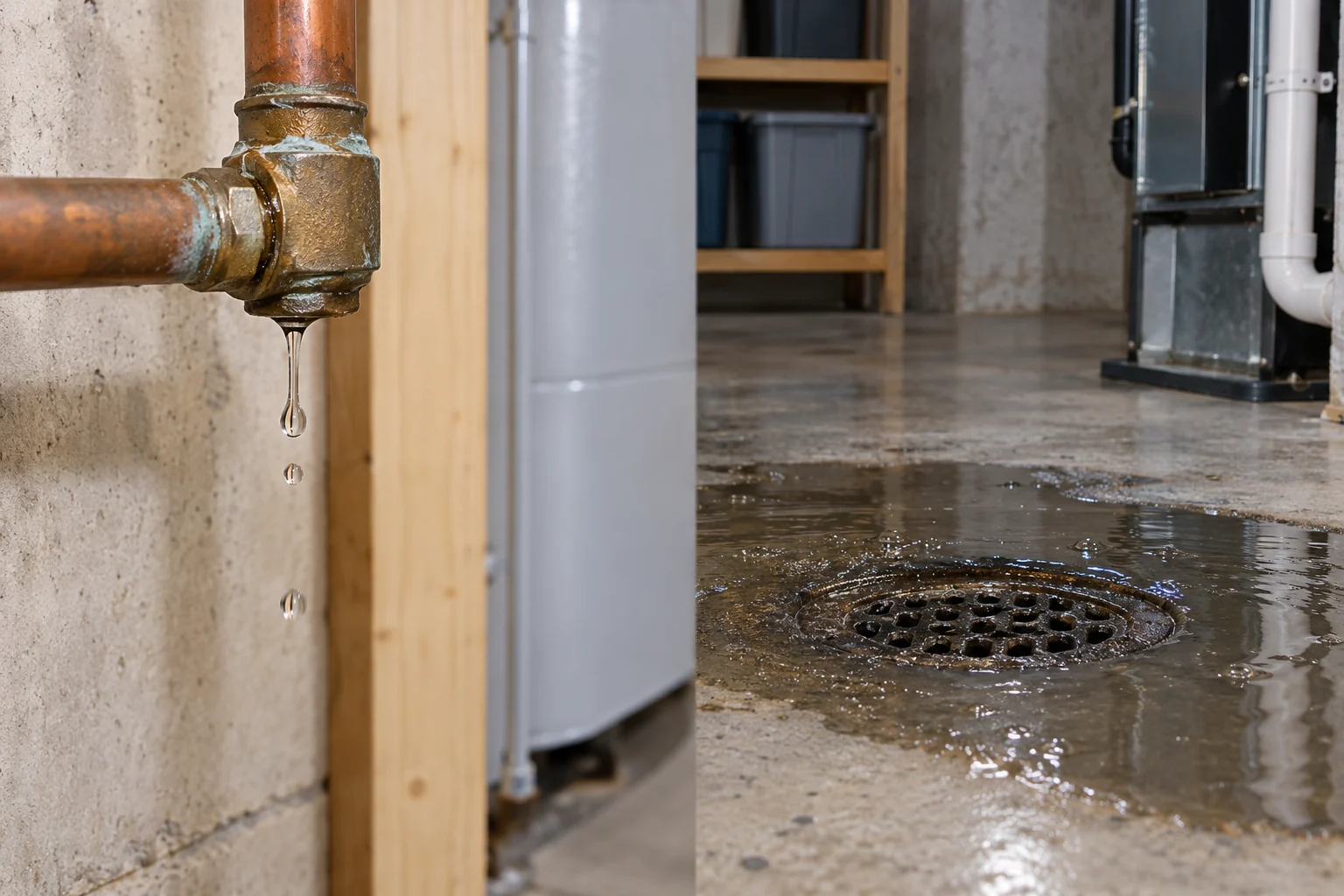
Water rising through a floor drain, toilet or sink points to a drainage event that should be reported as returning wastewater. Water spraying from a visible supply connection points to a different source. Water appearing beneath flooring or through a ceiling may not reveal either route. Describe what you can actually see and where the first wetness appeared without opening the building to prove a theory.
Timing helps too. A backup that follows another fixture's discharge is useful information, as is a leak that continues when fixtures are unused. These observations do not replace inspection. A supply leak can travel along a pipe, and a sewer obstruction can affect a fixture far from the obstruction. The first wet point is not necessarily the failed component or the location where repair will be needed.
Keep contamination concerns separate from appearance
Returning wastewater can contain contaminants without a dramatic smell or dark colour. Do not treat an overflow as clean because it looks like tap water. Keep children and pets away, and avoid moving contaminated items into unaffected spaces. If the source is not confirmed, tell the cleanup professional that uncertainty rather than choosing a reassuring label yourself.
Even a confirmed supply leak can contact building materials, soil or other contents after release. Its treatment depends on the actual affected area and conditions. The source classification is relevant, but it is not a universal household cleanup instruction. A wet electrical outlet or unstable ceiling remains hazardous whether the water began in a supply pipe or came through a drain.
Compare the first source-control actions
| Observed event | First concern | Important limit |
|---|---|---|
| Water escapes from a supply connection | Appropriate known water isolation where safely reachable. | A valve must work without force; unsafe access is a separate emergency. |
| Wastewater returns through a drain | Stop connected discharges and report the backup. | A drinking-water shutoff does not remove wastewater already in the system. |
| Source remains concealed or unknown | Protect people and describe the observed pattern. | Do not open finishes or enter hazardous water to diagnose it. |
This comparison helps explain the call; it is not a substitute for the actual installation's controls. In a shared building, common supplies and drainage require management's involvement. If you do not know what a valve serves, say that. An unfamiliar control should not become an experiment while other occupants may rely on the system. For sewage actually entering a basement, the first steps during a backup include stopping household discharges and keeping people away.
Report a suspected sewer backup through the City process
Calgary's sewage backup guidance explains 311 reporting and how possible City infrastructure and internal plumbing issues are triaged. Give the address, affected fixtures and water behaviour. A public report is useful even when the homeowner cannot identify the blocked section. Keep the actual instructions and reference number, and share them with the private contractor where relevant.
For a confirmed or suspected internal problem, Calgary sewer backup repair can investigate the private source. Do not conclude that rain proves a municipal cause or that one clogged fixture proves a broken private sewer. The report should separate weather timing, observed return and any inspection finding. Those are different kinds of information.
Choose the private service from the source being investigated
A supply release may need repair of a valve, connector, pipe or fixture. A drainage event may need clearing or investigation of the affected route. A repair recommendation should follow the actual diagnosis rather than the appearance of water on the floor. If the source is uncertain, ask how the contractor will establish it and what access may be needed.
Our Calgary water leak repair service addresses private supply concerns. Tell the plumber whether a known shutoff changed the release and whether water still appears with ordinary use stopped. For a drainage concern, disclose any chemical cleaner added. Product residue can change the conditions of the work even when the original event is clearly a sewer backup.
Give cleanup providers and the insurer the same facts
- State the confirmed source, or say that it has not yet been confirmed.
- Record when water was first noticed and whether release continued.
- Describe the rooms and materials reached from safe observations.
- Flag electrical equipment, appliances or unstable finishes that were affected.
- Disclose any sewage involvement and cleaning chemicals already used.
- Keep the source-repair report separate from the cleanup and drying records.
- Ask the insurer what documentation and authorization it requires.
Do not improve the description for a hoped-for coverage result. An insurer decides coverage under the actual policy and circumstances. Likewise, calling water clean does not make cleanup simpler if the conditions do not support that description. Consistent facts allow the professionals to handle the appropriate scope instead of reconciling conflicting accounts later.
Separate plumbing completion from room recovery
After a supply component is repaired, or a drain is cleared, ask what the plumbing work established. Was the source confirmed? Were other relevant sections checked? Does any restriction remain? The answer should identify the completed work and unresolved questions. It should not describe every affected wall or floor as recovered just because the source stopped.
Alberta's flood recovery guidance addresses affected utilities and materials. Qualified checks may be necessary before flooded equipment returns to service. Cleanup, drying and reconstruction have their own scope and records. Keep the household out of restricted areas until the responsible parties have given appropriate instructions, regardless of which type of source caused the initial release.
Keep the distinction useful when symptoms return
A later puddle in the same room could come from another source. Do not assume it is the same sewer obstruction or supply fitting because the earlier incident happened there. Compare the new timing and visible entry point with the previous report. Explain what repair was completed and what remains concealed or outside that work.
For recurring drainage symptoms, give the contractor the clearing history and affected-fixture pattern. For recurring supply wetness, provide the replaced-component details and any control that changed the flow. The practical distinction is source, contact and completed work. It helps a Calgary household ask for the right investigation while keeping safety and cleanup decisions grounded in what actually happened.