How Is An Underground Water Line Leak Located In Calgary?
Professionals locate an underground water line leak in Calgary by establishing the likely pipe route and narrowing the escaping-water source. Acoustic listening and, where suitable, leak-noise correlation can help investigate a buried pressurized line. Site conditions and accessible measurement points affect the choice. A wet patch alone does not pinpoint the break, and locating other utilities is a separate safety step before excavation.
Describe the surface and indoor symptoms together
Record persistent wet ground, unusual water sounds, loss of pressure or changes in the supply. Note when each symptom began and whether they occur together. A source underground can show at the surface away from the damaged pipe, so mark the visible location in a photograph without labelling it the exact break. Explain recent irrigation use or exterior work if known. These observations help frame the assessment, but the plumber still needs to establish what system is involved.
Establish which buried system is suspected
A landscape irrigation leak, sanitary sewer problem and drinking-water service fault require different assessment routes. Water near a sprinkler does not automatically come from its line, and a service leak may not create an obvious outdoor puddle. For underground water line repair, say which supply symptoms accompany the ground conditions. Keep irrigation activity and wastewater symptoms distinct instead of combining every buried-water problem under one service label.
Use Calgary service information
The City's water service leak guidance describes the private-service context and next steps. Water service line information also explains public and private portions. The route and boundary help establish responsibility, but a property-line description is not a leak detector. Ask which section was assessed and what supports a conclusion about the defect location before assuming City-side or private repair responsibility.
Listening and correlation answer different location questions
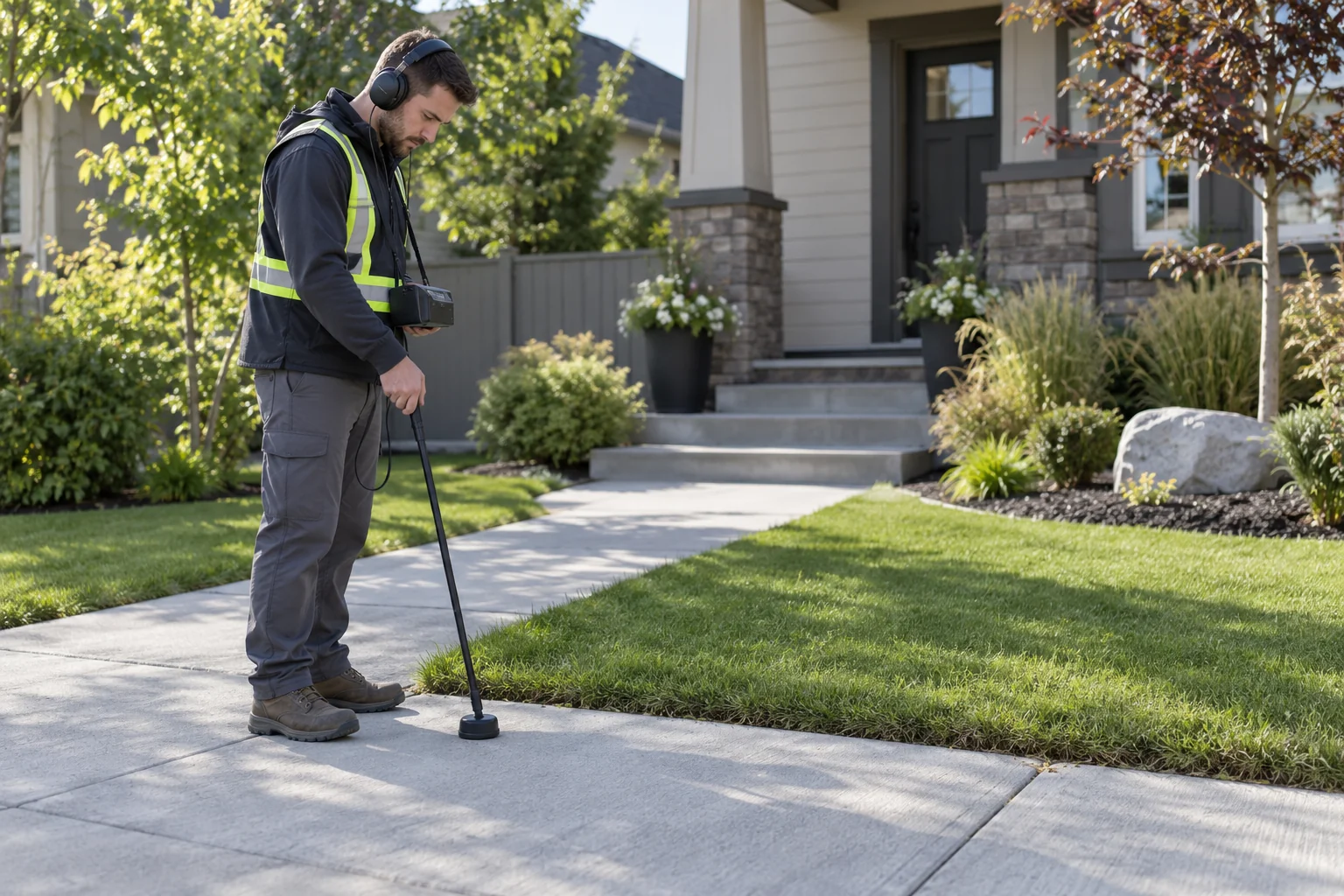
A ground microphone listens for leak noise from above the buried route. Correlation compares recordings made at two points on the pipe: the difference in sound travel time helps calculate a likely leak position. Manufacturer SebaKMT explains the correlation process and why pipe material, diameter, measurement-point spacing and noise quality affect the result. A quiet or masked signal can make detection harder.
The investigator needs reliable pipe information, not merely a straight line drawn between the street and the house. Unknown material or route details should remain uncertainties in the finding. Ask which measurement points were used and whether the result was checked against another observation before repair access was proposed. These are examples of professional techniques, not a claim that every contractor offers the same equipment.
Bring route clues without turning them into a dig location
Existing repair invoices, drawings and photographs taken during earlier work can help explain the service arrangement. Tell the contractor if part of the yard was previously opened or a service section was replaced. Keep the date and source with that information: a recollection of a trench is different from an as-built record.
Where the household first sees water may still matter, but record it separately from the suspected pipe path. Give the investigator both clues without drawing a single conclusion across them. The next decision should follow the combined site evidence and safe access plan.
Keep utilities and excavation separate from homeowner checking
A homeowner should not dig exploratory holes to help locate a suspected water line. Other buried services may be present, and an opening can still miss the actual defect. Ask how the appropriate utility information and site controls will be arranged before access work. An emergency affects the urgency of coordination, not the need for it. Do not operate an unfamiliar outdoor service valve or remove its cover as an alternative to obtaining the right isolation and access arrangement.
Use the location finding to discuss repair choices
Once the affected section is established, ask whether a localized repair, replacement or another suitable option is proposed. Water line repair should be tied to the assessed defect, material condition and access. Our article on repairing a Calgary service line without a full trench explains why an alternative is not automatically suitable everywhere. Compare defined outcomes rather than assuming every location result leads to the same excavation.
Keep a record that distinguishes assessment from completion
Retain the assessed route, identified fault section, proposed work and completed repair checks. Include any restrictions on supply use or areas that remain unavailable. Surface drying after isolation does not establish that the line has been repaired, and a located area does not prove every service component is sound. Documentation makes the next step clear and gives later symptoms a useful reference. The goal is a supported source and access plan, not an occupant's confident guess about where to dig.
A buried-leak assessment checklist
- Symptoms: describe persistent ground wetness, pressure changes or unusual water sounds, including when each was first noticed.
- System: identify known domestic service or landscape irrigation context while leaving uncertain buried routes unlabelled.
- Boundary: ask which service portion is involved and what evidence supports that location.
- Method: understand what the chosen investigation is intended to establish and what remains limited by access or conditions.
- Utility planning: clarify appropriate coordination before any opening, not after a homeowner starts exploratory digging.
- Repair proposal: connect the identified defect to the proposed access and source work.
- Record: retain findings, restrictions and completed checks so a located area is not confused with a repaired line.
Questions before approving the first opening
- Which evidence places the suspected leak on this water service rather than irrigation or another source?
- Is the proposed opening intended to confirm a narrowed location or expose a defect already established?
- Which utility information and site controls are required before work starts?
- What happens if the opened area does not reveal the suspected defect?
- Who will explain and authorize a change to the access or repair scope?
- Does the proposal include restoring paving or landscaping, or only the water line work?
Keep the answers with the agreed plan. A marker identifying a possible leak area does not replace utility coordination, and an opened trench does not establish that the supply can be returned to use. Ask for the actual repair findings and completed checks before treating this stage as finished.