When Should A Backwater Valve Be Checked In Calgary?
Set the inspection and maintenance schedule from the valve’s model instructions, its service history and the building’s drainage conditions. Federal guidance recommends professional inspection and regular maintenance, but a generic annual reminder does not replace the actual model requirements. Ask the contractor to record the required tasks, timing and response to a backup or closure alarm.
Find The Model And Maintenance Instructions
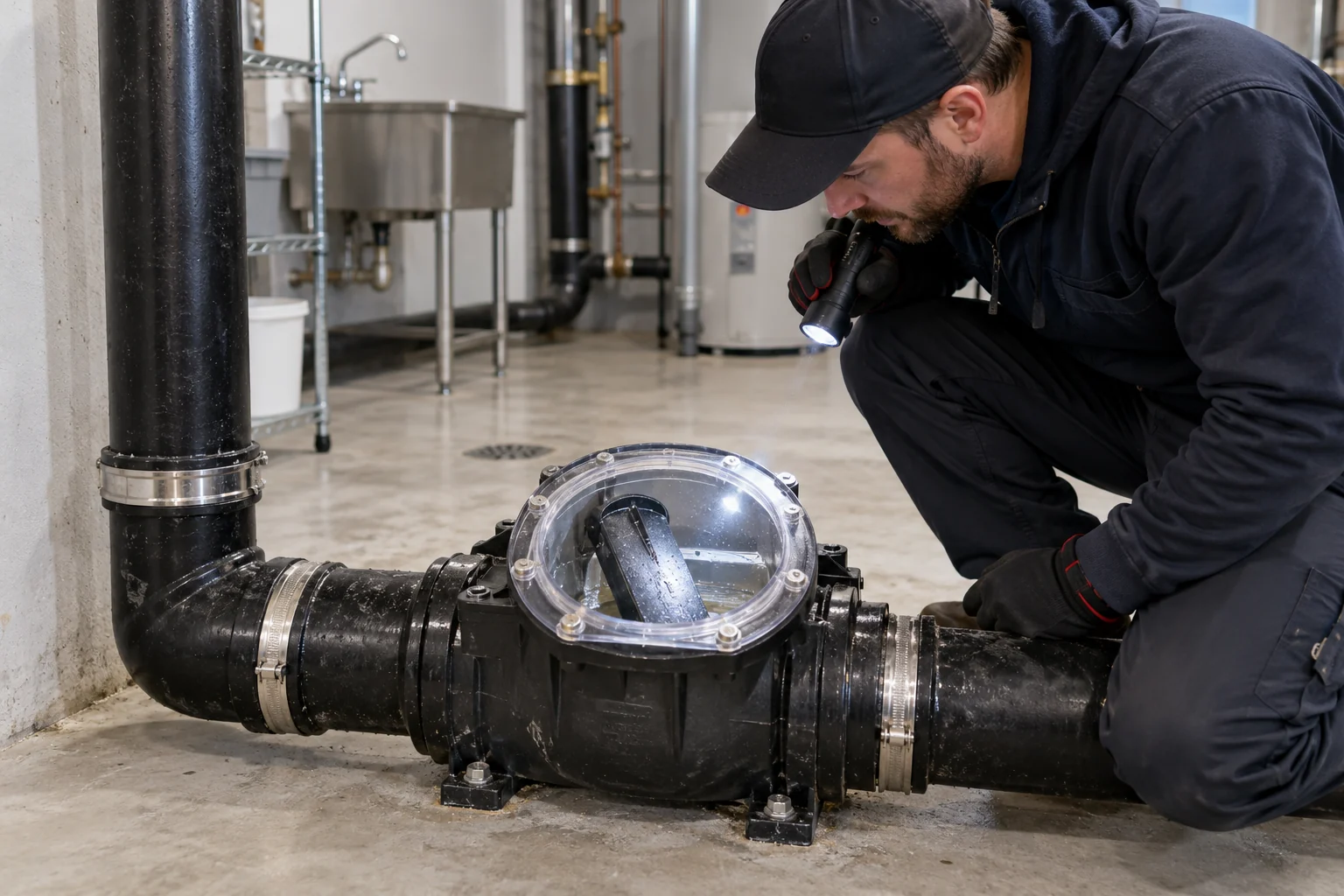
Record the valve location and manufacturer as established by the building records or contractor. If a renovation has covered the access point or the model cannot be identified, include that issue in the service discussion. Do not choose a maintenance process based on a photograph of another model. The plan should describe the installed device and the access it actually has.
Separate Inspection From Cleaning And Repair
A building employee may record an existing alarm indication while a plumber performs a different set of maintenance tasks. Keep those activities distinct. The record should show what was observed, what was serviced and what remains to be repaired. This makes it possible to understand a later backup without guessing whether the previous check meant a brief look or a complete planned service.
Use Guidance As A Starting Point
Ask the professional to turn the applicable guidance into a written schedule for this installation. The federal page discusses maintenance but also directs users to model instructions. Avoid presenting its general advice as a universal commercial compliance interval. Where the building has specific operating conditions or a previous fault, ask whether those facts change the recommended checks or timing.
- Record the make, location and access route for the installed valve.
- Ask what inspection and cleaning the manufacturer requires.
- Note deposits, a stiff flap or prior backup findings without opening a loaded chamber.
- Set the next review based on the actual recommendation, not an invented universal interval.
Keep The Access Area Available
Tell tenants and staff that the valve access area must remain available for the planned work. Do not store stock or create fixed furnishings over it without considering service access. If a restriction already exists, describe it before the booking. Safe access during a routine appointment can differ from access during a backup, so keep both arrangements in the building plan.
Record Findings And The Next Due Task
Use a record with separate fields for the date, work completed, finding and next action. Name the person responsible for booking any remaining work. A repair recommendation should not disappear simply because the routine visit occurred. Keep the contractor’s actual description rather than replace it with a broad maintenance complete label that conceals unresolved components or access problems.
Use backwater-valve repair when the valve is damaged or cannot operate as intended. If the sewer route is backing up independently, sewer-backup repair handles that separate condition.
Review The Plan After An Incident
Report an incident promptly with the first affected fixture and any alarm information. A fixed schedule does not mean the building must wait for the next visit when a new symptom appears. Let the contractor determine the required examination. Preserve the original observation before controls or restrictions change, and tell occupants which connected use remains stopped while the condition is checked.
Assign The Building Responsibility Clearly
Clarify the practical arrangements between owner, manager and tenant: who calls, who provides keys, who may approve work and who receives records. Responsibility under a lease is a separate question that cannot be answered by a generic guide. Even while that is clarified, keep current restrictions and communication clear so maintenance coordination does not leave an active drainage concern unattended.
A scheduled inspection is different from altering or replacing the valve. If the work changes plumbing, Calgary’s plumbing and gas permit guidance helps clarify Calgary approval requirements for that actual scope.
Use Government of Canada valve-maintenance guidance to frame a maintenance plan, then confirm the access and intervals for the installed valve.
Leave Occupants With A Closure Response
Provide the response in simple building terms rather than only a technical manual reference. Staff should know whom to notify, which fixtures are affected by a known closure and where the current status is recorded. Do not tell them to open the valve during an alarm. The incident plan and routine schedule serve different purposes, and both should remain accessible to the people using the building.
Build A Schedule With Tasks And Triggers
A useful maintenance entry identifies what is due, not only a date. Ask the contractor to separate the regular inspection, cleaning or repair recommendation from the response to a new incident. Leave an interval blank until it has been confirmed for the installed model.
| Schedule field | What to enter |
|---|---|
| Device | Confirmed model, location and access route. |
| Routine task | Manufacturer-based work to be completed and the recommended timing. |
| Responsible person | Who books service, provides entry and receives the report. |
| Incident trigger | Who receives a backup or alarm report and arranges assessment outside the calendar schedule. |
| Outstanding finding | Any repair or access problem still needing action after the visit. |
For example, a completed inspection with an unresolved access issue should stay open as a follow-up item. Record the inspection result and assign the access task separately. Do not mark the whole plan complete because a contractor attended. Share the next due task with the incoming building manager so the schedule survives a staffing change.
When the next due date is assigned, put it in the building calendar with the task and access contact. A reminder titled only valve may not tell a new manager which device or appointment is intended. Attach the previous findings or their location. When service occurs, replace the reminder with the confirmed next task rather than automatically repeating the old interval without reviewing the report.
If the appointment is postponed, record who will rebook it and the revised date. Keep any unresolved repair recommendation visible while routine maintenance is rescheduled.
When arranging help, give the crew the valve model, access and previous maintenance or backup history. Ask which finding, test and remaining restriction will be recorded. Request service or call (587) 333-7742.