Is Hydro Jetting Safe For A Damaged Sewer In Calgary?
Hydro jetting should not be assumed suitable for a damaged sewer pipe. A crack, displaced joint, weakened section or collapse can change the cleaning risks and may require repair before further cleaning. The condition and access need assessment first. Cleaning can remove material, but it cannot restore missing pipe structure or correct every alignment problem.
Damage changes the purpose of the visit
A sound pipe with deposits presents a cleaning question. A damaged pipe presents a structural question as well: can it safely carry wastewater and can cleaning equipment pass through it appropriately? Treating both situations as the same service ignores why material may be collecting at the damaged area in the first place.
Tell the plumber about any previous camera findings, excavations or repairs. Provide the report rather than only the phrase that the pipe is old. Age alone does not describe the current defect, and an old repaired fault may differ from a newly observed problem. The method should be based on the present condition and the actual route.
Inspect the accessible pipe without overstating the view
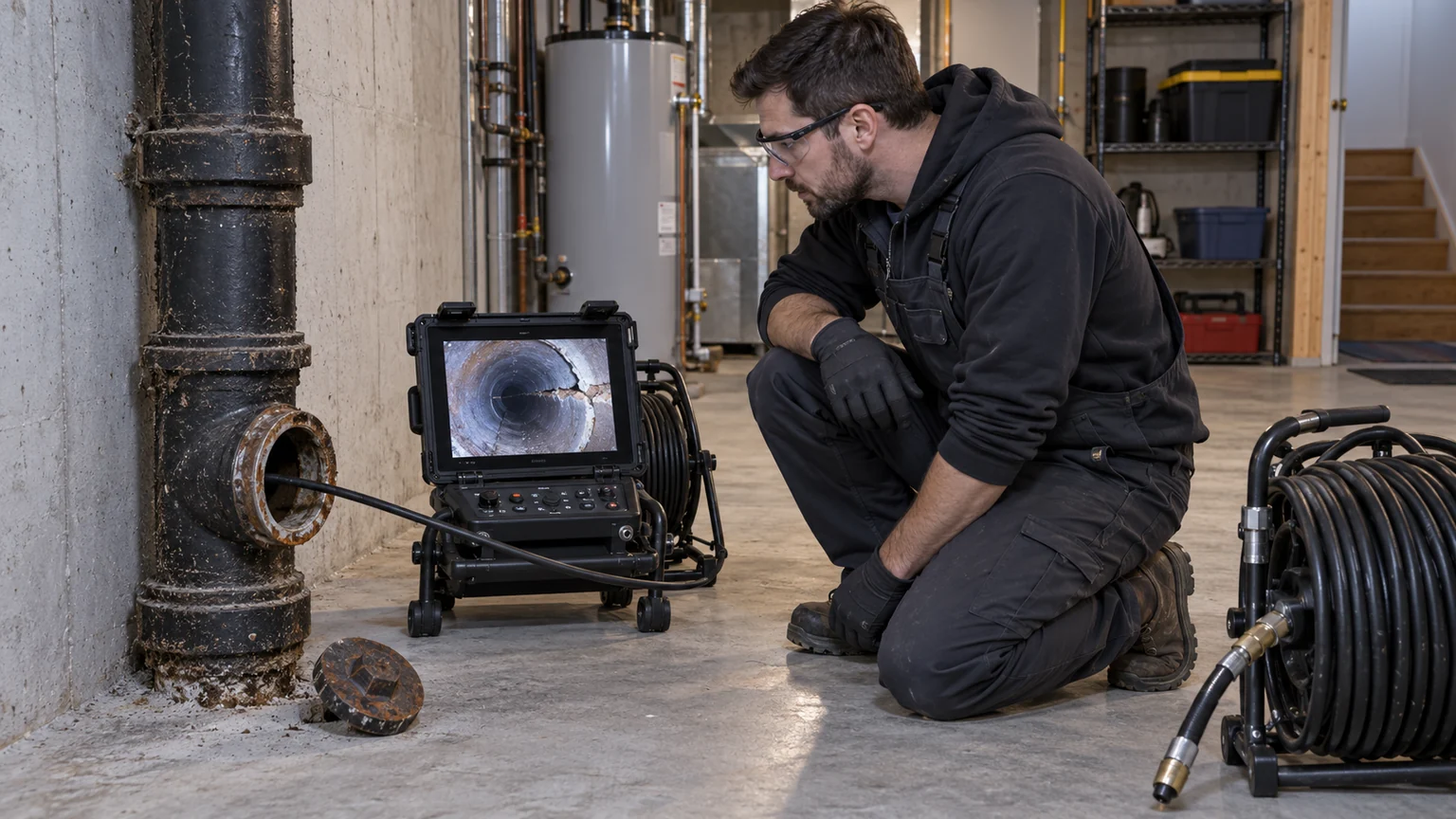
A camera assessment may show damaged surfaces, open joints, offsets or roots, but wastewater and deposits can obscure parts of the pipe. Ask which sections are directly visible and which remain uncertain. If preparation is needed, discuss an appropriate next step for obtaining a useful view rather than assuming an aggressive cleaning pass is necessary.
A camera that cannot travel farther has not proved the condition beyond that point. A stopped tool can reflect several circumstances, including a severe restriction or a bend. The report should identify the observed limit and explain what additional investigation can clarify the repair question.
Ask what cleaning is expected to accomplish
If cleaning is proposed despite a known defect, ask why it is considered suitable and what limits apply. Is it intended to restore temporary flow, prepare a particular inspection or remove deposits from an otherwise assessed section? Those purposes differ from a complete solution to a structurally failed line.
Hydro jetting does not seal a leaking joint or rebuild a collapsed section. When structural repair is needed, discuss sewer line repair options and how access, alignment and remaining condition affect them. Avoid selecting a repair method from the equipment name rather than the evidence.
An active backup still needs immediate source assessment
Reduce water entering the affected sewer when wastewater is returning indoors. Pause laundry, dishwashing and showers connected to the problem route. Keep people away from sewage, and do not remove a cleanout cap yourself to release the pressure. Report any chemicals that have been added to the drainage system.
The City of Calgary sewage backup guidance explains local reporting and the role of 311 when a possible public infrastructure problem needs consideration. A damaged private line and a municipal blockage can require different coordination. Describe any similar symptoms at neighbouring properties or other units instead of assuming the private pipe is the only cause.
Questions to Resolve Before Cleaning a Known Defect
If a damaged section has already been documented, ask for a method-specific explanation before authorizing another cleaning pass. The condition may affect access, equipment travel and the purpose of the work. A general statement that the line needs cleaning is not enough to account for the known structural finding.
- Which defect is confirmed? Identify the directly viewed condition and distinguish it from a suspected problem beyond the camera's endpoint.
- What would cleaning achieve? Specify temporary flow, deposit removal or preparation for a further assessment.
- Why is that method suitable? Ask how the observed material and pipe condition support the choice.
- What might change the plan? Identify a limit or further finding that would stop cleaning or require a different investigation.
- What remains a repair issue? Keep the structural fault separate from the material that cleaning may remove.
The answers should fit the actual route. A method used successfully on another property does not establish suitability for your damaged pipe. Neither does a brief flow improvement demonstrate that the weakened section has been restored.
Keep Temporary Flow and Structural Correction Separate
| Outcome | What to document |
|---|---|
| A passage was opened | The access point and restriction encountered, plus limits on continued use. |
| Deposits were removed | The treated section and any newly visible pipe condition afterward. |
| A structural repair was selected | The defect and location supporting the method, with scope and access requirements. |
| The repair was verified | A check matched to the corrected section and the remaining inspection limits. |
Use these distinctions in communications with residents or managers. If the first action is temporary source control, say so explicitly. Someone returning to the property should not interpret the absence of standing wastewater as proof that every damaged component has been repaired.
Ask how the next stage will be coordinated if cleaning reveals more of the fault. New evidence can change a recommendation, and the revised scope should be explained before it is treated as an approved repair. This preserves a clear connection between observation and action.
Finally, retain the original and follow-up footage. Comparing them helps establish which surfaces were previously hidden and what condition remained after material removal. It also prevents a later discussion from confusing a pre-cleaning restriction with the final assessed pipe condition or describing an unviewed section as a verified result.
Ask whether known damage affects the proposed access point as well as the cleaning route, and keep that limitation in the report.
Make the next decision conditional on the findings
Ask for a written explanation of the defect, inspection coverage and proposed action. If the assessment cannot establish the condition safely, it should say what remains unresolved. A sensible plan can include further diagnosis before choosing equipment, particularly where the wrong cleaning method could complicate an already damaged section.
After the work, keep the inspection and repair records together. Verification should address what was actually done: flow restoration, cleaning or structural correction. These are related outcomes, but one does not automatically establish the others. For a Calgary sewer fault with suspected damage, arrange an assessment that addresses the pipe condition: call (587) 333-7742 or request service.