What Access Does A Hydrovac Crew Need In Calgary?
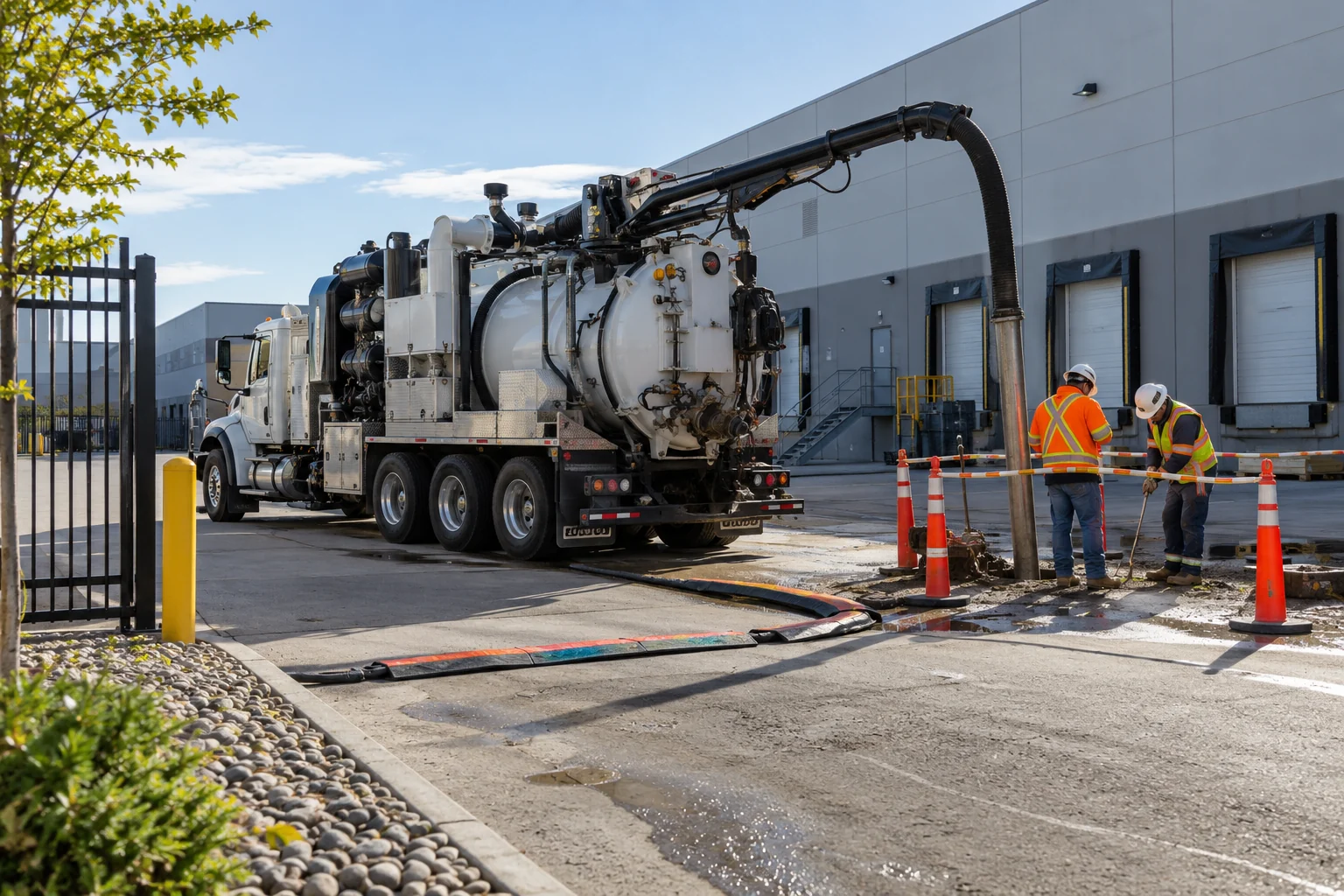
A hydrovac crew needs an assessed vehicle approach and operating area, access to the planned exposure point, the relevant utility and site information, and a contact who can coordinate permissions and occupant restrictions. Tell the contractor about gates, surface condition and traffic before arrival. Do not assume that any open parking space is suitable for the truck or excavation.
Give The Correct Entrance And Site Contact
Give the entrance description and a reachable phone contact before arrival. A truck sent to a visitor entrance may face different access from one entering a service yard. Tell the crew about locked gates and who will open them. Avoid assuming that the driver can find the correct area from the company name alone, particularly where several tenants share the property address.
Describe Vehicle And Operating Restrictions
Provide the restrictions you know without declaring the route suitable for a particular vehicle. The crew must assess its equipment and the surface condition. Tell them about visible leak-related weakening, tight passages or overhead features. Do not move barriers or direct a truck across uncertain ground merely to create apparent access; the arrival plan should account for those conditions.
Separate Truck Position From Exposure Access
Discuss the work point and operating area together. A convenient space for the vehicle may not provide the arrangement needed to expose the intended section. Let the contractor determine the workable setup for its equipment and scope. Keep loading activity and other site users out of the proposed area according to the agreed plan, rather than improvise around the vehicle after it arrives.
- Give gate dimensions, loading rules and the actual work location.
- Describe ground firmness, slope and overhead or buried constraints.
- Confirm which areas staff and deliveries must avoid during setup.
- Ask who will repair the exposed pipe and restore the work area.
Provide Utility And Work-Area Information
Have the responsible person provide the reviewed locate and site information, including any known private infrastructure. Access permission and utility clearance are different parts of the plan. A clear yard is not evidence that nothing is buried there. If documents are uncertain or a response is outstanding, tell the contractor before work rather than leave the crew to discover the gap at the exposure point.
Coordinate Tenant And Public Movement
Notify tenants, security and delivery contacts about the actual affected routes. Explain where the restriction is located and who gives updates without promising a fixed completion time. People should not have to decide whether to pass a hose or barrier while making a routine delivery. Any alternative route should be appropriate to the site, not a shortcut over softened ground near the leak.
Plan hydrovac service around the actual equipment route, not just the building address. If a water line is exposed, underground water-line repair is the follow-on repair.
Confirm Permission And Work Authorization
Confirm who can approve the agreed excavation scope and any later change. The staff member meeting the truck should know how to reach that person. A tenant may arrange a call but not control shared ground or a utility boundary. Establish that practical authority early so the crew is not asked to begin work based on permission from someone who does not hold it.
Discuss Material Handling And The Next Trade
Tell the crew what is known about the material to be removed and which trade receives the exposed-line finding. Unknown contents should remain described as unknown until addressed through the appropriate process. Pipe repair, material handling and excavation can be distinct work scopes. Keep those roles explicit rather than assume a truck booking includes every stage needed to restore the property.
A truck can reach a commercial site while its work point remains close to buried services. Use Utility Safety Partners’ ground-disturbance guidance with the actual staging and excavation plan before opening the ground.
Keep Restrictions Through The Handover
At the end of the exposure visit, ask which routes remain restricted and who is responsible for the pipe repair or reinstatement. Pass that status to the next shift and site contacts. A truck leaving is not evidence that the area is ready for public access. Record the completed scope and outstanding tasks so the final reopening decision follows the actual condition.
Send An Arrival Brief The Crew Can Assess
| Record Or Decision | Useful Detail |
|---|---|
| Entrance | Give the gate or yard name, opening contact and any known restrictions. If dimensions are available, identify how they were obtained rather than guessing a clearance from a passenger vehicle's access. |
| Work point | Describe the exposure location in relation to a fixed site feature. Include an existing site plan or a photo from safe access where useful; do not enter weakened ground to improve the description. |
| Operating area | Identify loading activity, occupied paths and visible surface concerns near the proposed setup. Ask the contractor to assess staging and hose access for its actual equipment. |
| Site authority | Name the person who can authorize work and the person greeting the crew. If they are different people, provide a way for the arrival contact to reach the decision-maker. |
A hypothetical brief could read: ‘Enter through the north service gate; security has the key; suspected line is beside the rear loading area; deliveries normally use that yard; a wet surface patch remains beside the work point.’ It should ask the contractor to confirm a workable arrival plan, not declare the route safe for every hydrovac vehicle. Add any known opening restrictions and the reachable site contact.
If the entrance or tenant access changes after booking, send a revised brief through the agreed contact. Mark which instruction it replaces. This prevents security from directing the truck to an outdated staging area while tenants receive a different route notice. Keep a copy for the next shift so arrival and occupant instructions stay consistent. Where safe photos are available, label the entrance and work point separately. A close-up of wet pavement may not show how to reach it; a gate photograph may not show the affected yard. Send those descriptions to the contractor for assessment without moving barriers or entering the leak area to create a better view.
When arranging help, give the crew vehicle access, work point and site restrictions. Ask the contractor to confirm staging, the crew contact and any route changes before arrival. Request service or call (587) 333-7742.