What Is A Plumbing Emergency For A Calgary Business?
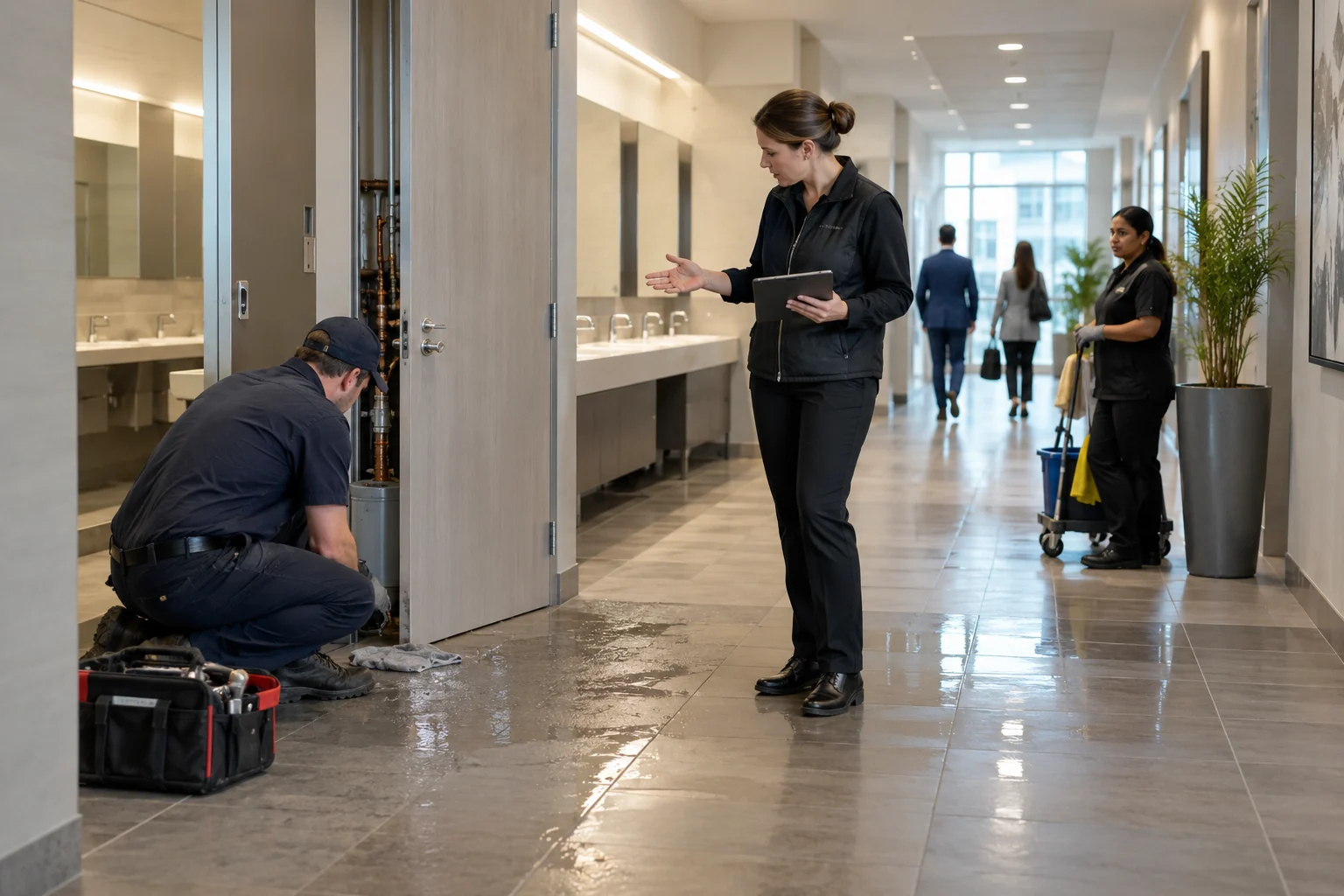
An emergency plumbing problem for a Calgary business is an active leak, wastewater backup or essential-service failure that threatens people, property or safe operations. Call an emergency plumber if water keeps escaping, sewage is entering the premises or a plumbing failure leaves essential washrooms or equipment unusable. Keep staff and customers out of the affected area and notify the manager or landlord. Being able to keep serving customers does not mean the leak can wait.
Consider the function of the affected space
A leaking supply connection in a locked storage room creates a different immediate exposure from wastewater rising through a drain in an occupied food preparation area. Both need attention, but the response must account for who can enter the room, what equipment is nearby and which activities depend on the plumbing. The visible size of a puddle is only one part of that assessment. The general definition of a plumbing emergency in Calgary is a starting point; a business must also consider safe operations and affected customers.
A loss of water may interrupt sanitation, equipment operation or washroom use without producing any visible flooding. Describe the business function to the service provider, including whether the fault affects one fixture or the whole premises. Avoid promising customers that operations can continue until the responsible manager has assessed the actual conditions and any relevant trade or health guidance.
The same plumbing failure can be more disruptive during a busy shift than after closing, but an empty building does not eliminate property risk. Water can keep travelling while no one is there to notice a change.
Five problems to report right away
- Water is still escaping: a continuous pressurized leak, spreading ceiling stain or repeated overflow needs source control. A bucket can overflow while staff are busy elsewhere; it does not stop the leak.
- Wastewater enters usable space: stop contributing fixture use and keep people away. Clearing the line and addressing contamination are separate scopes.
- Electrical equipment may be wet: prevent access and arrange the appropriate safety assessment. Do not send staff into water to reach switches or plugs.
- Building materials look unstable: keep clear of sagging ceilings or compromised areas. Removing wet material to investigate can introduce another hazard.
- Essential service is unavailable: explain which operations rely on the affected water or drainage system so the response can account for the business's needs.
These observations help describe urgency; they are not a remote determination that a particular area is safe. When a person is in immediate danger, emergency services take precedence over a routine plumbing booking. Tell the plumber which hazards are known and which are still uncertain.
Has the water really stopped
A familiar, working isolation valve may stop an accessible fixture leak. If staff can operate that valve safely and within their role, communicate which branch is closed and prevent another user from reopening it. A leak that continues afterwards, a valve that also leaks or an unknown common supply means containment has not been established. Report that limitation directly.
In a multi-tenant property, an unfamiliar valve can affect other units. Contact the building manager or authorized property representative rather than experimenting with common controls. The repairer needs the building's access and isolation information to decide how source control can be coordinated.
For a confirmed active supply fault, commercial water leak repair in Calgary is relevant. If sewage is returning through drains, commercial drainage and sewer backup repair addresses a different system. Stopping supply use does not remove a downstream blockage.
Use a short response sequence that staff can follow
- Make the affected area unavailable and direct people through a dry, safe route.
- Stop the activity adding water or wastewater if that can be done without entering the hazard.
- Notify the duty manager and property contact, identifying the active release and access limitations first.
- Arrange the appropriate trade response and share any known isolation plan or building drawings.
- Document visible conditions from a safe position and keep one person responsible for updates.
Do not assign staff unfamiliar repair tasks to keep the business running. Opening equipment, dismantling a pressurized connection or removing a contaminated pump cover can extend the problem. Alberta's flood cleanup guidance provides useful safety context for water-affected spaces, but a business may also need workplace, equipment or health-specific advice appropriate to its operation.
Make the service call specific enough to plan access
Provide the Calgary address, unit number, entrance instructions and a contact who can authorize access. Explain whether customers are present, whether the leak crosses units or floors and whether a mechanical room is controlled by the landlord. Mention electrical proximity, wastewater and unstable materials early. These details help the plumber reach the right room and coordinate with the person who has the keys.
Share photographs and equipment labels only when they can be obtained from a safe position. If the supply has been isolated, say by whom, which valve and whether the visible release stopped. Avoid reporting that the property is safe merely because the floor has been mopped.
Separate source repair from the reopening decision
A repaired fitting or cleared drain may resolve the plumbing fault while moisture, contamination or damaged equipment still needs assessment. Ask what was tested, which service is restored and what remains restricted. The responsible business manager should coordinate any additional inspections or advice needed for its premises.
Keep repair notes with the incident record and communicate them to the next shift. If the same symptoms return, use that history to arrange investigation rather than repeatedly treating the event as an isolated overflow. A clear record supports targeted follow-up and reduces confusion about what was actually repaired.
Questions for the manager before operations resume
- Has the plumbing source been identified and controlled, rather than just the visible water removed?
- Are staff aware of any fixtures or areas still unavailable?
- Does equipment or electrical exposure require another assessment?
- Has wastewater contamination been distinguished from clean-supply leakage?
- Who will inspect or report another change after the repairer leaves?
Record the answers as current findings, not guarantees about hidden conditions. A trade's plumbing test covers the work it inspected; it does not automatically establish that every affected finish or piece of equipment is ready for use. The business contact needs to bring those separate findings together.
Where the incident affects a tenant or neighbouring unit, share relevant access restrictions and repair status through the property manager. That communication prevents a second occupant from adding wastewater or reopening a common supply before the coordinated repair is complete.