What Does A Rumbling Hot Water Tank Indicate In Calgary?
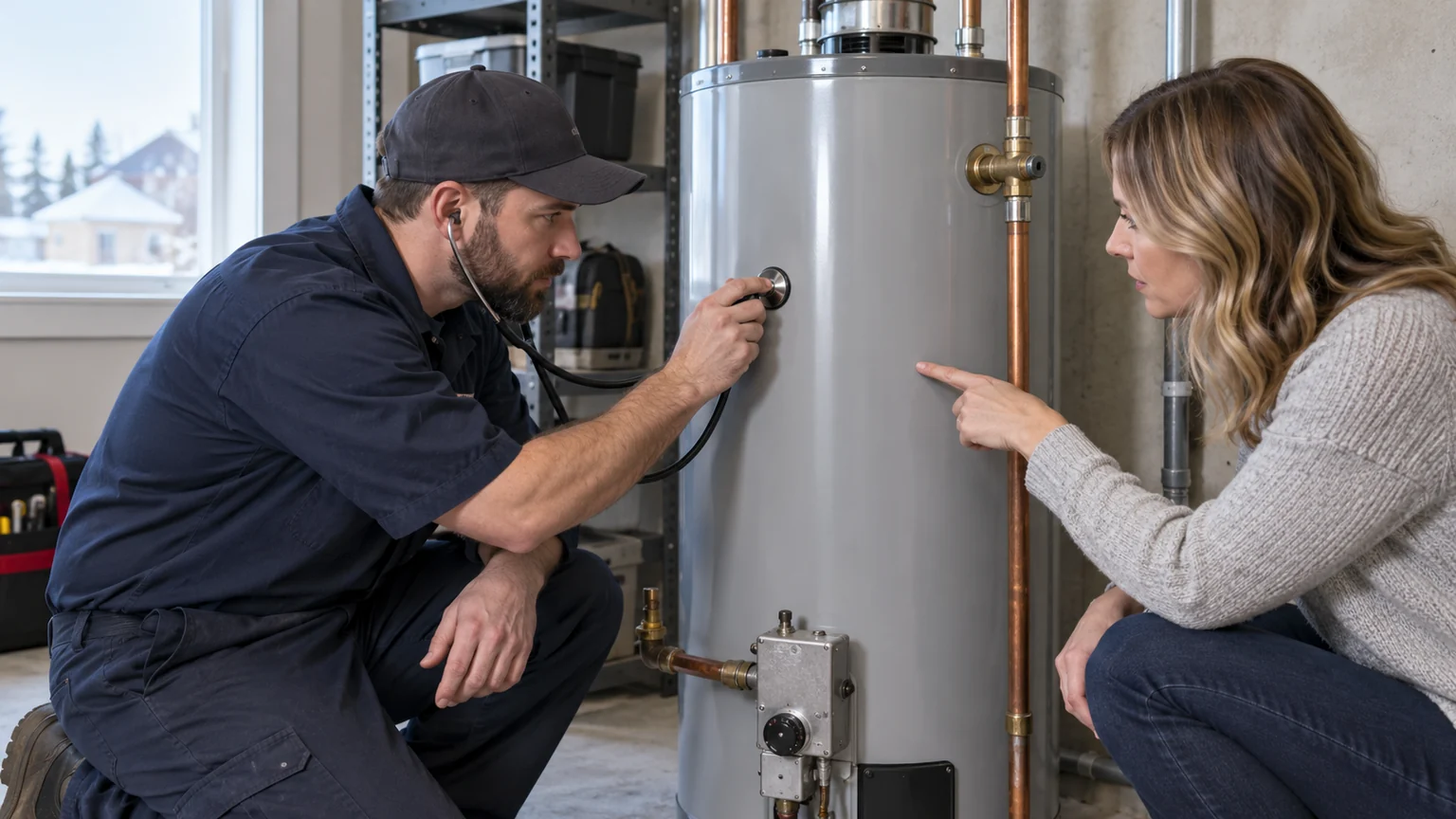
In Calgary, a rumbling hot water tank may contain mineral sediment that traps water beneath it. As that water heats and boils, steam pockets can make rumbling or popping sounds. Other noises can come from nearby pipes or equipment, so sound alone cannot identify the fault. The timing, exact sound location, hot-water performance and any visible leak help a technician distinguish a maintenance issue from a different fault.
Why Sediment Can Make a Tank Rumble
Minerals dissolved in water can leave deposits in a storage tank. Rheem explains the sediment and steam-pocket mechanism: water beneath a sediment layer can boil during heating, producing the noise people describe as popping or rumbling. This explanation applies to the possible mechanism; it does not establish how much sediment is in your tank or which service it needs.
Tell the technician whether this is a storage tank or another type of heater, and provide its model number. An explanation involving a layer of sediment at the bottom of a tank should not be applied automatically to every appliance. Past maintenance, a recently changed noise and the stage of the heating cycle all help determine what to inspect. Have the service provider choose maintenance from the manufacturer instructions rather than treating every rumble as a reason to drain the unit.
Timing Is More Useful Than a Sound Label
Describe whether the noise occurs during heating, after heavy hot-water use or at unrelated times. Words such as rumbling, banging and clicking can mean different things to different listeners, so the sequence and associated symptoms are important. A recording made safely can help communicate the complaint.
Do not run extra cycles to make the sound easier to capture. If the equipment is leaking, producing unsafe temperature or showing another fault, report that condition separately. A noise complaint should not distract from a source or safety issue that changes the immediate response.
Compare Noise and Hot-Water Performance
Tell the technician whether usable hot water, flow or temperature changed near the start of the noise. A sound without a performance complaint and a sound paired with repeated loss of service may lead to different assessment questions. Neither pattern establishes the internal cause remotely.
Water heater service assessment should connect the observed operation to the identified appliance. Provide model information and existing service records so the investigation starts from the equipment actually installed rather than a general explanation for all noisy tanks.
Maintenance Needs Depend on the Appliance
A heater may have model-specific maintenance instructions and serviceable components, but a generic online procedure should not be applied to every unit. Opening, draining or altering equipment without identification can create another problem. Ask what assessment supports the proposed maintenance or repair.
The Rheem homeowner resource centre provides manufacturer documents that can be matched to the relevant model. Those records can help a homeowner identify the equipment and retain proper instructions. They do not establish that a particular sound has the same cause as a sound described for another appliance.
A Rumbling-Tank Observation Checklist
- Operating stage: State whether the noise accompanies heating, follows heavy use or appears while the unit is otherwise idle, based on ordinary observations.
- Duration and change: Explain when the noise began and whether it became more frequent or different. Avoid inventing a precise history where it is uncertain.
- Hot-water symptoms: List loss of heat, changed flow or unsafe temperature as separate observations rather than assume one shared cause.
- Visible condition: Report leaks, discharge or messages safely visible from outside the equipment.
- Previous work: Provide maintenance and repair records, with the actual components involved if known.
- Access and hazards: Mention wet electrical areas, unsafe access or an immediate threat before planning routine service.
This information helps select an assessment, not a part order. If the sound cannot be reproduced safely at the visit, the report should retain that limit rather than claim a cause from a short description alone.
Compare the Possible Next Decisions
| Assessment outcome | Question to ask |
|---|---|
| A serviceable operating condition is identified | What suitable work addresses it and how will the result be checked? |
| The sound remains unexplained | What further observation or diagnostic step would clarify it? |
| A leak is directly observed | Does source control need separate repair before other maintenance? |
| A non-serviceable defect is established | What evidence supports replacement and what installation work is included? |
| Another component nearby produces the sound | How was the source distinguished from the heater itself? |
The purpose is to prevent the noise label from becoming a universal replacement recommendation. Equally, do not assume every sound can be resolved with routine maintenance if an assessed defect requires another approach. The finding should support the action.
Separate a Leak From the Noise Investigation
If water appears beside the tank, heater leak assessment may be relevant. A puddle can come from a connection, valve, tank or another nearby source. Its presence needs diagnosis rather than being folded into a general statement that the tank is rumbling.
Stay away from hot discharge and water close to electrical equipment. The appropriate isolation plan should match the appliance and condition. Source repair does not establish the state of affected materials, so keep those impact questions separate in the incident record.
Evaluate Replacement on Evidence
If tank replacement is recommended, ask which confirmed condition supports it and whether other options were suitable. The appliance's age and service history can be context, but the sound alone should not substitute for identifying the current problem.
Discuss the actual installation scope, connections and verification. Avoid unsupported promises about a standard lifespan, a guaranteed silent result or a fixed recovery period. A proposal should be reviewable against the equipment and assessed defect.
Keep the Noise Source Identifiable
A mechanical room can contain several sources of sound. If the heater was not directly observed producing the noise, make that limit clear rather than assign the source from proximity. Nearby pipes or equipment can create a sound that appears to come from the same area. The technician should identify the actual origin before a heater component is selected.
- Describe where the sound was heard and whether it coincided with another appliance operating.
- Provide any safely made recording together with its timing, not as an isolated clip without context.
- Record whether the visit reproduced the complaint or relied on the earlier description.
- Keep any further observation plan tied to the unresolved source question.
If the noise disappears temporarily, retain the assessment limits. A quiet period can occur without the cause being established, especially for an intermittent complaint. The result should distinguish a verified repair from a recommendation for more information so a future owner or technician does not assume the whole heater was assessed as satisfactory.
Keep the Service Result and Remaining Limits
After work, ask whether the original noise conditions and any accompanying performance complaint were checked. A short quiet interval can be useful, but it should not be described as proof of every internal condition. Retain model, component and test notes.
Keep the invoice or report with the model information and the original recording. If the complaint returns, note whether it returned under the same heating conditions; that lets the next visit build on the first finding. For a Calgary homeowner, an unresolved intermittent rumble needs a clear follow-up plan rather than an unexplained part replacement. The City of Calgary home maintenance guidance has general home-maintenance information. For Calgary heater assessment, call (587) 333-7742 or request service.