What Happens During Burst Pipe Repair In Calgary?
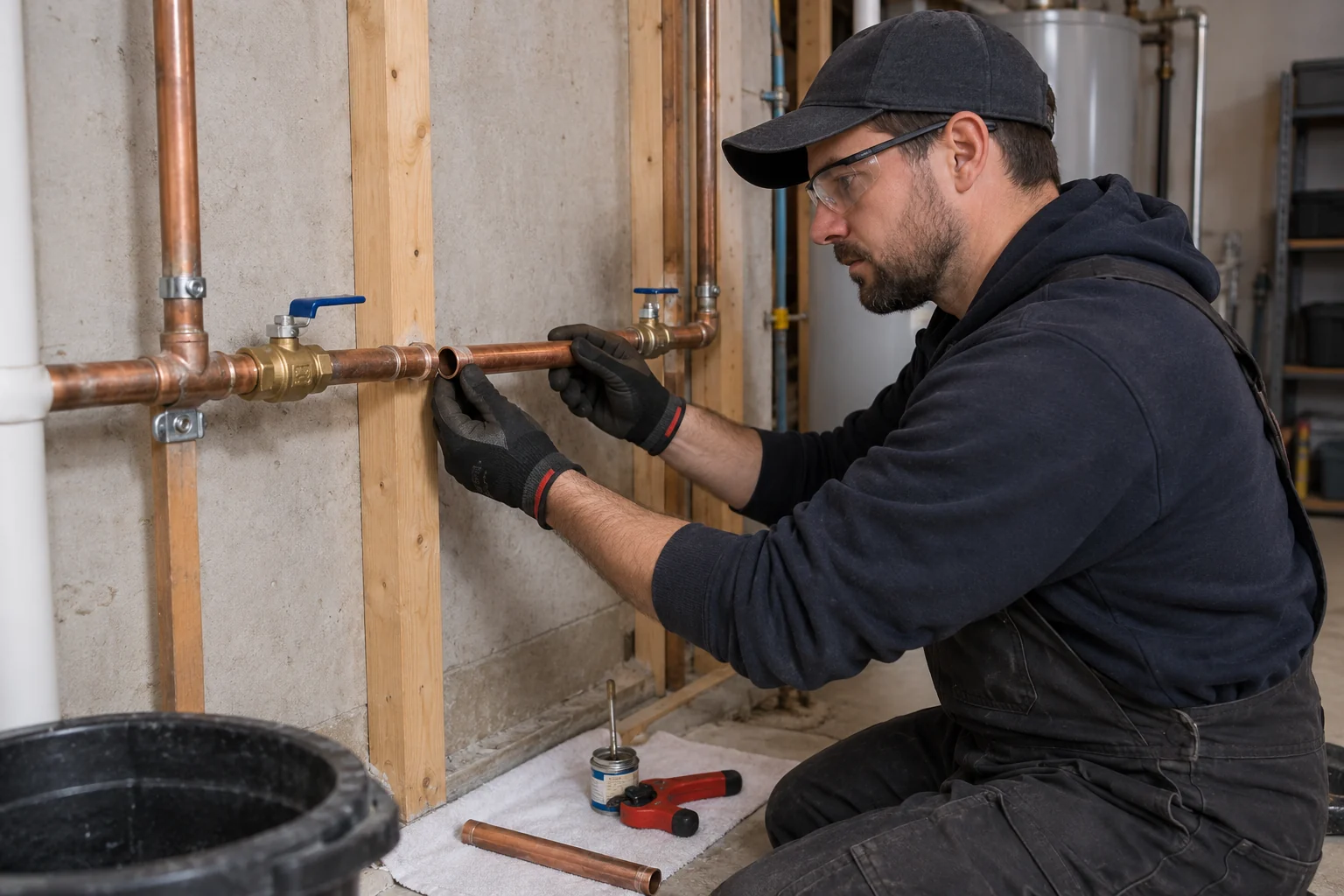
A professional burst pipe repair in Calgary generally involves safe access, appropriate water isolation, assessment of the damaged section, a defined repair and checks before use is restored. The exact work depends on the pipe and property conditions. Ask what was confirmed and which restrictions remain; repairing the source does not automatically dry finishes or clear wet electrical equipment. Our look at how a burst pipe affects other rooms explains why the visible opening may not define the damage area.
Establish safe access before pipe work
The responding professional needs to know where water is travelling and what hazards affect the route. Electrical proximity, unstable ceiling finishes or contaminated water can require another safety response before ordinary plumbing work. Keep occupants away from those conditions and report them early. Do not open a wall or shift a wet appliance simply to make the visit easier. Safe access is a condition of the assessment, not a homeowner task to complete regardless of risk or the need for another trade.
Confirm how water will be shut off
An identified working control may stop the supply feeding the damaged section, while a faulty main or shared building can require coordination upstream. Ask which arrangement is being used and what it affects. Calgary's service interruption information is relevant where City controls are involved. A homeowner should not operate unfamiliar outdoor infrastructure. Record which fixtures or occupants are affected so the supply-control step does not become an unclear restriction after the pipe repair.
Assess the failed section and surrounding evidence
The plumber should connect the visible fault to the proposed work. Material, accessible condition, prior repairs and possible freezing or movement can be relevant. A suspected cause should remain distinguished from a confirmed finding. For burst pipe repair, ask what section is damaged and what adjacent condition was assessed. Concealed or inaccessible runs may have limits. A visible split does not by itself establish the state of every pipe or justify an unexplained whole-property proposal.
Define access and authorization
If pipework is behind finishes or in a shared space, the repair may depend on access permission or an appropriate opening. Ask how that access follows the findings and who handles reinstatement. The accepted scope should show what is proposed now and how new conditions will be communicated. A person meeting the plumber may have limited repair authority in a rental or business. Resolve the decision-maker before treating access permission as approval for every alteration or wider repair option.
Ask how the repair will be tested
Ask the plumber what checks are appropriate for the component and work, and what the findings establish. Do not prescribe a test based on a video or assume the most elaborate procedure is always required. The useful outcome is a clear explanation of the repaired section and restoration limits. A successful check within scope should not be promoted as a guarantee that every hidden pipe is unaffected. If freezing was involved, frozen pipe assessment can address the exposure question separately.
Separate repair completion from material recovery
Water may have travelled beyond the rupture before isolation. Floors, cabinets and concealed materials can require appropriate assessment after source work. Wet electrical equipment has its own safety question. Our Calgary leak repair and restoration comparison explains these stages. Do not assume a clean-looking room or stopped drip means every consequence is resolved. Ask what observations and scope limits should be handed to the next professional so recovery does not rely on an unsupported all-clear.
Keep prevention tied to the findings
After the visit, retain the identified source, repaired section and any recommendation about exposure, condition or operating concerns. Ask what follow-up applies to the assessed issue rather than accepting a universal promise that another leak cannot occur. If a symptom returns elsewhere, describe its pattern using the record instead of automatically assigning the original cause. A professional repair can have a defined successful outcome while the broader system has only limited assessment. The documentation should make that practical distinction clear to the household.
A seven-stage repair handoff checklist
- Source status: distinguish an active release, temporary isolation and a confirmed repaired component so occupants understand the current outcome.
- Control: identify the appropriate supply arrangement and any shared or City coordination that affected restoration.
- Fault: record the damaged section and supported cause, leaving uncertainty clear where access limited the assessment.
- Scope: identify the pipe work and necessary access without silently including drying, sanitization or finish reinstatement.
- Checks: ask what supports restoring use and what remained outside the assessed area.
- Restrictions: name fixtures or rooms that remain unavailable and the next responsible contact.
- Record: keep the completed work and follow-up advice with the original observations and safe photographs.
The record need not use technical language beyond what is understood. A short accurate description of the repaired component and restrictions is better than a general claim that all plumbing is now safe or that the incident had one certain cause.
Review a changed scope before additional work
Access can reveal a different condition from the initial visible split. Ask how that changes the proposed repair and what evidence supports any wider work. A homeowner should not interpret an early assessment as a fixed promise regardless of concealed conditions, but should receive a clear explanation before authorizing a revised scope.
Compare outcomes rather than only line-item totals. A localized repair, another connection replacement and assessment of a wider run can address different concerns. Keep any exclusion or remaining limit visible, including material recovery and shared-system questions.
Finally, explain the practical restrictions to everyone who will use the property. A completed burst section can coexist with another fixture left isolated. Restored main pressure does not automatically clear that separate source, so the handoff should prevent an occupant from restarting unresolved work by guesswork.
For a shared property, include which suites or common areas were affected by isolation. The person providing access should not assume they can authorize every change, and another occupant should not restore common use based only on seeing a repaired section. Keep management informed of the confirmed scope, remaining restrictions and any separate room-safety or material-recovery stage. This makes the plumbing outcome understandable across a handoff without extending the repair record beyond the areas actually assessed.