What Helps Plan An Urgent Tank Replacement In Calgary?
Useful planning information includes the heater's visible model details, the reason replacement is being considered, whether water is still leaking and how the equipment can be accessed. Describe household hot-water needs and any known installation changes. Gather only information available without unsafe access, opening covers or touching hot equipment, and let the plumber verify the actual installation before confirming the work.
Explain What Made the Replacement Urgent
Begin with the event rather than a preferred appliance size. A confirmed tank defect, an unexplained leak and a loss of hot water are different starting points. Tell the plumber whether someone has already diagnosed the problem or whether replacement is still an assumption based on the symptom.
Describe the sequence in ordinary language: when the complaint began, what was first observed and what changed afterward. Include any action already taken to isolate the equipment. If you do not know which valve or control was used, say so rather than naming a component from memory.
An urgent replacement discussion still needs source assessment. Water heater leak diagnosis may establish that a visible leak comes from another connection. Accurate information helps avoid planning a new appliance around a fault that has not yet been identified.
Gather Visible Appliance Information Safely
A model label or existing service record can help identify the equipment. Photograph a label only where it is safely visible and accessible. Do not open panels, move vent components or reach through pooled water to obtain a serial number. The technician can verify details during appropriate assessment.
Record whether the appliance is a storage tank or another type of heater, if that is known. Describe its location and any obvious service arrangement without guessing about concealed connections. Photos of the room from a safe position can communicate access more clearly than an uncertain technical description.
The Rheem resource centre provides manufacturer documents that can be matched to model information. It is useful for identifying the relevant equipment, but another model's instructions should not be used to make assumptions about the installation you have.
Give a Clear Access Description
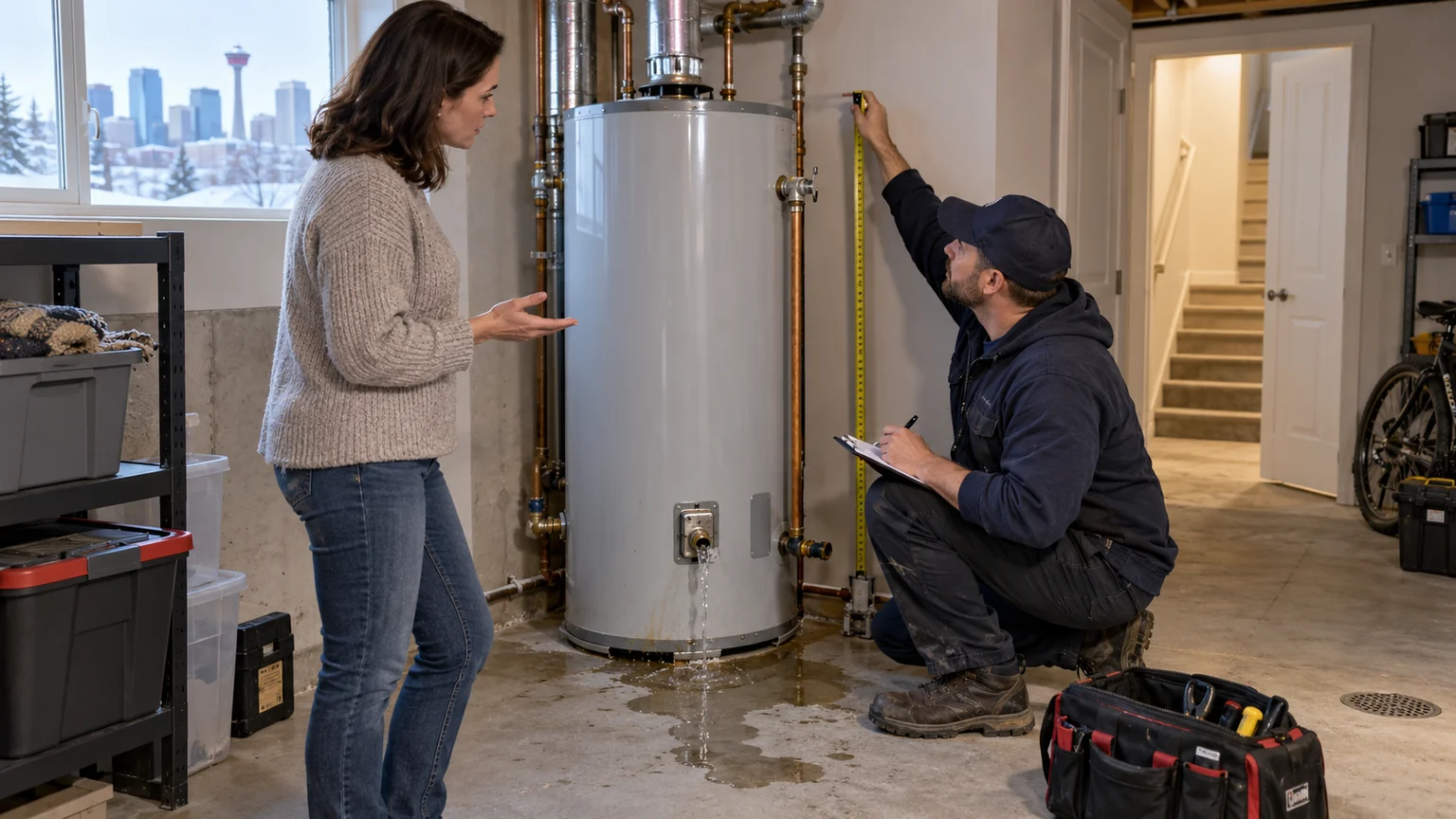
Explain where the tank is located: basement utility room, finished space, mechanical area or another part of the property. Mention stairs, narrow passages, doors and items that restrict access. Do not move heavy equipment or alter a building component to make the route appear easier.
Access information affects planning for both removal and installation. A route that allows a person into the room may not establish that a tank can be moved through it. Let the contractor assess that requirement rather than promising that a visible opening is adequate.
For a condominium, rental or shared building, identify who can authorize work and arrange mechanical-room access. Tell the plumber about building contact requirements and any known shared systems. A resident's access to a suite does not necessarily provide access or authority for work on common equipment.
Use This Call-Preparation Checklist
- Observed fault: Describe leaking, loss of hot water, unusual temperature or other symptoms separately, and state whether a diagnosis already exists.
- Current status: Explain whether water is still appearing and what restrictions or isolation instructions were provided.
- Equipment record: Provide a safely visible model label or existing service paperwork, without dismantling the heater.
- Location and route: Identify the room, stairs, doorways and known access restrictions for assessment.
- Building contact: Name the person authorized to arrange access and discuss any shared-system coordination.
- Household use: Describe occupants and overlapping bathing, laundry or other hot-water demands.
- Previous changes: Mention recent plumbing work, appliance changes or known alterations near the heater.
- Questions to resolve: Ask what inspection, installation and approval details must be checked before the final scope is confirmed.
Keep unknown information marked unknown. A reliable plan can incorporate a site check; it becomes less reliable when guessed measurements or unverified equipment details are treated as facts. Send relevant photos if requested, while keeping the immediate response focused on safe access and current symptoms.
Distinguish Equipment Selection From Installation Scope
A model recommendation is only one part of the replacement proposal. Ask which retained connections, energy supply, drainage and other installation conditions require assessment. If the proposed appliance changes the existing arrangement, request an explanation of the additional work.
| Information supplied | Planning question it helps resolve |
|---|---|
| Visible model details | Which appliance and manufacturer documents are relevant? |
| Leak source already confirmed | Is replacement directed at the actual failed equipment? |
| Access route description | What removal and installation constraints require checking? |
| Changed household use | What demand information should inform equipment choice? |
| Shared building equipment | Who must coordinate access and any service interruption? |
| Recent installation alterations | Which existing conditions should be verified rather than assumed? |
The table does not substitute for an inspection. It separates useful observations from decisions that need verification. Ask the contractor to identify anything that could change the scope after assessment so the initial conversation is understood as planning rather than a completed installation commitment.
Discuss Hot-Water Needs Without Inventing a Capacity
Tell the plumber when household demand overlaps and whether the previous arrangement met that demand before the fault. The number of residents is helpful, but it is not a complete description of use. Bathing preferences, laundry timing and fixtures can affect the discussion.
If the household recently changed, explain the change. If demand stayed the same but performance suddenly deteriorated, that points to a different assessment question. Water heater service assessment can connect performance complaints to the identified equipment before a capacity change is assumed necessary.
Avoid selecting a tank solely because it has a larger nominal capacity or resembles a neighbour's installation. The proposed model and its installation requirements should be evaluated for the actual property. Ask what information supports the choice rather than expecting one universal size recommendation.
Confirm Approvals and Return-to-Service Responsibilities
Ask who will establish the applicable permit and inspection requirements for the scope. The City of Calgary plumbing and gas permit guidance explains the general permit framework for installing or altering those systems. The specific work and energy arrangement need to be considered.
Request a clear description of what completion means. Delivery of an appliance, installation of connections and verification for operation are separate stages. If another assessment or approval remains outstanding, record it rather than treating the presence of a new tank as evidence that all requirements are complete.
Hot water tank replacement planning should also include the homeowner handover. Ask which operating restrictions apply during the work and how normal use will be confirmed afterward. Instructions should be practical enough that everyone in the household can follow them.
Prepare the Household for the Actual Work Plan
Discuss which fixtures or activities must remain unused while the heater is isolated and replacement proceeds. Do not infer a universal duration from an online article. The contractor should explain the expected sequence for the assessed installation and communicate changes if additional work is needed.
Keep the work route accessible through ordinary safe housekeeping, while leaving technical alterations to the appropriate people. Secure pets and tell household members about the equipment restrictions. Avoid storing belongings against the appliance or in a path the contractor needs to evaluate.
Retain the final model, work scope and instructions with property records. If a later complaint occurs, those documents help identify what was actually changed. Calgary Emergency Plumbing can assess the urgent condition and plan the replacement around the property: call (587) 333-7742 or request service.