What Must Be Checked Before Digging By Utilities In Calgary?
Before emergency excavation, confirm the actual work area, the relevant locate responses and utility-owner requirements, site access and permission, and the plan for any private or otherwise unaddressed infrastructure. Identify who is responsible for those checks. Urgency changes coordination needs; it does not make an unverified area clear to disturb.
Define The Real Work Area
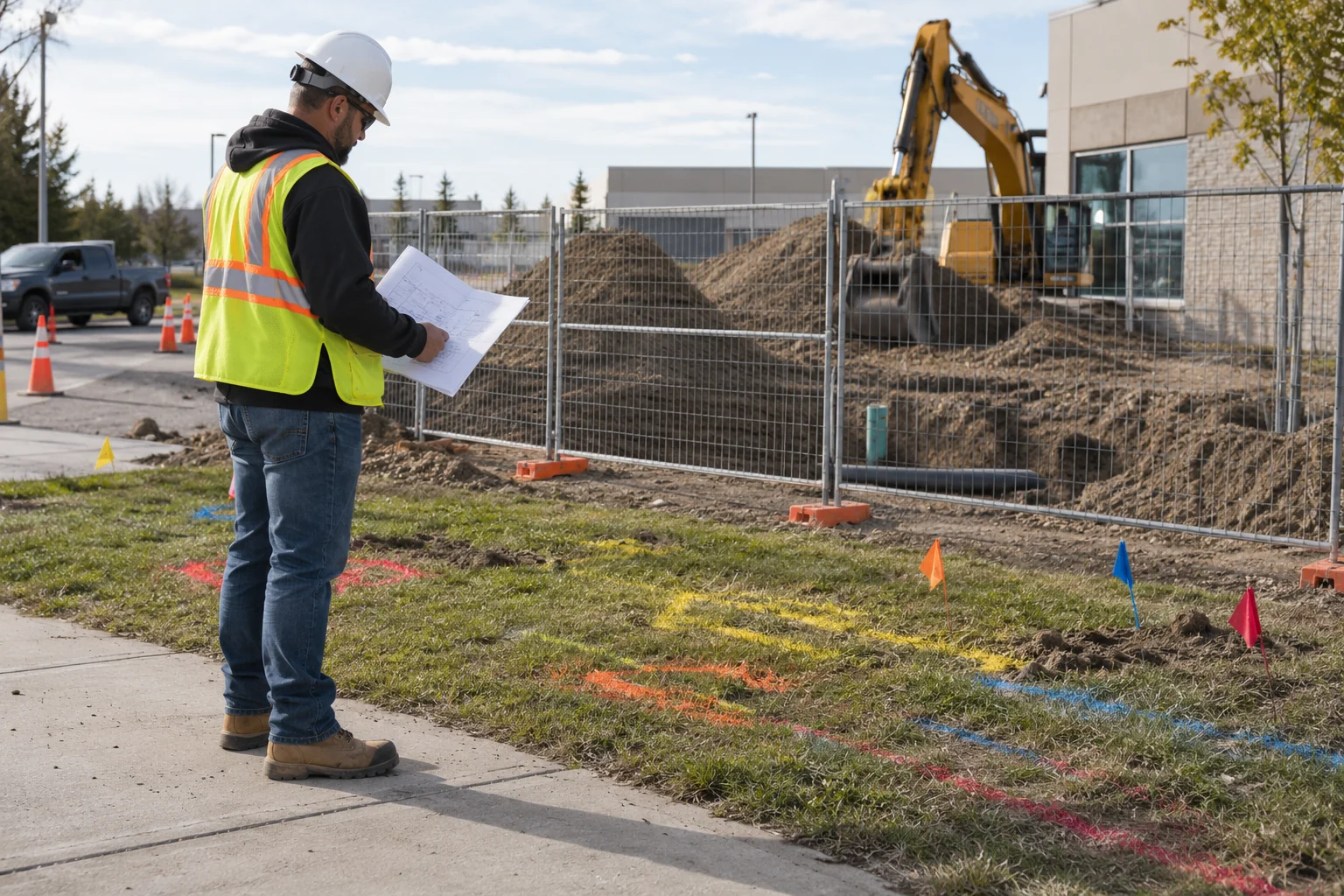
Give the proposed location in terms the responsible contractor can use, including the site area and intended disturbance. A changing leak investigation can expand that area beyond the original expectation. Make changes explicit before work continues. The information request and planned excavation need to match; do not assume that a locate tied to the general address covers every possible place a crew might dig.
Review Responses Rather Than Only A Ticket Number
A ticket number records a request, not the full reviewed result. Ask the contractor who is checking the returned information, applicable markings and utility requirements before work. If a response is missing or unclear, disclose that issue and obtain the appropriate direction. The building contact should not translate silence into clearance or treat a submitted request as proof that every relevant line was addressed.
Address Infrastructure Beyond The Initial Request
Commercial site records can include services installed for individual buildings or tenants. Provide those records through the authorized contact and mark uncertainty clearly. The normal utility process may not address every private installation. Do not direct the crew to rely on an old drawing as complete field evidence; ask how additional infrastructure is being accounted for in the actual excavation plan.
- Identify the proposed ground-disturbance area and depth.
- Confirm current locate requests and utility-owner instructions.
- Keep crews clear until marked services and site conditions are assessed.
- Coordinate pipe repair after exposure instead of treating excavation as the fix.
Confirm Property And Work Permissions
Clarify who owns the surface and buried line involved, and who can approve the proposed work. A tenant’s urgent report is useful but may not authorize disturbance of a shared yard or right-of-way. Ask the responsible contractor about relevant permissions for the work area. Keep that coordination separate from a verbal promise that the building wants the leak fixed quickly.
Explain The Current Emergency Condition
Describe the active condition without overstating it: where water is emerging, which service is affected and any visible hazard to people or property. That information helps the appropriate contacts coordinate an urgent response. Do not guess that gas or electrical infrastructure was damaged when there is no finding. If a potential immediate safety concern is observed, use the appropriate emergency or utility route rather than investigate it yourself.
The hydrovac service plan must reflect the utility information for this exact excavation. The resulting underground water-line repair begins only after the line is safely exposed and assessed.
Agree On The Excavation And Exposure Approach
The method should be chosen by the responsible professionals using the utility and ground information. Staff should not make a starter hole, probe the leak or move a buried component to help. Those actions are themselves disturbance and can change the condition before the crew arrives. Keep people back and provide access information instead of attempting technical preparation.
Keep The Public And Occupants Away
Identify affected entrances, delivery areas and traffic routes in the site communication. A repair can involve people who were not present when the leak was reported. Tell them where access is restricted and who provides updates. Do not establish an alternative route over visibly weakened ground. The responsible site plan should account for both the excavation crew and ordinary users of the property.
Before breaking ground near an unknown line, confirm current utility information for the precise work area. Utility Safety Partners’ ground-disturbance guidance gives the locate process and related ground-disturbance guidance.
Update The Plan When The Scope Changes
Unexpected infrastructure or a larger-than-planned exposure can require the responsible contacts to review the scope. Record the change and do not tell the crew to keep digging outside the area already addressed by the information. The urgent objective remains the repair, but the next action must fit the actual findings. Keep the revised work area and next-stage responsibility clear in the record.
A marked utility location is part of the work information, not a promise that every buried object has been found. The crew should reconcile markings with site records and visible conditions before ground disturbance. If an unexpected line or obstruction appears, pause and have the relevant owner or utility contact reassess the plan.
Build A Pre-Dig Information Register
| Record Or Decision | Useful Detail |
|---|---|
| Work area | Record the proposed location and boundaries, who supplied them and whether the contractor has reviewed them. If the leak investigation changes the location, update this entry before assuming the earlier information still covers the task. |
| Locate responses | Record the responsible reviewer and any outstanding or unclear response. Keep the response information with the work record rather than saving only the request number in an email subject. |
| Private site records | List the drawings or maintenance records supplied and identify known gaps. A drawing with an uncertain date should remain described that way; staff should not upgrade it to a verified field location. |
| Permission and access | Name the authorizing contact, affected routes and person maintaining restrictions. Keep property permission distinct from the contractor's review of buried-service information. |
For example, the register might show that the loading-yard work area is defined and access is approved, but a private-service drawing is still being sought. That is a coordination status, not clearance to dig. Give the outstanding item to the responsible contractor and ask what the next action is. Do not have maintenance staff fill the gap by probing the surface.
Use dated updates so the record shows which area and information were reviewed at each stage. When the scope changes, identify the changed boundary and the person reviewing the new information. This gives the next crew a specific unresolved question instead of a vague instruction that all locates have been dealt with.
When arranging help, give the crew the excavation area, locate status and utility contacts. Ask who reviews outstanding utility information and any change to the proposed ground-disturbance area. Request service or call (587) 333-7742.