
What Photos Help Document A Plumbing Leak Safely In Calgary?
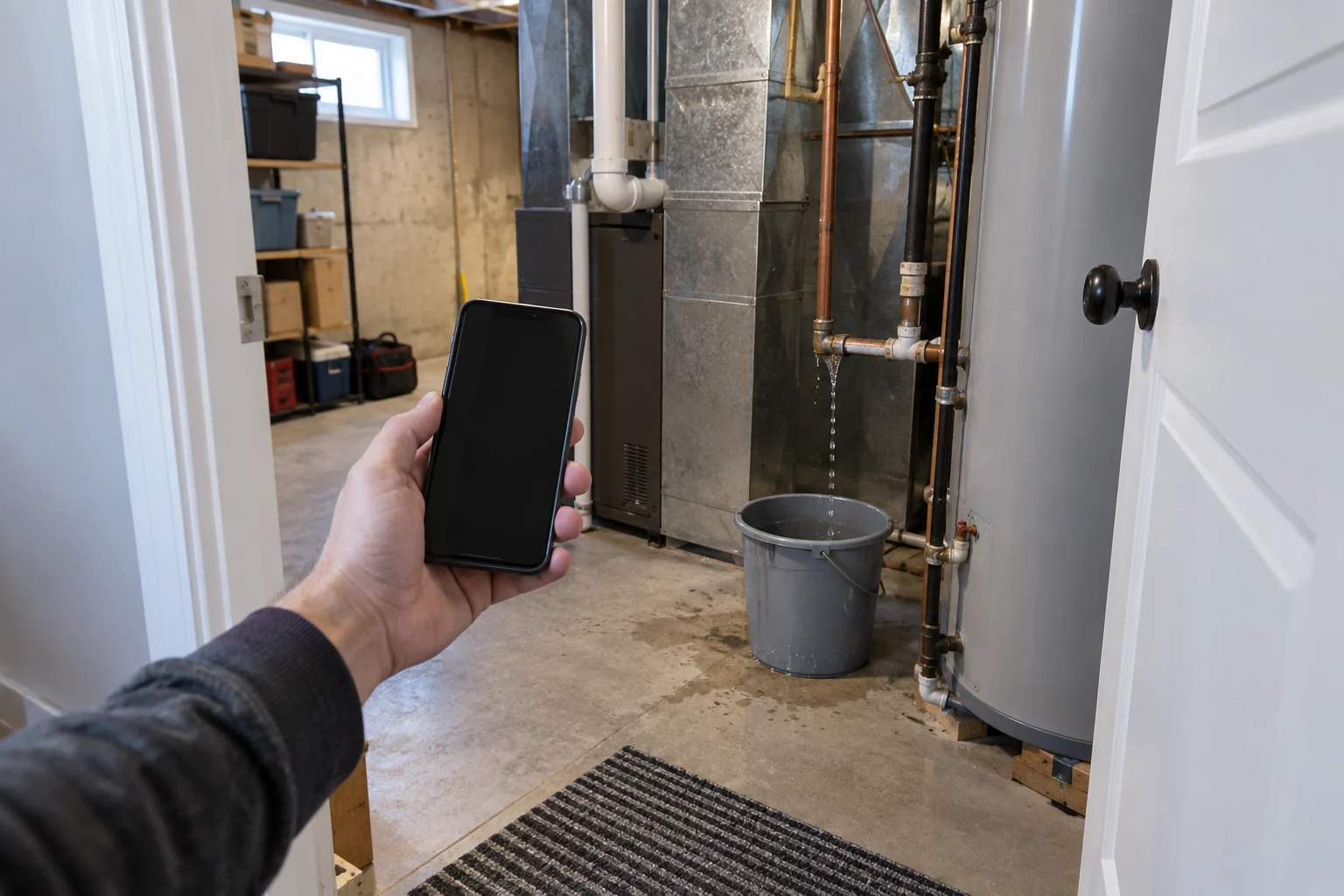
Useful photos of a Calgary plumbing leak show the visible source, surrounding layout and affected rooms from a safe position. Take a wider view before a close-up, record the timing, and stop if reaching the view would involve water near electrical equipment, sewage or unstable finishes. Photos support communication and documentation; they do not establish a complete diagnosis or insurance decision.
Take a room view before a component view
A close-up of a fitting can hide where the water is travelling or how the pipe is accessed. If the area is safe, begin with a wider image showing the fixture or pipe in its room. Follow with a closer view of the visible wet point, taken without touching equipment or shifting a heavy appliance.
Include a fixed reference such as the cabinet, wall or accessible pipe run. You do not need to add a ruler near the leak or place objects into contaminated water. A clear layout image can help a plumber understand access even when the exact failed component is not yet known.
Record the pattern as well as the appearance
A still photograph may not show whether water is actively moving or only remains from an earlier release. Note whether the image was taken while a fixture was being used, after its use stopped or after a valve was closed. Do not run an appliance again solely to recreate a leak for documentation.
If safe observation shows an intermittent pattern, describe it in writing alongside the photograph. For leak detection, that timing can be more useful than several nearly identical images of a stain. Avoid turning the caption into an unconfirmed diagnosis.
Keep the camera out of hazardous areas
Do not enter standing water to photograph an electrical panel, reach beneath a sagging ceiling, or kneel beside sewage for a detailed shot. Keep children and pets out of the affected area. The absence of a close-up is preferable to adding exposure while trying to document damage.
Alberta's official cleanup guidance provides context for electrical and contamination hazards. Explain that a particular area could not be photographed safely. A responder needs to know that access limitation rather than receive an image taken at unnecessary risk.
Document accessible rooms without opening finishes
Photograph visible stains, lifted flooring edges or water at the base of a wall from an ordinary safe viewpoint. Do not remove ceiling board, insulation or cabinet panels to look for concealed damage. Opening a surface changes the conditions and can create hazards or remove evidence that the assessing professional would otherwise observe.
Water may have reached another floor or room, so record visible symptoms beyond the source area. Describe the relationship between rooms without claiming that the photograph proves an entire assembly is wet. A surface image shows what was visible at that time, not every hidden layer.
Protect privacy when sharing the images
Keep the frame focused on the plumbing and affected materials. Avoid unnecessary images of people, tenant belongings, private documents or medical equipment details. In a shared building, use the approved property contact to coordinate information rather than circulating photographs of another suite without a clear purpose.
Send only the images needed for the repair conversation or documentation request. Label the room and time plainly. A collection of photos named kitchen underside before isolation is easier to interpret than dozens of files without context, particularly when several trades assess the same incident.
Keep photos alongside the confirmed repair record
Save the original images and your timeline separately from later explanations. Once water leak repair establishes the plumbing findings, add the repair scope and checks to the record. Do not rewrite early observations as though the final cause was already known at discovery.
For the immediate call, our article on information to give a Calgary emergency plumber helps prioritize the facts. Photographs complement that description; they do not replace safe access, inspection, source repair or a separate assessment of affected materials.
A photo set that communicates the incident
- Wide room view: show where the visible symptom sits in the room and the safe approach, without moving into a restricted area.
- Visible source view: photograph an accessible drip point or connection only if it can be seen from the same safe position.
- Water-path view: show visible spread to a nearby cabinet, floor or wall, while keeping hidden conditions described as unknown.
- Other-room view: record visible changes on another floor or adjoining room without claiming the path between them is confirmed.
- Control context: if a known valve is dry and accessible, its location photo can help identify what was operated, not certify its internal function.
- Later condition: keep a dated image after isolation or repair so changes are distinguishable from the original discovery.
Write captions that preserve facts and uncertainty
A useful caption says what the image actually shows: for example, wetness below the basin after it was emptied, photographed before isolation. It should not say failed pipe behind the wall unless that source was confirmed. The wording matters because photographs can circulate between a plumber, property manager, material assessor and insurer. A confident label can turn an early guess into an apparently established cause.
Include the room, approximate time and known use condition. If a photo was taken after the supply closed, say so. A smaller puddle in a later image can reflect isolation or movement into materials; the photo does not independently explain why it changed.
Keep the original file with its date information where practical. If you add a simple annotation for location, retain the unedited version as well. Avoid altering colours or removing details that another professional may need to interpret the scene. There is no need to create an artistic damage record; clear ordinary images usually communicate the visible conditions better.
If a view cannot be obtained safely, state that in the written record. A message saying the mechanical room was inaccessible because of standing water is more useful than a risky image that omits the hazard. The professional can plan appropriate access without asking the occupant to prove every symptom.
Finally, distinguish documentation from diagnosis. Photos support questions and records, but they do not measure every concealed layer, prove water quality or establish insurance coverage. Keep the later assessment findings attached so the visible first condition and the confirmed source remain separate parts of the incident history.