What If A Clinic Equipment Water Line Leaks In Calgary?
A Calgary clinic should stop using the affected equipment, keep patients and staff away from the wet area, and tell its authorized facilities and clinical leads. If there is a safely accessible, clearly identified isolation control for that equipment, follow the clinic’s established procedure. Do not disconnect a device, open a treatment cabinet, or turn an unfamiliar common valve simply to see whether the leak stops. Clinical staff should decide how care continues while the plumbing source is investigated. A plumber cannot declare a medical device safe for patient use. The building-plumbing and medical-equipment handoff explains which provider should inspect each side of the connection.
Describe the connection before anyone opens the equipment
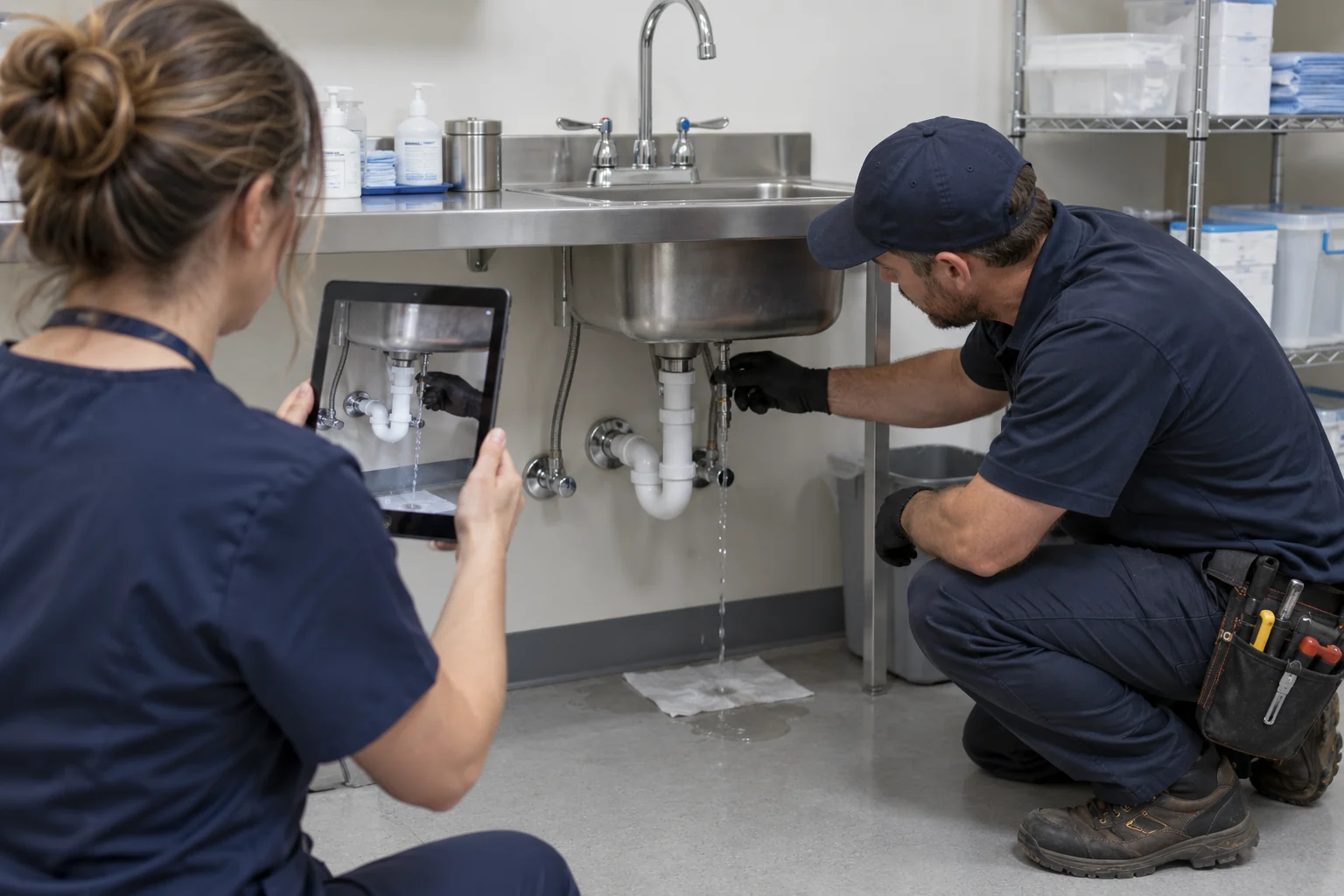
Note whether water appears at the wall outlet, supply hose, coupling, drain, cabinet base, or floor behind the unit. Say whether it appears only while the device fills, drains, or runs a cycle. A dry exterior does not rule out water inside a cabinet. Keep an accurate timeline: a small intermittent drip at a connection is a different clue from water arriving under a wall after the device has been idle. Photographs from a dry, accessible position may help, but a staff member should not reach around energized equipment to obtain them.
Separate plumbing work from device work
The plumbing contractor can inspect the building supply and drainage connection and identify the repair boundary. The equipment vendor or qualified biomedical technician may need to inspect the device, hoses, internal valves, or performance after water exposure. The clinic should contact both when the source is uncertain. Do not assume a dry floor after plumbing repair proves the unit functions properly. The manufacturer’s instructions and the clinic’s own clinical controls govern when the equipment can be returned to service.
Check whether other fixtures share the affected supply
A small valve behind one unit may serve only that unit, or a nearby branch may serve other clinical rooms. Before anyone closes a control, identify what else it affects and arrange an appropriate interruption. Record which taps or devices lose water and who approved the shutdown. If the leak is on a common building service, coordinate with the landlord or property manager. Staff should never compensate for lost service by making an unapproved cross-connection or using an improvised hose.
Protect water quality and occupied space
A device connected to potable water may include backflow protection or other specified components. Leave those parts intact. Calgary’s business guidance on cross-connections explains why a connection between drinking water and another system needs proper protection. Ask the qualified parties to check any affected protection as part of the repair. Keep wet materials and equipment out of use until the relevant cleaning, drying, electrical, and clinical checks are complete. Record the limits of each contractor’s work so nothing falls between them.
Reopen with an explicit handoff
Ask for a record of the plumbing source, parts replaced, tests performed, and any remaining restriction. Have the equipment specialist complete its own return-to-service work where required. The clinic lead should confirm that the room is fit for care, staff know which unit is available, and any affected patient appointments have been managed. If water reached a wall, floor assembly, or electrical component, arrange an appropriate separate assessment; stopping the supply does not settle those conditions.
A Clinic Lead’s First Call Checklist
- Room and device: Give the treatment room, device name and unit identifier. Include the model if available outside the restricted area.
- Water pattern: Say whether the first release was at the wall, cabinet, hose or drain, and what the device was doing at the time.
- Restriction: Identify the equipment and room taken out of use, the established control used and the observed effect.
- People: Name the facilities contact, clinical decision maker and equipment service contact so each can receive its own findings.
- Access: Arrange the clinic’s escort and permissions without placing patient information in the general repair record.
The Calgary medical equipment leak repair visit should start with that room-specific account. Do not run a patient-use cycle to demonstrate the leak. Tell the plumber if a unit was already dried or disconnected by an authorized provider, because the visible condition may differ from the first report. The equipment specialist can determine how to examine the device under its service procedures.
Keep Care Decisions With The Clinic
A water restriction can affect more than one scheduled appointment. The clinic lead should establish which rooms and equipment are unavailable, then communicate the care plan through the clinic’s procedures. Give the plumbing crew the required work access without asking it to decide whether another treatment room is clinically suitable. A service provider needs to understand supply effects, while the clinic retains patient-care decisions.
For a leased suite, obtain the building contact early if a common branch or mechanical room is involved. Ask who can approve the plumbing repair and how changes beyond that scope will be handled. Our commercial emergency plumbing overview describes building-side service. It should not be interpreted as equipment certification or authorization to open a medical device. Separate approvals make the visit clearer for everyone involved.
Three Completion Records, Not One Informal All-Clear
Use separate entries for the building connection, the device and the affected room. The plumbing entry should state the observed source, repair and connection test. The equipment entry should record the specialist’s checks and any remaining device restriction. The room entry should identify cleaning, damaged finishes and any electrical concern. Mark an unexamined item as pending rather than copying a completed plumbing status into it.
| Entry | Who receives it | Question it should answer |
|---|---|---|
| Building plumbing | Facilities or authorized property contact | What connection was repaired and tested? |
| Medical equipment | Clinic lead and equipment provider | What still prevents device use? |
| Treatment room | Responsible clinic manager | What cleaning or other assessment remains? |
If only the wall coupling was repaired, say so. If the equipment provider has not yet attended, the device entry remains open. This avoids a common handoff mistake: a contractor reports a dry supply connection, and another staff member reads it as permission to use the entire treatment unit. The return-to-care decision needs the applicable records, not just the fact that water stopped.
Protection Checks And Repeat Leaks
Use Calgary’s business cross-connection guidance to discuss affected drinking-water protection with the qualified contractor. For a proposed alteration to the building connection, the contractor should review Calgary’s plumbing permit information against the actual work. Neither link supplies a device-specific clinical release.
For a later recurrence, retain the original room and unit identifiers, the connection repaired and the earlier test conditions. Record the new timing, including whether water appeared while the unit was idle or during a permitted cycle. Route that update to both providers where their boundaries are involved. The clinic should restrict the affected unit again while it is reassessed, rather than having staff repeat an earlier reset or reconnect it from memory.