What Goes In A Commercial Plumbing Repair Log In Calgary?
A commercial plumbing repair record in Calgary should identify the observed problem, confirmed source, affected location, work performed, relevant checks and any remaining restrictions. Include approvals, parts or sections replaced, permit information where applicable and work outside the plumbing scope. Keep safe photographs and related reports with it. A record saying only "leak fixed" is not enough to explain a repeat incident, a tenant question or outstanding restoration needs.
Start with a location someone else can find
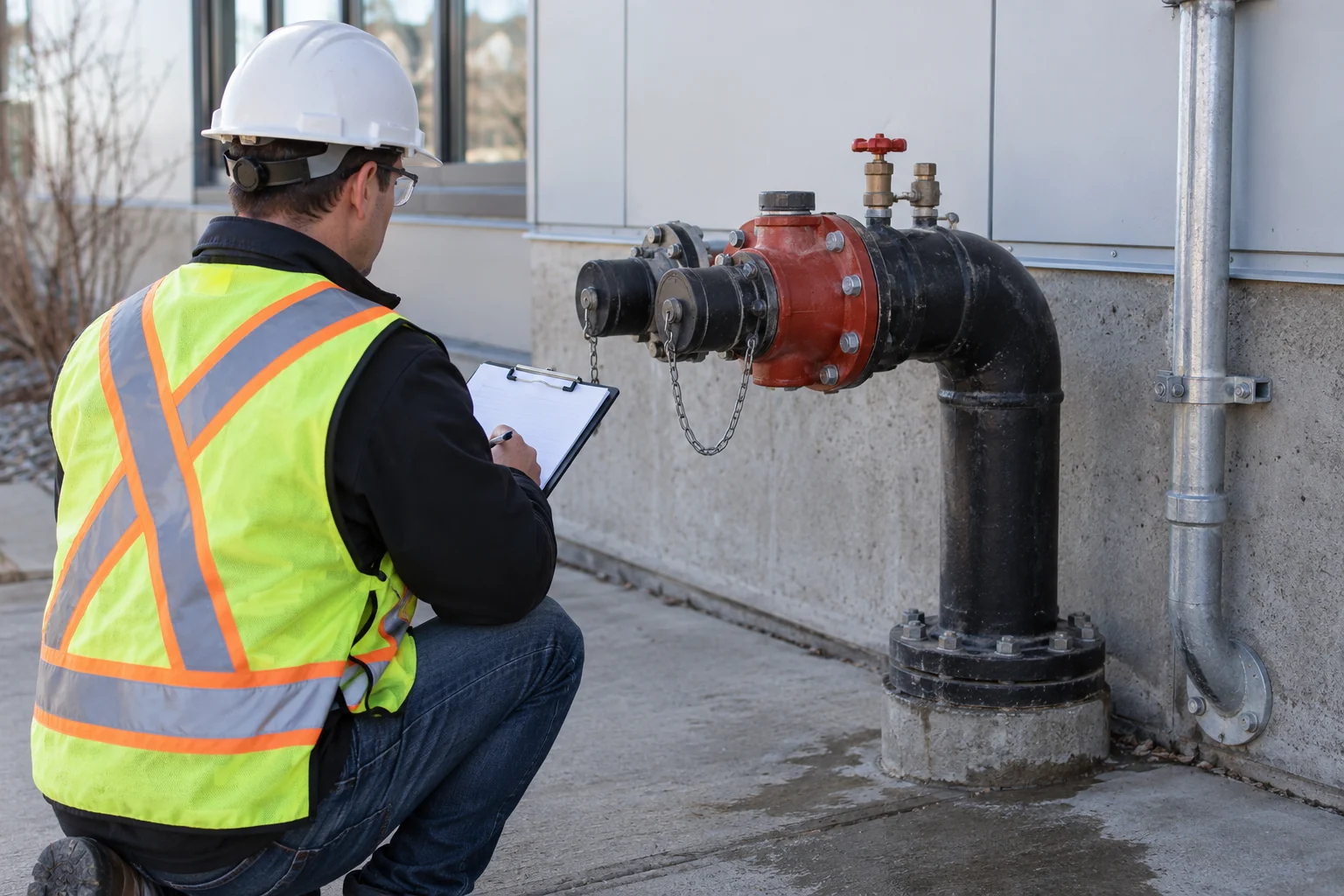
Record the building address, unit, floor and room. A large facility may have more than one kitchen, washroom or mechanical area, so "sink leak" can be ambiguous. Identify the actual fixture or component using a clear description and any reliable equipment label. An overview photograph can help show the location without exposing sensitive business information.
Include when the problem was noticed and who reported it. The discovery time may differ from when the leak began, particularly after closing time. Keep that distinction rather than claiming an exact duration nobody observed. If water appeared in another room, record that area too. The repair location and the area damaged by water may not be the same place.
Separate observations from the confirmed diagnosis
The first report may describe dripping from a ceiling or wetness under equipment. After investigation, the contractor may identify a specific pipe or connection. Keep both in the record, but label the confirmed finding clearly. Do not preserve an initial guess as though it was the final diagnosis. Likewise, do not replace an uncertain source with a confident label just because one local part was changed.
Ask the contractor to state any limitations: concealed piping not opened, a room not accessed or an operating condition not reproduced. Those limits matter if another symptom appears later. A useful record explains what the work established without claiming that every line in the building was inspected. For Calgary commercial water leak repair, the scope should be tied to the actual source and section addressed.
Describe the completed work in concrete terms
List the part or pipe section replaced, the repair boundary and any work on adjoining valves or equipment connections. Where product information is relevant, retain the model or part details provided. A photograph of completed accessible work can help later contractors understand it. The record should not require someone to dismantle a finished area simply to discover what was repaired. The written scope can be checked against what a commercial leak repair estimate covered and any approved changes.
If the intervention was temporary isolation or a temporary repair, call it that. State the remaining work, the restriction and the person responsible for authorizing the next step. A closed valve can stop an active release while leaving the failed component unrepaired. If that distinction is lost, another employee may reopen the control assuming ordinary service was restored.
Include these practical record fields
- Property and location: address, unit, room and identifiable component.
- Incident: first report, observed release and known affected areas.
- Source: confirmed finding and any unresolved uncertainty.
- Work: parts or sections replaced and the repair boundaries.
- Checks: relevant verification performed and conditions under which it was done.
- Restrictions: fixtures, equipment or areas still unavailable.
- Approvals: who authorized repair, access and any larger interruption.
- Follow-up: outstanding inspection, restoration or equipment work and its owner.
The record can be concise while covering those facts. Avoid technical abbreviations that the facility manager cannot interpret. If a contractor uses a part name, ask them to explain its practical role and location. The goal is a document the next shift or property manager can use, not an impressive list of terminology with no clear meaning.
Record permits and inspection information when relevant
Calgary's plumbing permit guidance explains requirements for installation and alteration work. Ask what applies to the actual project and who is responsible for the required process. Where a permit or inspection forms part of the work, keep the reference and result with the repair record. Do not state that an inspection occurred unless it did.
A completed source repair and a pending required inspection are different states. Record the status honestly and identify who will follow up. Likewise, work on a cross-connection control device can have its own records and requirements. Calgary's business cross-connection information provides the relevant context; an ordinary leak invoice should not silently stand in for device testing or other required documentation.
Keep restoration and equipment checks visible
Water may have reached flooring, walls, stock or equipment outside the source repair. Record that observation and identify the party handling cleanup, drying or reconstruction. Do not write that the room is recovered solely because the pipe no longer leaks. If affected equipment needs an appropriate technician, assign that next step and retain the result separately.
Our Calgary commercial emergency plumbing service can document the private plumbing work. Management should also collect the other relevant reports before reopening a restricted area. An electrical or sanitation decision belongs to the appropriate responsible professional or authority. Keeping those scopes separate prevents one contractor's invoice from being treated as approval for all business operations.
Document communications without deciding liability
Keep the landlord, tenant, insurer and building contacts notified, along with the instructions relevant to the work. State who approved a local repair and who approved any later expansion. The plumbing record can help the parties understand facts, but it does not decide legal responsibility under a lease or guarantee insurance coverage.
Save photographs taken from safe locations, invoices and relevant incident notes together. Avoid including unnecessary personal or confidential workplace information in shared files. If a claim reference is used, keep access appropriate to the people handling the loss. A consistent factual record is useful; a speculative statement about who caused the failure can complicate discussions without adding reliable evidence.
Use the record when the next symptom appears
If water appears again, compare the new location and timing with the completed work. It could be another component or an unresolved condition rather than failure of the replacement. Provide the earlier report to the contractor and explain what changed. That gives the investigation a better starting point than another generic entry saying a leak returned.
After follow-up, update the outstanding-work list with the actual result. Keep restrictions current so staff are not following an obsolete instruction or reopening equipment prematurely. A strong Calgary commercial repair record explains the source, scope and remaining tasks in words that the building's people can use. It turns a stressful service visit into a clear maintenance history without claiming more than was checked or completed.