What Should Staff Do If A Backwater Valve Closes In Calgary?
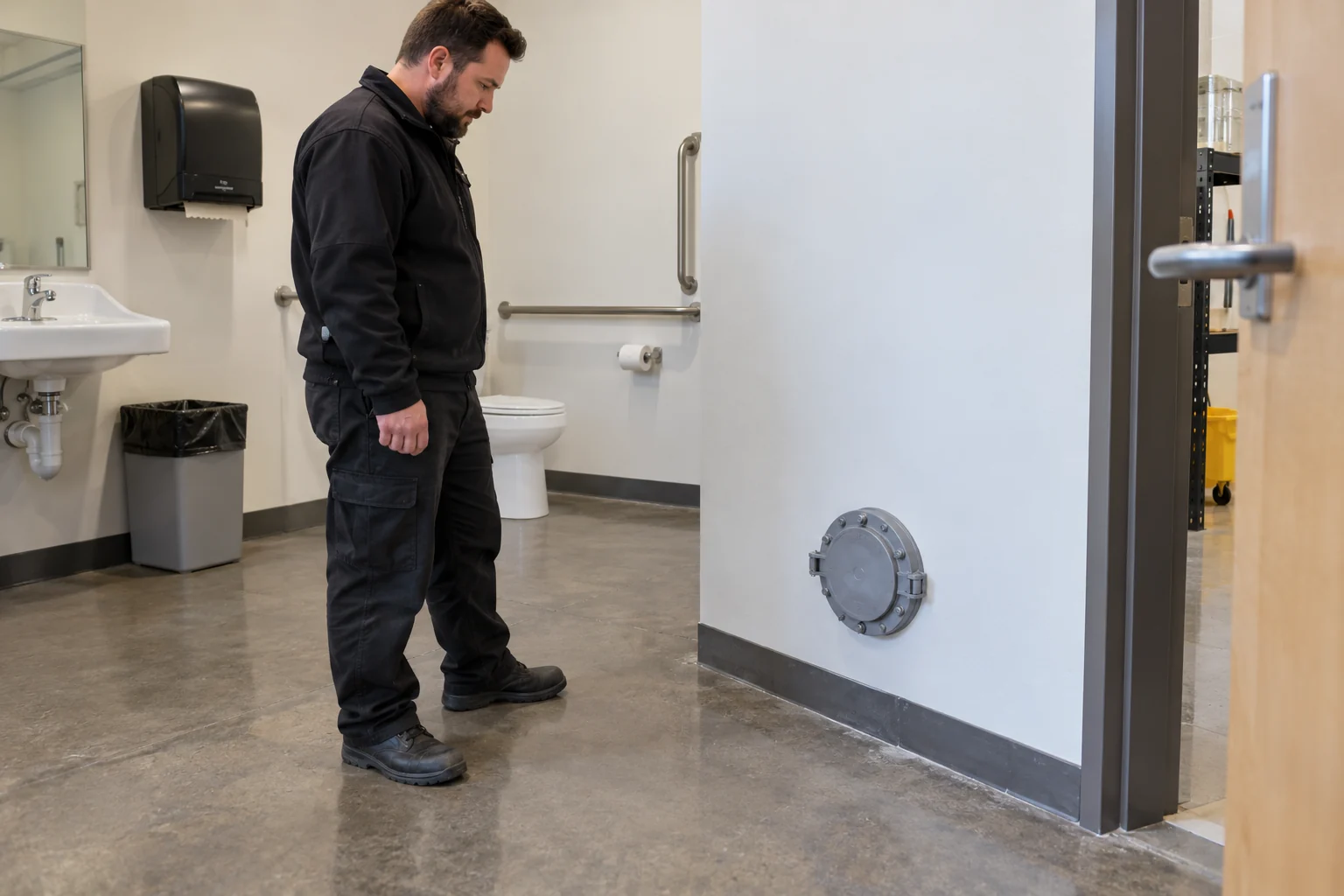
Stop adding wastewater through fixtures on the protected drainage route and notify the building manager when a backwater valve is closed during a backup. Do not force the valve open or remove its cover. Closure may be preventing incoming sewage, but continued discharge from inside the building can still create a backup upstream of the closed valve.
Explain The Closure Without Promising Protection
Give the valve location, the indication observed and the time it was noticed. If staff did not see the valve itself, say that closure was reported by an alarm or another contact. Do not turn an uncertain status into a claim that every protected area is secure. The contractor needs the actual drainage condition and the connected-fixture information as well as the valve report.
Stop Use Of The Protected Drainage Route
Use a direct notice identifying the affected washrooms or equipment. Staff arriving later should receive the same restriction rather than assume ordinary use can continue because sewage is not visible. If the connected route is uncertain, tell the manager and service provider instead of testing fixtures. An internal discharge still needs somewhere to go while the valve remains closed.
Leave The Valve In Its Installed State
Do not treat closure as a fault to be overridden. A valve responding to backflow may need to remain closed while the surrounding drainage condition is assessed. Forcing it open can defeat the intended barrier. Opening a cover or cleanout during the event can also expose wastewater. Leave those parts in place and report the symptoms from safe access.
- Reduce fixture use while a closure or backup is suspected.
- Locate the valve only from safe access; do not open a loaded chamber.
- Report which drains rise and whether wastewater is still arriving.
- Ask whether the valve operated, is obstructed or needs another repair.
Include Automatic Wastewater Sources In The Restriction
The notice should cover connected equipment as well as washrooms. Tell the manager about any scheduled laundry, dishwasher cycle or other known discharge on the affected route. Do not start a cycle to check its connection. Ask the responsible contact to identify those sources from building records and communicate the restriction to their users. Otherwise a washroom notice can leave another occupant unaware that their equipment adds wastewater to the same closed route.
Notify A Responsible Building Contact
Keep the response in a brief incident record: who received the report, who contacted the service provider and who is updating occupants. If several staff members are involved, name one person to hold the current status. Avoid guessed reopening times. A building needs a clear responsible contact even when no contractor can yet confirm how long the restriction will last.
Use The Correct Local Reporting Route
The City’s reporting process helps route a sewage backup based on the information supplied. Explain the fixtures involved and current visible wastewater. Do not assume a municipal cause merely because a valve is closed or several occupants are affected. Equally, do not dismiss a potential infrastructure concern without following the relevant reporting route. Record any advice received and the next step assigned.
Use backwater-valve repair to inspect the valve itself. If the main sewer remains blocked, sewer-backup repair addresses the fault beyond the valve.
Describe Other Drain Symptoms Without Testing
Existing observations can identify the extent of the problem without creating another discharge. Tell the contractor whether water rose at a floor drain, toilet or sink and whether those events occurred before or after use restrictions began. If only one point was seen, state that. The first visible outlet is not automatically the only affected connection or the original fault location.
Maintain Access And Exposure Restrictions
Arrange the keys and contact needed for inspection, but do not have staff make access by crossing sewage or disturbing the installed valve. Mention wet electrical equipment and any inaccessible areas before entry. Where wastewater has escaped, appropriate cleanup is a separate task from establishing the valve and drainage condition. Keep both stages visible in the building record.
A closed backwater valve may protect one route while household wastewater still needs somewhere to go. If water has entered the building, Alberta’s flood cleanup and utility-safety guidance covers utility and material precautions alongside valve assessment.
If wastewater returns during suspected valve closure, use the City’s sewage-backup steps for local reporting while the installed valve and building line are assessed.
Reopen Fixtures Only After A Clear Handover
Ask the contractor what supports reopening each affected area. The answer should explain the drainage condition and any work completed, not only that the valve’s alarm stopped. Keep remaining cleanup or equipment restrictions in place even if the drainage issue is resolved. Record who received the handover and notify the incoming shift so temporary notices are removed only at the appropriate stage.
Write A Closure Notice Around The Protected Fixtures
A useful notice identifies the fixture group and the responsible update contact. For example: “Lower washroom fixtures unavailable while the reported backwater-valve closure is assessed; do not add wastewater; duty manager provides updates.” These are illustrative labels. The building manager must use the actual connected route rather than assume every lower fixture belongs to one valve.
| Current status | What to communicate |
|---|---|
| Closure reported by alarm | The indication and time, with direct valve condition still unconfirmed. |
| Connected use restricted | The named washrooms or equipment and who received the notice. |
| Wastewater visible | The affected area and separate access or cleanup restriction. |
| Service result received | The finding, checks and restrictions the responsible person can change. |
Keep the notice even if users cannot see sewage. The point is to avoid adding discharge to the route under investigation, not to wait for a visible spill. Direct staff to an alternative only after the building has confirmed it is suitable.
At shift change, state who will receive the contractor's findings and update the notice. If the drainage restriction is lifted but cleanup remains, identify the remaining room restriction separately. A valve status change and a cleared public area are different messages for occupants.
When arranging help, give the crew the valve location, fixture pattern and any ongoing return. Ask which finding, test and remaining restriction will be recorded. Request service or call (587) 333-7742.