What Should I Check When Hot Water Stops In Calgary?
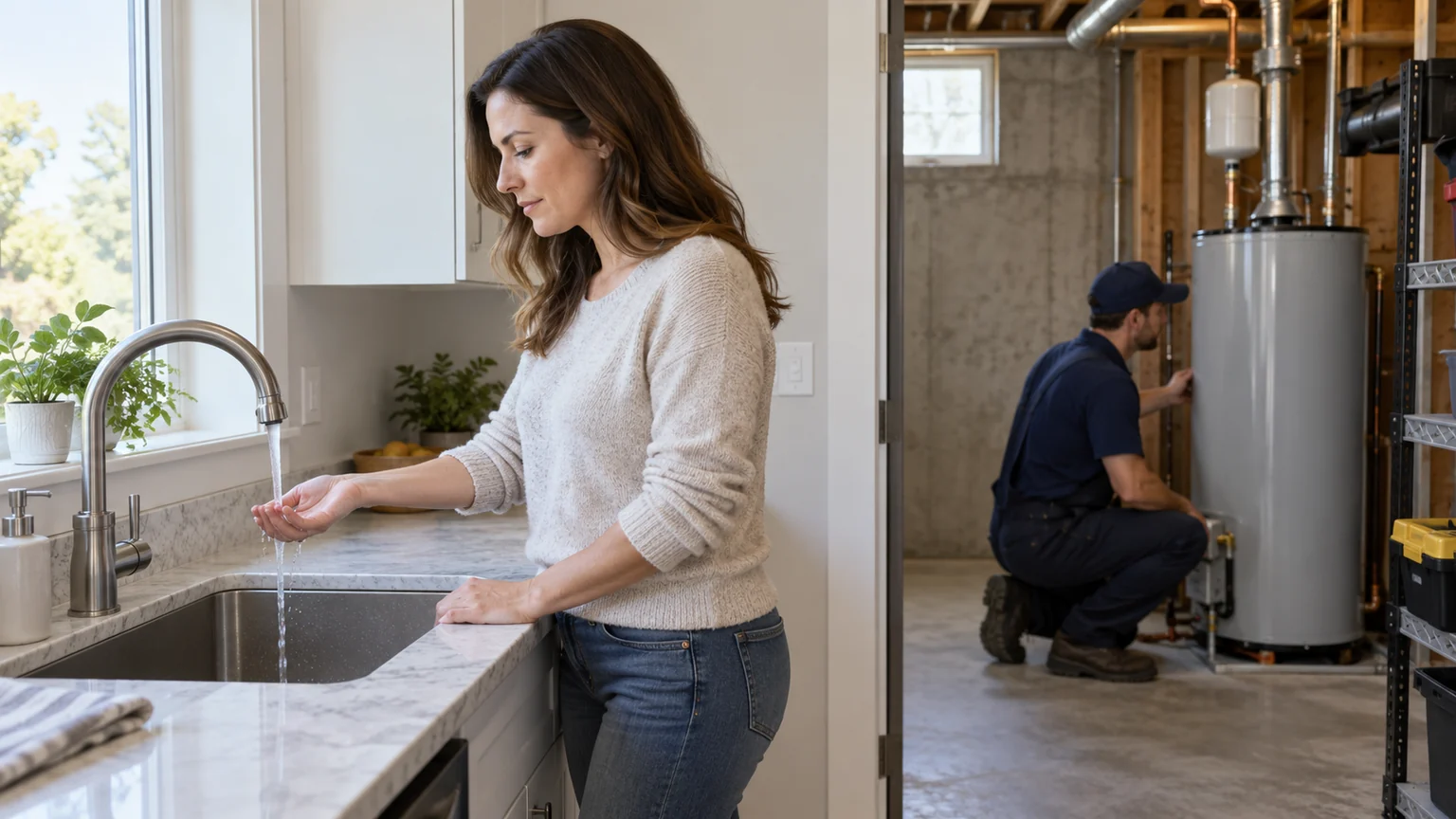
When hot water suddenly disappears, first establish whether every outlet is affected or only one fixture. Check safely for a visible heater message, leak or unusual operating condition without opening covers or repeatedly restarting equipment. A single-fixture problem and a whole-home heater fault need different assessment. Report the pattern, appliance model and any safety concern before deciding what repair is needed.
Compare More Than One Outlet Without Creating Risk
A bathroom tap with cold water where hot is expected does not prove the heater has stopped supplying the whole home. If ordinary use already showed other outlets working, report that distinction. A fixture control or local connection may need attention independently of the heater.
Where all hot outlets are affected, the water-heating equipment and common supply route become relevant. Do not perform repeated prolonged tests when the heater is leaking, showing a fault or creating another safety concern. A description of which outlets were affected is useful without deliberately draining more water or changing controls.
Look for Information, Not a DIY Restart Procedure
A safely visible display or status message can help identify the operating condition. Record the exact message and model from existing documentation if available. A vague description that the heater is broken is less useful than the actual displayed information and the time the symptom began.
Do not remove panels, bypass interlocks, alter fuel connections or repeatedly reset an unfamiliar appliance. Equipment designs differ, and a procedure for another model may not apply. If there is a suspected gas leak or immediate safety threat, leave the affected area and use the appropriate emergency response instead of beginning a routine hot-water check.
Separate a Leak From a Heating Complaint
If water is pooling beside the heater, report that at the start of the call. A leak can require source control independently of restoring hot water. Water heater leak assessment addresses the visible source question, while operating diagnosis may involve other components.
Stay away from hot discharge and water near electrical equipment. Do not enter a wet area to reach controls. Stopping a leak does not establish the condition of contacted materials or equipment, so retain those separate impact questions rather than consider the incident resolved as soon as hot water returns.
Use a Structured No-Hot-Water Checklist
A clear description helps the technician select the right assessment and avoid treating a local fixture symptom as a whole-home failure. Gather information already available from normal use and safe observation; do not recreate a hazardous condition to complete the list.
- Affected outlets: Name the taps or showers that lost hot water and any outlet still operating normally. Include floors and rooms so the common versus local pattern is clear.
- Start and duration: State whether the change was sudden, followed heavy use or occurred repeatedly. The pattern is useful context but does not identify a specific component by itself.
- Visible message: Record exact display text or a fault code where safely visible, without repeated resets that may obscure the original condition.
- Model and records: Provide appliance identification and prior service notes so guidance can be matched to the equipment.
- Leak or hazard: Mention moisture, hot discharge, unsafe electrical access or a suspected immediate threat before arranging an ordinary service visit.
- Household needs: Explain essential hot-water uses and vulnerable occupants so interim instructions reflect the practical situation without inventing a repair timetable.
Keep unknown information identified as unknown. A safely inaccessible label does not justify entering a wet area, and an absent display does not establish that the heater has no fault. The technician can obtain further information through the appropriate assessment.
Compare Local and Common-System Findings
| Observation | Question for assessment |
|---|---|
| Only one shower is affected | Does its control or local supply connection explain the symptom? |
| Several hot outlets are affected | What operating or common-supply condition needs investigation? |
| Hot water disappeared after a visible leak | Does source control need attention before operating diagnosis? |
| A code or message is displayed | What does the actual model's documentation indicate, and what checks support it? |
| The complaint recurs after restarting | Does the underlying fault remain unresolved despite a temporary return of service? |
The comparison is not a diagnosis chart for ordering parts. Similar symptoms can have different causes, and the explanation should be based on the identified equipment and observed pattern. Ask what has been directly established and what remains outside the inspection.
Match the Repair to the Evidence
Water heater service assessment should explain the operating finding and suitable next action. If a shower alone is affected, shower control assessment may be relevant instead. Avoid assuming that a tank replacement is the only way to restore service before the source of the complaint is known.
The Rheem homeowner resource centre provides manufacturer documents that need to be matched to the actual appliance. Use the model information to support identification rather than follow a generic maintenance procedure on unfamiliar equipment. A repair proposal should state the component or condition being addressed and why.
Preserve the Original Operating Information
Keep the first visible message and the time it appeared in the service record. If a display changes after controls are operated, the later message may not describe the same condition as the original complaint. Do not repeatedly restart equipment to produce a clearer code, particularly when a leak or another safety concern is present.
For a shared household, collect each person's outlet observations separately. One resident may have noticed a cold shower while another still had warm water at a different tap. Combining those into a claim that every outlet failed can lead the assessment toward the wrong scope. The technician can evaluate the actual pattern and explain which common or local route it suggests.
- Retain any earlier service report that identifies the repaired component rather than only its date.
- Note whether the current complaint differs from the previous one in outlet, timing or visible message.
- Ask whether the first visit establishes the cause or only identifies a further diagnostic step.
- Keep any temporary operating restriction separate from the final repair recommendation.
When service returns, record the check performed and any condition that could not be reproduced safely. A temporary warm outlet is not proof that an intermittent issue has been fully explained. Clear records make a later recurrence easier to assess without assuming it is automatically the same fault.
Confirm the Return-to-Use Instructions
Ask how the restored hot-water operation was checked and whether restrictions remain. A warm tap immediately after work is useful, but the verification should reflect the original recurring or whole-home complaint. Keep the operating finding, repaired component and relevant checks in the record.
Tell the contractor whether every hot tap is affected, which heater message is visible and whether water or another safety symptom is present. A single cold outlet can point to a different fault from a whole-home loss of hot water. Keep any safety-related assessment with the repair note. The City of Calgary home maintenance guidance offers general property-care guidance. For Calgary hot-water diagnosis, call (587) 333-7742 or request service.