What If My Bidet Hose Or Connection Leaks In Calgary?
Stop using a bidet with a leaking hose or connection and isolate its water supply only if the appropriate valve is accessible and operates safely. Do not assume switching off a powered bidet stops the pressurized water. Keep clear of wet electrical connections and have the hose, valve and fixture connection assessed before use resumes or improvised tightening changes the installation.
Separate water isolation from appliance controls
A bidet attachment or seat may remain connected to the water supply even when it is not actively spraying. An electronic power control and the plumbing shutoff perform different functions. Tell the plumber whether leakage persists while the device is unused and whether the local water valve can be operated normally.
Do not reach through water to unplug equipment or adjust electrical controls. If water is close to energized components, stay away and arrange appropriate assistance. The plumbing assessment can address the supply path, while any affected electrical equipment needs suitable evaluation before normal operation resumes.
Locate the visible leak without disturbing the installation
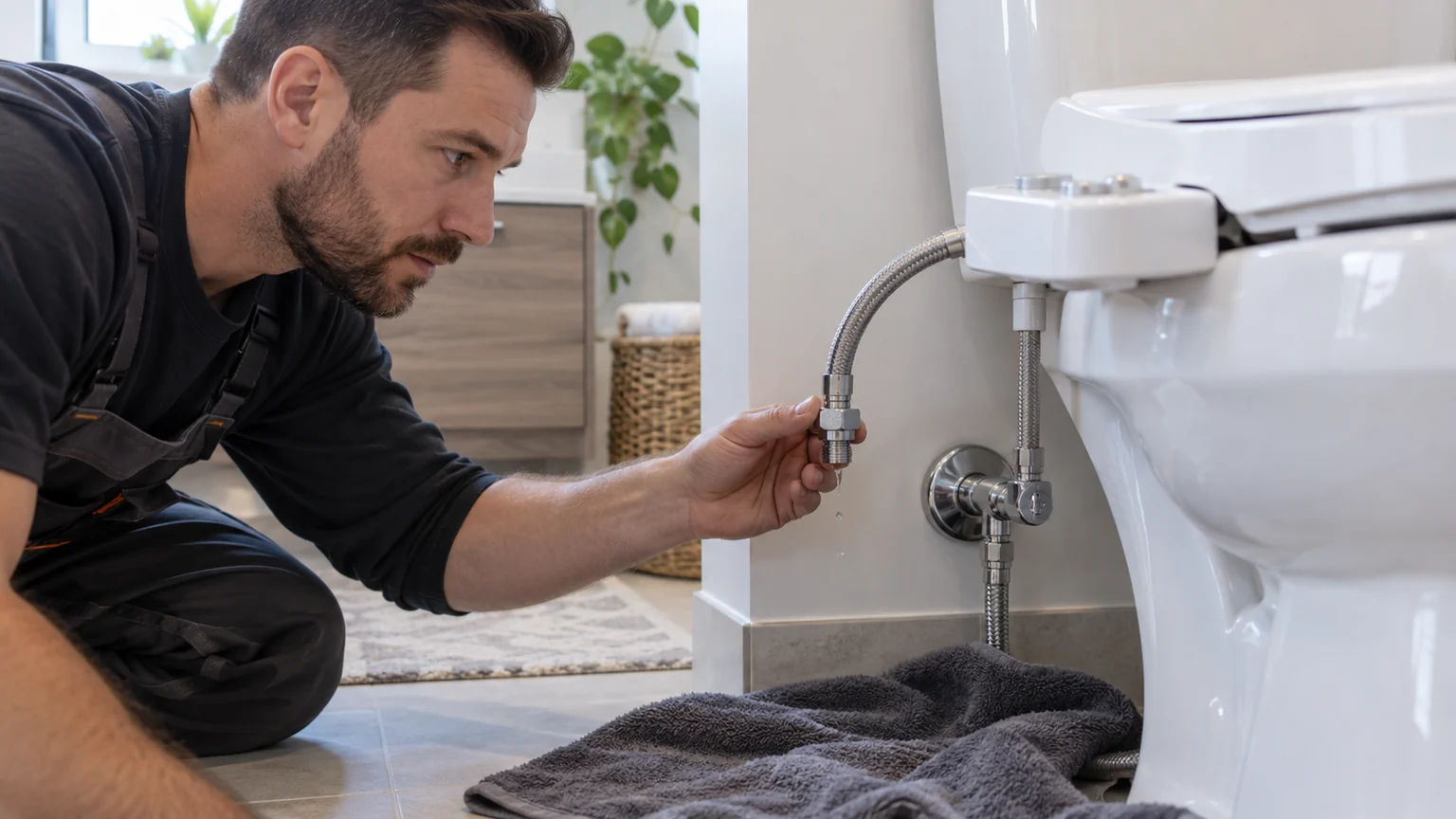
Water may escape from a hose, a tee connection, the shutoff valve or the bidet itself. It can run down a component before collecting beside the toilet, so the lowest wet point is not necessarily the origin. Report whether moisture appears continuously, only during use or after a recent installation change.
Model and manufacturer information are useful because attachments differ. Provide the installation instructions if available and mention any non-original fittings. A generic hose or improvised adapter should not be assumed appropriate for a particular device; compatibility needs to be established from the actual arrangement.
The supply valve deserves its own check
If the valve leaks or will not close normally, do not force it. Shutoff valve assessment may be needed alongside bidet connection repair. The isolation plan must account for the condition of the valve, not merely the point where the hose is dripping.
A shared toilet supply arrangement can involve several connections. Ask which fitting failed and whether the adjoining components were checked. Replacing a hose without addressing a misaligned or unsuitable connection may leave the reason for the leak unresolved.
Water at the floor can hide more than one fault
A puddle beside the toilet may be from the bidet supply, toilet supply, tank or floor drainage connection. If the leak follows flushing as well as bidet use, explain both patterns. Toilet leak assessment may be relevant when the fixture itself has another symptom.
Keep people away from the spill and protect access to the bathroom. A plumbing repair stops new water at the identified source, but it does not establish whether flooring or the ceiling below has been affected. Describe any visible staining or swelling to the people assessing those materials without entering unsafe spaces.
A Bidet Leak Information Checklist
Bidet installations vary, so the responding team needs the actual arrangement rather than assumptions about a generic attachment. Gather existing instructions and observations from a safe dry position. Do not dismantle a pressurized connection or reach through water to operate electrical equipment.
- Device type: Identify whether it is a handheld hose, attachment or powered seat, with model information from existing documents if available.
- Supply route: Describe the visible hose and tee arrangement without assuming every nearby valve isolates every connection.
- Timing: State whether leakage is continuous while unused, begins during spraying or follows toilet operation.
- Water location: Distinguish the device, hose, valve and floor connection, noting where moisture first appeared.
- Recent changes: Include installation or component replacement history and any non-original adapters known to be present.
- Electrical exposure: Report wet cords, outlets or device parts at the start of the call and remain clear of unsafe access.
A powered unit being off does not establish plumbing isolation. Likewise, a local valve being closed does not certify exposed electrical components. Keep these two control questions separate so the incident is not considered resolved from only one action.
A Restart Checklist for the Repaired Installation
| System part | What to clarify before normal use |
|---|---|
| Hose and fittings | Are the repaired components appropriate for the identified device and checked at their connections? |
| Water control | Does the appropriate valve operate and isolate the intended route? |
| Toilet connections | Were separate flushing or base-leak symptoms assessed where reported? |
| Powered components | Does any exposure require another assessment before the device is energized? |
The plumbing result should identify the part repaired and the controlled use checked. If the assessment covered only a hose connection, do not describe the entire powered device as certified satisfactory. Ask what remains outside the service scope and retain the appropriate restrictions.
For a rental or condominium, keep management informed where shared isolation or approval for installation arrangements is relevant. A device attached within one bathroom can still rely on common supply access. The current fault should be assessed without assuming every existing fitting was originally approved or correctly matched.
Keep model information, source findings and any electrical or material assessment together. A later puddle beside the toilet may have a different source, so the earlier record should distinguish the bidet supply from the tank and floor connection. That detail helps avoid repeating a hose replacement when the new observation points elsewhere.
If the bidet was attached to an existing toilet supply, ask whether the retained toilet hose and valve were included in the current check. A repaired attachment can leave an older adjoining component unchanged. The handover should identify that boundary rather than describe the entire bathroom supply as renewed. Where the device instructions are unavailable, retain the actual model information and ask how suitable components were selected before future changes are made.
Use component-specific verification before restarting
After repair, ask how the hose, valve and repaired connection were checked under appropriate operating conditions. A powered device may also require separate assessment if its electrical parts were exposed to water. Do not restart it solely because the floor looks dry or the visible drip has stopped.
Keep the device model and note whether the hose leaked during use or while idle. Ask which connector, supply line or fixture component was actually repaired, and whether the bidet can be returned to use. A powered unit being switched off does not necessarily stop pressurized supply water. The City of Calgary home maintenance guidance gives general upkeep context. For a Calgary bidet connection leak, call (587) 333-7742 or request service.