What Should I Do When A Kitchen Sink Overflows In Calgary?
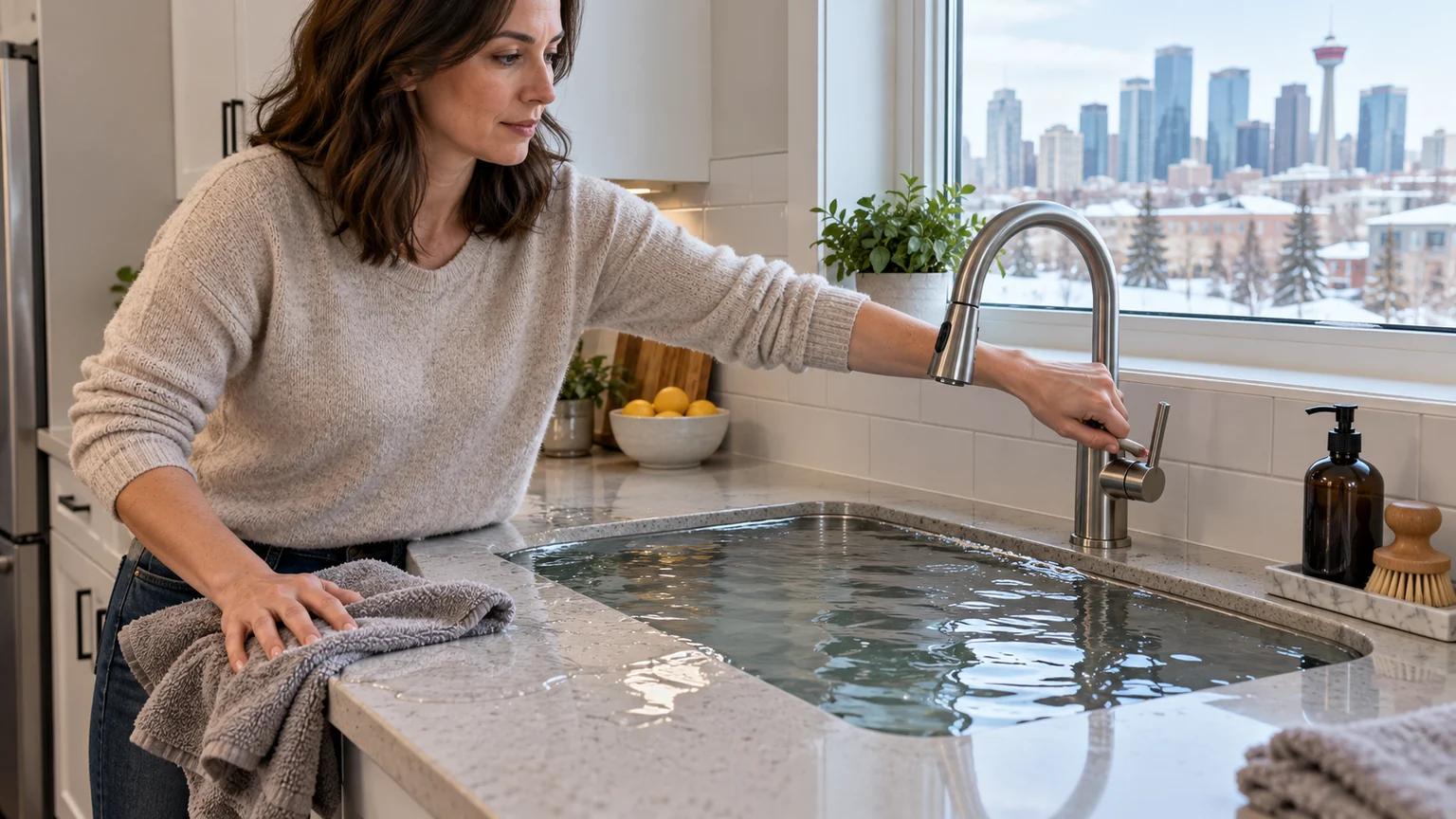
Stop the tap and any appliance discharging into an overflowing kitchen sink, especially the dishwasher. Do not add water to test the drain or pour chemical cleaner into a bowl that is already backing up. Keep people away from the spill and arrange source assessment. If both bowls or other fixtures are affected, the common drain route needs attention rather than only the sink opening.
Stop every source that feeds the kitchen drain
An overflowing sink can keep receiving water after its own tap is closed. A dishwasher may still be pumping into the same route, and another fixture can share part of the downstream drainage. Pause those sources using their normal controls only if you can do so safely. Do not reach through water or move an energized appliance to find a connection.
If water continues entering with the tap off, note when it happens and what equipment is running. In a shared building, tell management because another unit may feed a common route. The observation helps the plumber distinguish water supplied locally from wastewater returning through the drain.
Use the bowl pattern to describe the problem
In a double sink, water may move from one bowl into the other through the connected plumbing. That is useful to report, but it does not reveal whether the restriction is in the trap, branch or farther downstream. Tell the technician which bowl rose first, whether the dishwasher triggered it and whether drainage had been slowing beforehand.
Also mention any recent disposal of grease, food or an object and any earlier work on the branch. Avoid using a disposer or repeated heavy flows to push material through a restricted line. A short-lived improvement after an earlier clearing is worth reporting because it may influence how the remaining route is assessed.
Keep the spill separate from clean areas
Water escaping from a backed-up sink has contacted the drainage system and may contain food residue or other waste. Restrict access, especially for children and pets, and avoid spreading it to unaffected flooring. A sink overflow and a supply leak require different handling, so do not assume every puddle is clean tap water.
If water is entering cabinetry, flooring or a ceiling below, source repair is only one task. A plumber can address the drainage fault, but the condition of concealed materials may need a separate assessment. Stay away from water near outlets or appliance connections and do not enter an unsafe space to retrieve belongings.
Choose assessment over another improvised clearing
Overflowing sink assessment should consider the trap, connections and affected downstream route. Recurring deposits in suitable pipes may lead to a cleaning discussion, while repeated multi-fixture backups may require a broader investigation. A method should be chosen from the findings rather than assumed from the visible bowl.
The City of Calgary sewage backup guidance explains why fats, oils and unsuitable household materials should not enter drains. Changing disposal habits can help prevent new buildup, but it cannot remove an existing restriction or explain a damaged pipe. Tell the plumber about chemical products already added to the water.
A Kitchen Overflow Call Checklist
A clear service call should describe every source feeding the affected drain and where water escaped. Use observations already made rather than running more water into the restriction. The checklist can be shared with the responding technician and, where relevant, the person managing shared building plumbing.
- Tap status: State whether the tap is now off and whether the sink continues rising.
- Appliances: Mention a dishwasher cycle, disposer use or laundry discharge that preceded the overflow.
- Bowl pattern: Identify whether one or both bowls filled and whether water transferred between them.
- Cabinet moisture: Distinguish water crossing the rim from a separate leak beneath the sink.
- Earlier work: Provide previous clearing notes and any recent connection changes.
- Products: Report drain chemicals already used so handling accounts for them.
If another unit may be discharging into the same route, include management rather than assuming your own tap control stops all incoming wastewater. A continued rise with local sources off is a useful observation and deserves to remain in the assessment record.
Separate the Three Kitchen Outcomes
| Outcome | Question to clarify |
|---|---|
| The sink stops overflowing | Was the source corrected, or did water use merely stop while a restriction remains? |
| The connected route drains | Which branch and appliance connections were checked under appropriate controlled use? |
| The surrounding materials are usable | Who assessed the wet cabinetry, flooring or ceiling, and what remains uncertain? |
These outcomes can happen at different stages. A plumber restoring flow should explain that work without it becoming a clearance for concealed finishes. Equally, drying a cabinet does not establish the condition of the branch that previously filled both bowls.
Keep the findings specific enough that a later event can be compared. A new drip at a hose connection is not the same symptom as wastewater returning during dishwasher discharge, even if both leave water in the kitchen. Report the changed route rather than describing every kitchen puddle as a repeat of the first blockage.
Ask for any temporary limitations in writing before the household resumes regular cooking and appliance use. A visitor may not know that the dishwasher is still restricted, so make the instructions practical for everyone using the space. Communication limits another spill while the unresolved plumbing question is addressed.
Include whether the cabinet leak and bowl overflow began together or at different times. The sequence can help the technician distinguish a weak connection exposed by a restriction from a separate supply fault. Keep both observations in the record rather than letting the more visible spill replace the less visible source question.
Ask how the kitchen will be checked afterward
The verification should address what caused the overflow, including dishwasher discharge or a connected second bowl when relevant. A tap that drains briefly does not automatically explain a symptom that previously occurred during a full appliance cycle. The technician can select an appropriate controlled check after the source has been assessed.
Keep any restrictions and recommendations in writing. If the line was opened temporarily but its condition remains uncertain, record the next diagnostic step. For a Calgary kitchen sink that is spilling or repeatedly backing up, arrange an assessment and describe all connected sources during the call: call (587) 333-7742 or request service.