What If A Water Softener Bypass Leaks In Calgary?
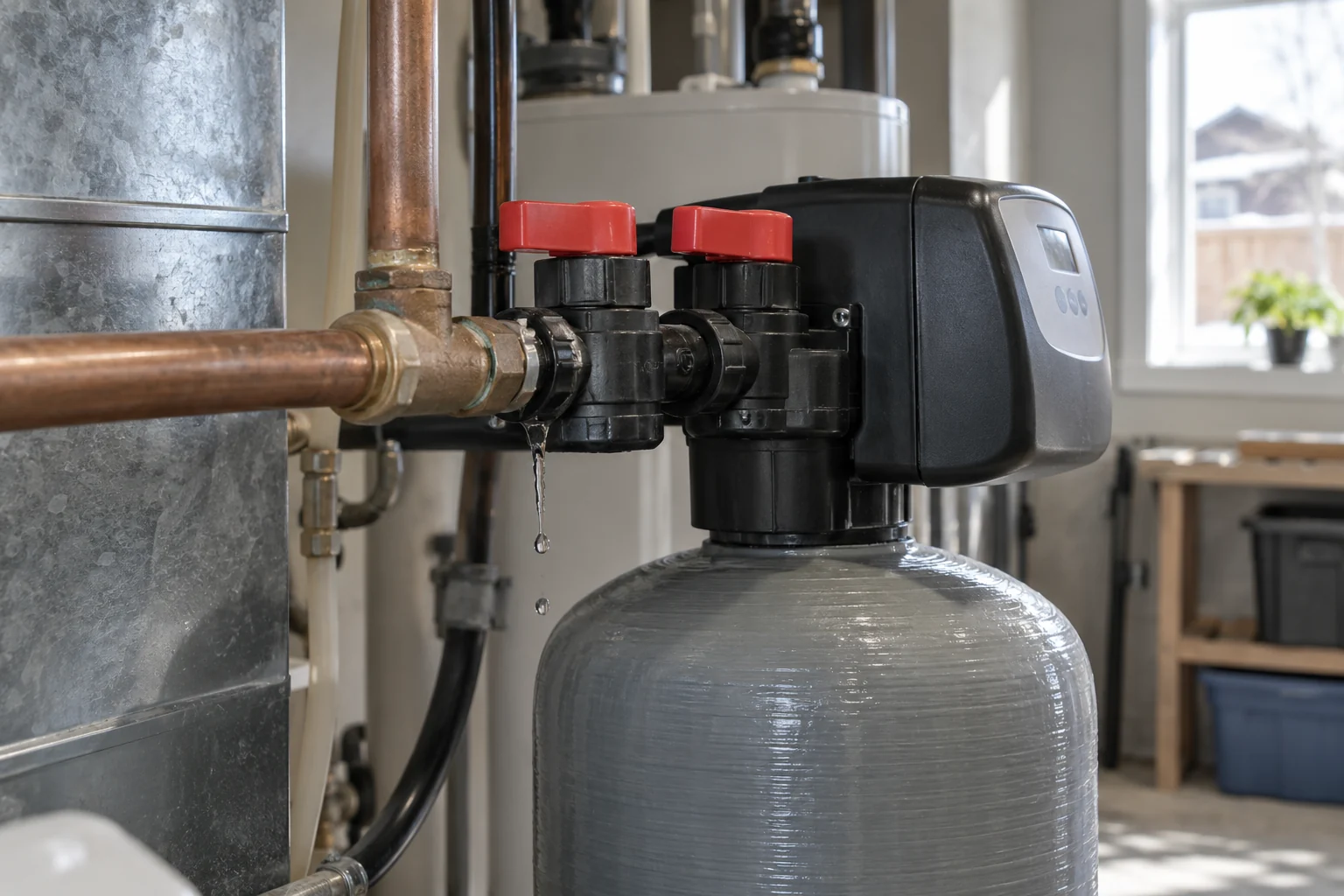
Do not force or dismantle a leaking water softener bypass valve. A bypass changes the water route through equipment, but a damaged valve can still leak while the building supply remains pressurized. Use a known safe upstream shutoff when appropriate and arrange repair, giving the technician the model and the exact place water escapes.
Locate The Leak Without Turning Every Control
If water appears at more than one point, describe each one separately. A wet bypass body, a connector drip and water running down from a fitting above can look alike at floor level. The plumber should establish the release point before selecting a part or repair method. Do not twist connected piping to make the suspected joint easier to photograph.
Understand What Bypass Does
Ask the technician what the bypass route serves in this particular installation. Different valve assemblies and arrangements do not support a universal household instruction. If the brine tank itself is filling over its rim, that overflow needs a separate source check. If the assembly itself is damaged, routing water around the softener may not stop that damage from being supplied. Explain any valve movement already attempted and whether it changed the visible water release.
Stop When A Handle Resists
Put down tools if the handle will not move normally or if the valve begins to release more water. A stuck handle is a reason to change the response, not to increase leverage. Do not remove a screw, stem or cover to see why it resists. Arrange assistance and report whether a known upstream control can be reached safely.
- Report the control position and where water first appears.
- Do not force a stiff bypass or assume one setting isolates every connection.
- Ask what remains pressurized after the selected bypass position.
- Record the repaired part and controlled leak check before normal operation.
Describe The Available Upstream Control
In a shared building, identify who has authority over the relevant supply and equipment room. Closing an assumed upstream valve can affect occupants or systems beyond the softener. Give the contractor a clear description of what is accessible and what is not. If the release continues and no safe control is available, say so directly rather than trying an unfamiliar building valve.
Keep The Model Details Available
Use a model label, installation record or existing manual to explain the equipment. A photograph from a safe dry location can help communicate the bypass type, but the technician still needs to inspect its condition. Do not buy an apparently similar valve on the assumption that its connection sizes, control function and equipment compatibility will match.
| Visible clue | What to report | What not to assume |
|---|---|---|
| Water near a handle | Describe the first wet point without moving the valve further. | Do not assume bypass mode isolates a damaged valve assembly. |
| The handle will not move normally | Tell the contractor about resistance or visible damage. | Do not use extra leverage or remove the stem during a leak. |
| An upstream control is available | Describe the known control and whether access is dry. | Do not operate unfamiliar shared-building supplies without coordination. |
A leaking bypass or connection belongs in water-softener leak repair. If the water instead comes from nearby supply piping, compare that repair through the service overview.
Ask How The Assembly Will Be Assessed
Ask whether the diagnosed failure is in the valve assembly, a seal or a neighbouring connection. Also ask whether other disturbed or retained connections need checking during the work. An explanation based on the actual source is more useful than a generic promise to stop the softener leak. Keep any temporary water restriction separate from the completed repair in the record.
Notify Occupants About Supply Restrictions
Tell occupants whether household water is restricted, whether the treatment unit remains bypassed or whether controls should be left alone. Only describe the condition actually established; do not assure everyone that water use is unchanged if the installation has not been assessed. In a rental, send the owner or manager the same status and provide a contact for access.
A bypass leak beside powered treatment equipment needs safe access as well as valve diagnosis. Alberta’s flood cleanup and utility-safety guidance covers water-damage and utility precautions if the leak reached electrical components.
Restore Use Only After Connection Checks
When the repair is handed over, ask which water route should remain selected and what was checked with the supply restored. Record any equipment maintenance or additional connection work still recommended. If another drip appears, describe whether it comes from the same valve area. A valve staying dry while isolated is not a substitute for checking it in the intended operating arrangement.
Distinguish The Water Route From The Leak Status
The bypass position and the visible release are two separate facts. A useful report is: “The bypass handle was moved to the marked position; the drip at the handle continued.” A less useful conclusion is “The softener is isolated” when that has not been established. Give the plumber the label wording if visible without moving equipment.
| Record | Why it helps |
|---|---|
| First wet point | Separates a handle-area leak from water arriving from an adjacent fitting. |
| Control used and visible change | Shows what happened without treating handle movement as proof of isolation. |
| Supply restrictions communicated | Prevents another occupant from changing the controls while repair is pending. |
| Confirmed part and final position | Gives the household a usable record after repair rather than an unexplained bypass setting. |
Ask whether normal household supply and treatment operation have both been restored, or whether one remains restricted. Those are different handover questions. If a temporary arrangement remains, record who will review it and the next task. Do not use the temporary status as a reason to omit the valve repair from follow-up.
If an occupant needs water while work is pending, ask about the established supply status rather than changing the bypass again. Record the answer so the next household member receives the same instruction.
When arranging help, give the crew the bypass position, first wet component and effect of any safe isolation. Ask which finding, test and remaining restriction will be recorded. Request service or call (587) 333-7742.