What If My Hot Water Tank Starts Leaking In Calgary?
A leaking hot water tank needs source assessment before it is used normally again. Keep away from hot discharge and wet electrical equipment, and do not assume the tank shell has failed from a puddle alone. Water can come from a supply connection, valve, drain component or the tank itself. Describe where it first appeared and arrange a safe isolation plan appropriate to the appliance.
Keep people clear before tracing the leak
Hot-water equipment can involve hot surfaces, pressurized water and electrical or fuel connections. Do not reach through a wet area to operate controls or enter a space with an immediate safety concern. If you suspect a gas leak or another urgent threat, leave the area and use the appropriate emergency response rather than treating it as a routine plumbing visit.
Tell the service team whether water is spreading toward nearby equipment or another room. A small visible puddle can conceal a continuing source, while a large puddle does not establish which component failed. Observations from a safe dry position are enough to begin the call.
The first wet component is more useful than the final puddle
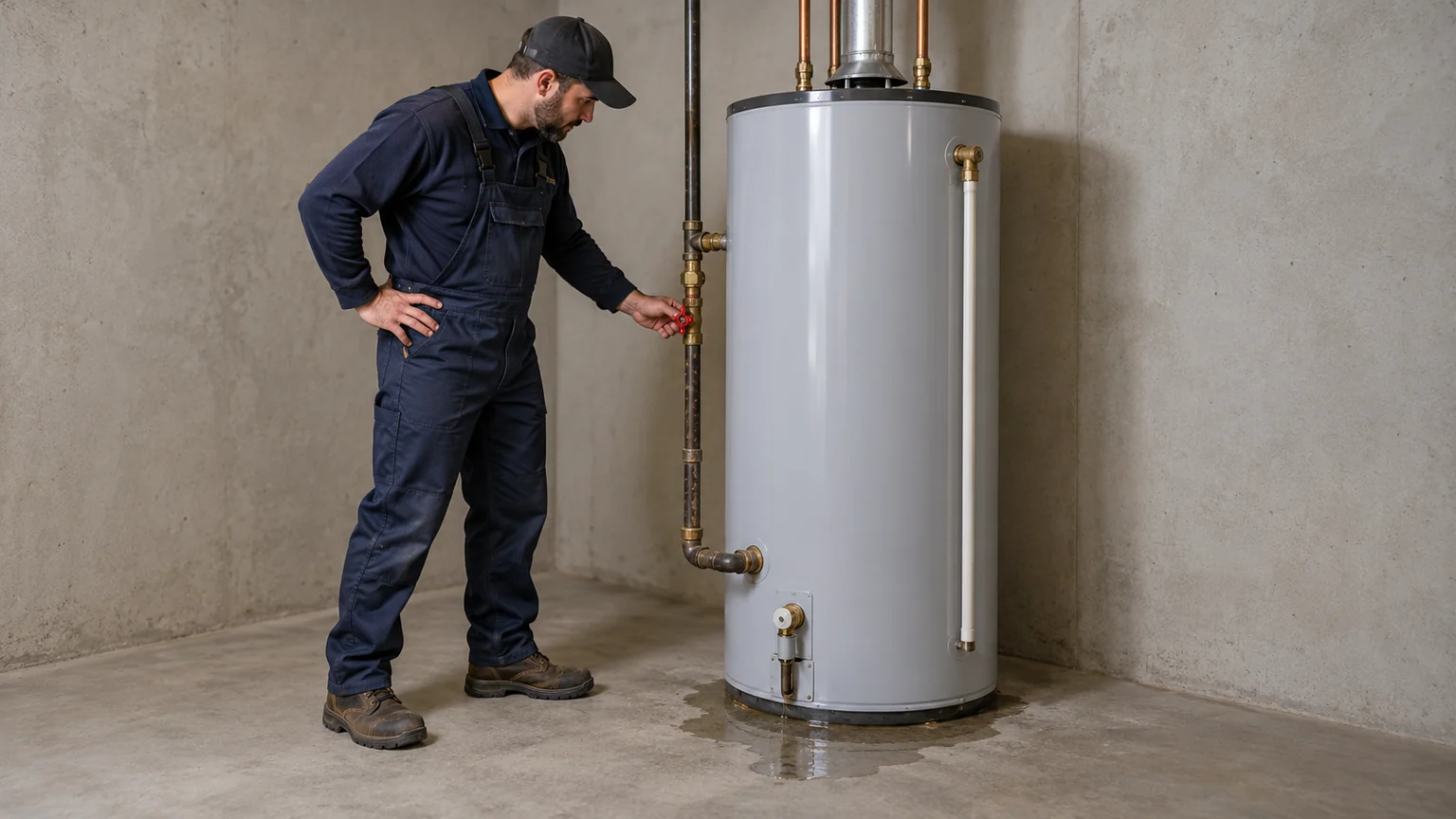
Look for the reported route without moving or dismantling the heater. Water from a top connection can run down the jacket; discharge from a valve can collect near the base; moisture from elsewhere in the room can appear beside the tank. The technician should establish the actual source before deciding repair or replacement.
Mention whether the event followed a heating cycle, a change in water use or recent plumbing work. Record any visible model information from a safe position. Appliance design matters when identifying components and appropriate controls, so a generic procedure from another heater should not be applied automatically.
Isolation has to suit the heater and the supply
Turning off one nearby tap does not necessarily isolate a tank leak. Water and energy controls need to be considered together by the person assessing the equipment. Do not leave a heater operating under conditions it is not intended to handle, and do not improvise by removing discharge connections or plugging a valve.
Water heater leak assessment can establish the source and the immediate control plan. If the supply route or an adjacent pipe is leaking, water leak repair may be part of the investigation. The service should explain which component was isolated and what use is restricted.
Repairability depends on the identified defect
A leaking external connection is a different finding from failure of the tank body. Age and visible corrosion may inform an assessment, but they do not replace source identification. Ask whether the proposal addresses an accessible component or recommends tank replacement because of a confirmed condition.
The Rheem technical bulletin library includes manufacturer guidance on diagnosing heater leaks; instructions must be matched to the actual appliance. Do not use a general bulletin to dismantle an unfamiliar heater. Its value for the homeowner is understanding why an assessment should locate the source rather than label every puddle a failed tank.
An Emergency Tank-Leak Call Checklist
Give the service team enough information to plan safe source assessment without approaching wet or hot equipment. The checklist focuses on the actual incident, not a remote conclusion that a replacement is inevitable. Unknown model or control details should remain identified as unknown.
- Equipment: Provide the heater type and any safely readable model information. Mention nearby equipment that may be affected by water.
- First wet point: State whether a top connection, discharge route, external pipe or lower area was visibly wet first.
- Timing: Describe continuous flow, a cycle-related event or moisture noticed after use, without deliberately running another test.
- Control status: Report any safe isolation already performed and avoid implying a tap being off isolates the heater.
- Hazards: Mention hot discharge, wet electrical access or an immediate safety concern at the beginning of the call.
- Spread: Identify affected flooring, walls or lower rooms from observations available without entering unsafe spaces.
Include recent work and prior leak reports. Those records can help identify which connections changed, but the current source still needs direct assessment. An older repair should not be treated as proof that the same component has failed again or that adjoining parts were renewed.
Compare the Outcomes of Assessment and Repair
| Outcome | Evidence to request |
|---|---|
| Leak source identified | The component directly observed and any limits on access or diagnosis |
| Immediate source control | Which water and operating conditions are restricted while work continues |
| Repair or replacement selected | The defect supporting that choice and the installation scope it requires |
| Normal service restored | A check matched to the completed source work and appliance operation |
A stopped drip between cycles is not necessarily the last outcome. Ask whether the check addressed the conditions associated with the original leak. If a connection is repaired but another source remains suspected, that limitation should be part of the handover.
Keep source control separate from surrounding impact decisions. Water near equipment can require another assessment, and concealed finishes may remain wet after the heater is isolated. The plumbing team should state its completed scope rather than allow a household to infer broader clearance from the absence of a current puddle.
Where several residents depend on the hot-water supply, communicate restrictions consistently. A lack of hot water can be inconvenient, but restarting uncertain equipment to restore convenience is not a substitute for the planned check. Retain the model, findings and operating instructions so later service can start from the actual repaired condition.
Separate the plumbing outcome from water impact
Stopping the leak does not establish the condition of adjacent flooring, walls or equipment. Describe what the water contacted so appropriate material or electrical assessment can be arranged. Keep a record of the source finding, isolation instructions and any remaining limitation.
Before normal hot-water use resumes, ask how the repaired or replaced equipment was checked and what restrictions remain. A leak-free connection and suitable operation are both relevant to the result. For a Calgary hot-water leak, arrange assessment and describe its visible route during the call: call (587) 333-7742 or request service.