
What Should I Report About An Intermittent Leak In Calgary?
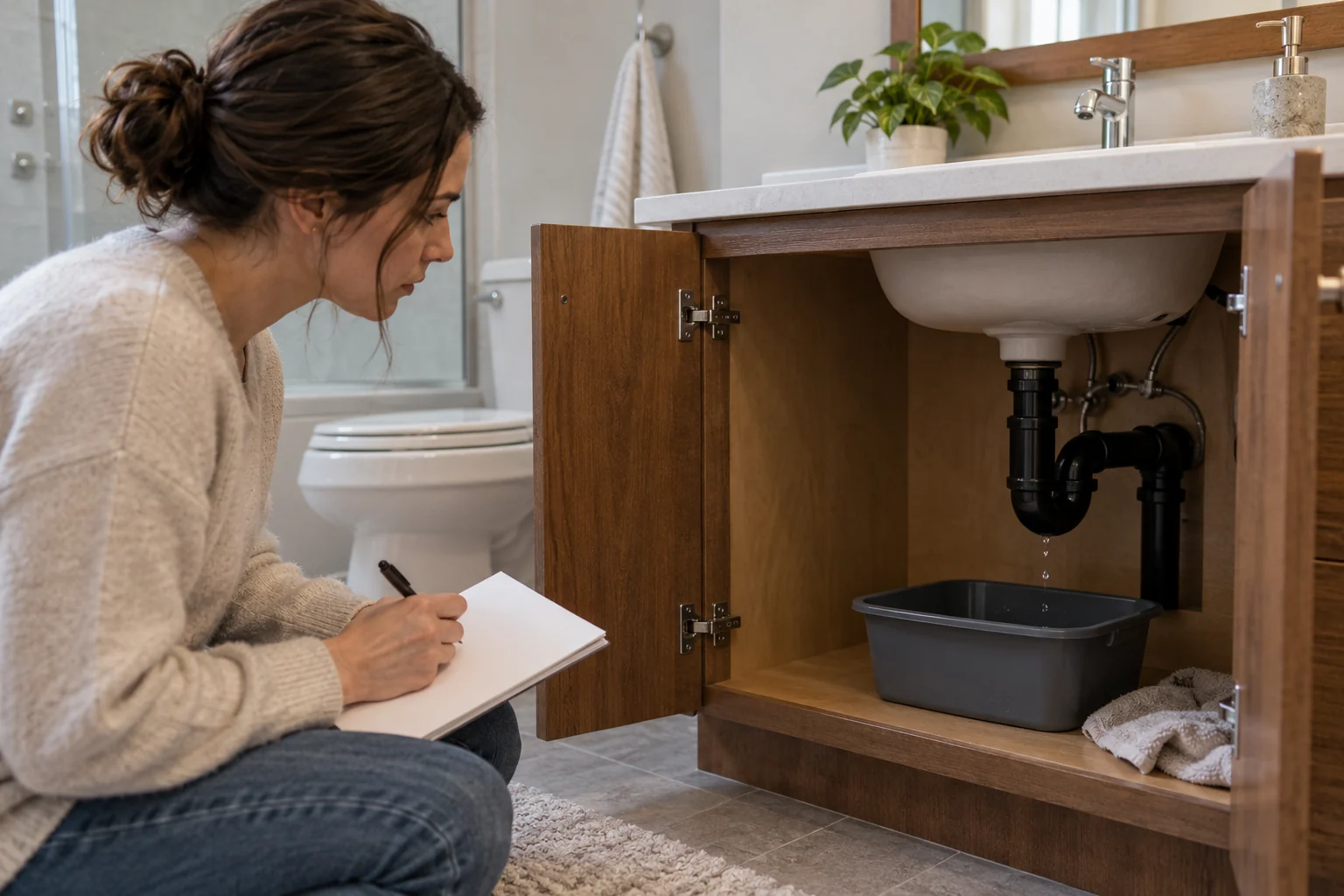
For an intermittent hidden leak in Calgary, tell the plumber when wetness appears, which fixtures or appliances were operating, where the symptom is visible and what changes after use stops. Include any known isolation steps and safety limits. A recurring pattern is useful evidence, but do not run equipment to reproduce damage or present an unconfirmed source as established.
Build a short observation timeline
Write down the first discovery and later recurrences, including whether the area appeared dry between them. Use approximate times honestly rather than inventing precision. Mention changes such as rainfall, household activity or a valve being closed, but keep them as observations. The timeline can guide assessment without proving a cause. A few dated entries explaining the circumstances are more useful than many photos without context or a confident story that combines every event into one suspected pipe failure.
Describe the visible location and surrounding layout
Identify the room, wall, ceiling or cabinet where water appears, then explain what is above or nearby if known. A stain location may not match the source because water can travel. Do not enter another suite, remove finishes or move a heavy appliance to make the layout more complete. For Calgary leak detection, an honest access limitation is useful information. The professional can determine what further access is appropriate for the investigation.
Include use patterns without recreating the incident
A leak after shower use, during laundry draining or while the home is idle raises different questions. Explain what was already observed, including the interval between use and visible wetness. Avoid repeatedly running a suspected fixture to see whether the stain grows. Our article on leaks that appear during Calgary fixture use expands on that relationship. Controlled professional assessment differs from a homeowner deliberately adding water to a problem in concealed materials.
Record the response to known isolation
If a fixture or main valve was safely closed, note which control and whether the symptoms changed. Remaining water in piping or materials can keep dripping, while another source may remain active. Do not force a reluctant valve or operate unfamiliar shared controls. A handle position alone is not proof of reliable isolation. Report the response plainly so the plumber can assess it, rather than describing all continued wetness as either an ineffective main or harmless residual water.
Use consumption clues with their limits
Unexpected meter use can be relevant to a supply concern, but normal use and automatic equipment must be accounted for. A stable observation does not rule out every intermittent or drainage leak. Calgary's household leak guidance provides the checking context. Give readings and circumstances separately from the wetness timeline. Those records may relate to the same issue, but the assessment should establish that connection instead of assuming it because both seem unusual.
Flag changing conditions immediately
An intermittent symptom can become an active release. If water spreads, reaches another floor, approaches electrical equipment or accompanies unstable finishes, report the current change rather than waiting for the next scheduled observation. Stay away from hazards and seek the appropriate urgent advice. For water leak repair, the present conditions matter alongside the history. A leak that cannot be seen continuously can still need assessment; invisibility is not evidence that the surrounding materials are unaffected.
Keep assessment limits visible in the record
If the symptom does not occur during the visit, ask what was checked and what remains uncertain. Do not convert a possible explanation into a confirmed diagnosis when sharing the result with another professional. Retain the observation timeline and any recommended follow-up. That record can support a later assessment without repeating unhelpful tests. A useful intermittent-leak report identifies patterns, access and unknowns, allowing the repair plan to follow evidence rather than the most persuasive guess about the hidden source.
A simple intermittent-leak observation log
| Entry | What to write |
|---|---|
| Time and location | When and where water was observed, with approximate times identified honestly. |
| Existing use | Fixtures or automatic equipment known to be operating, without recreating the incident. |
| Visible change | Stain growth, dripping or another room affected, from a safe position. |
| Isolation | Known control operated and the observed response, including any stiffness or valve leakage. |
| Assessment | Confirmed findings, inaccessible areas and next recommendations, kept separate from the initial theory. |
Give the plumber a timeline even when the wall is dry
- Preserve the earlier pattern: a dry moment does not erase repeated observations or establish that materials are unaffected.
- State what was not observed: do not fill a timing gap with an assumed appliance cycle or concealed start time.
- Do not repeat damage: controlled professional checks differ from household use that deliberately adds water to an unresolved source.
- Clarify the next decision: ask what additional assessment is proposed and what restrictions apply while uncertainty remains.
- Retain the limits: a possible explanation should not become a confirmed diagnosis in later communications.
If a professional cannot reproduce the symptom, ask which observations informed the assessment and what was still checked. A quiet visit can provide useful findings without establishing a complete source. The record should preserve the difference so another trade or property contact does not assume the fault was definitively excluded.
When a new recurrence occurs, add it chronologically rather than rewriting the earlier entries. State what changed and what remained the same. This supports comparison between incidents and avoids a narrative that becomes more confident each time it is retold.
Keep safety changes at the top of the report. A previously contained symptom reaching electrical equipment, another floor or damaged finishes can change the response even if the source still appears intermittent. Do not wait for another example to improve the log.
The record's purpose is to guide a finding-based assessment, not to make the homeowner diagnose hidden piping. Accurate timing, limited observations and clear access information are enough to support the next professional decision while avoiding unsupported conclusions about every concealed source or material.
When another professional reviews the record, point out which statements are observations and which are confirmed findings. This avoids a possible source becoming established through repetition and leaves the next assessment free to consider a different explanation where the new conditions support it.