When Should A Recurring Drain Clog Be Checked In Calgary?
A recurring commercial drain blockage in Calgary needs investigation beyond another clearing when the same symptoms return, several fixtures are affected, prior work did not explain the cause or findings suggest a pipe or installation problem. Clearing may restore flow without resolving why the obstruction recurs. Give the plumber previous reports and the new operating pattern, then ask what further inspection would establish before approving a particular repair or excavation.
Define recurrence with a usable service history
Start with dates, affected fixtures and what the contractor actually did each time. A sink trap cleaned once and a main route cleared later are different jobs. Several invoices saying "drain service" may not show that the same section was treated. Ask for available reports and record unknown scope honestly instead of assuming every visit checked the entire system.
Describe how long drainage appeared normal after each visit and what changed when symptoms returned. Was the same floor drain involved? Did another fixture become slow? Did the issue follow a particular equipment discharge? Those details make the pattern more useful than a count of service calls. Keep the history factual without declaring the earlier contractor at fault before the new source is established.
Look beyond whether the drain is currently running
A restored flow is useful, but it is not always a complete explanation. Ask whether the clearing found material, a definite obstruction location or evidence needing further review. If the source remained uncertain, keep that uncertainty in the record. Do not allow a successful discharge immediately after work to become a claim that every structural condition was checked.
For Calgary commercial drain investigation, explain the recurrence during the first call. The contractor may plan different work from a one-time local sink blockage. That does not mean every repeat incident requires a sewer replacement. The scope should follow the pattern, access and findings rather than an automatic escalation to the largest available service.
Include equipment changes and discharge practices
New equipment, altered cleaning routines or a change in how the premises uses water can be relevant. Tell the contractor what changed and when. An increased workload can reveal a restriction that was already present, while an unsuitable connection can need a separate installation review. The timing alone does not distinguish those possibilities. A floor drain that overflows only during busy periods offers a useful operating pattern to include in the investigation.
Where grease-interceptor or specialist-equipment servicing is relevant, provide reliable records and involve the responsible provider. Do not treat every restaurant blockage as proof that staff disposed of grease improperly. Likewise, do not assume scheduled servicing means no related problem can exist. The plumber needs the actual arrangement and maintenance history so recommendations connect to evidence rather than a stereotype about the business.
Ask what the proposed inspection will answer
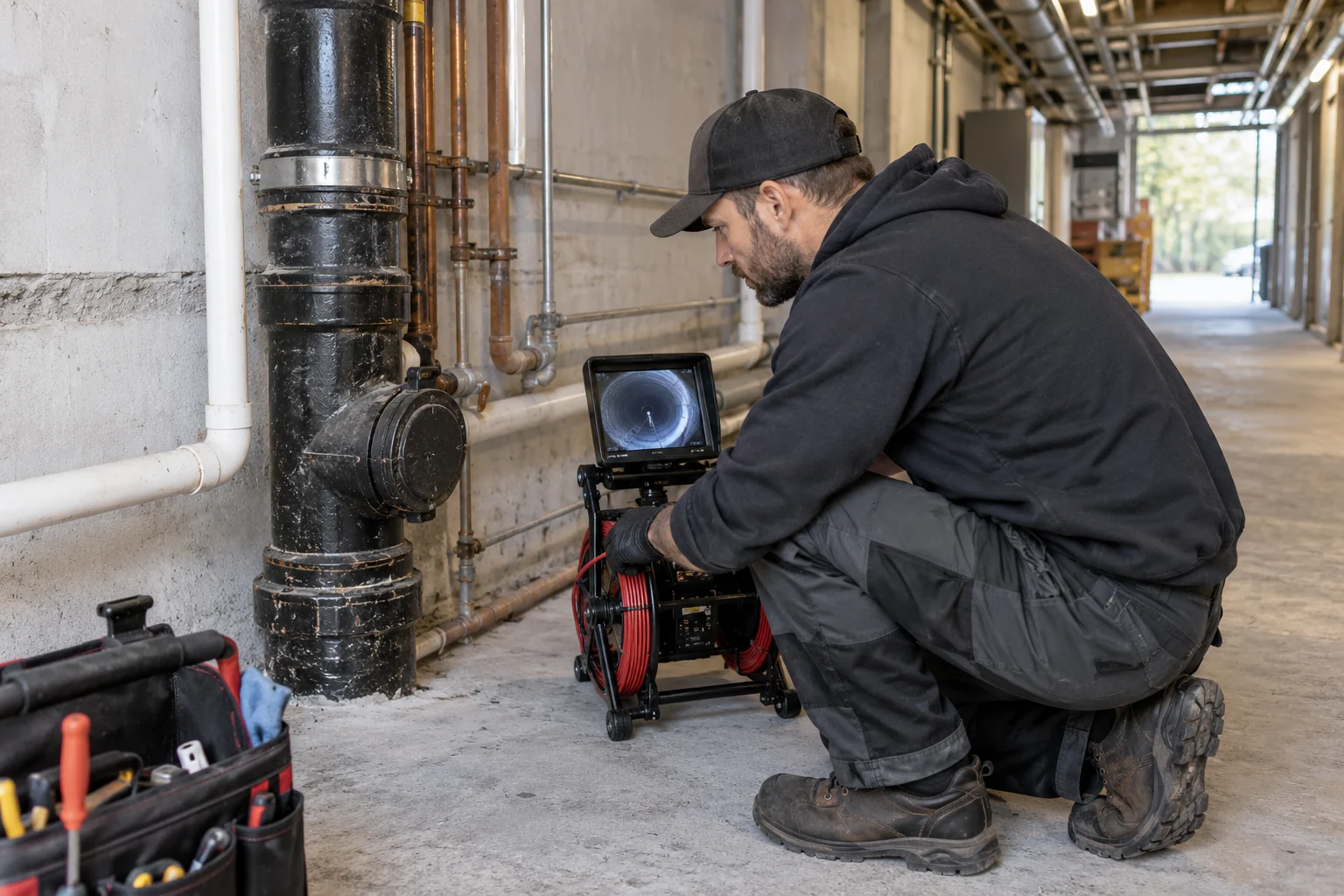
A camera or other investigation is useful when it has a defined purpose and adequate access. Ask which route can be examined, what condition the inspection is looking for and what may limit visibility. A route that remains obstructed or inaccessible can limit what the work establishes. Keep those limits in the result instead of treating the service name as proof that all piping was seen.
Our Calgary sewer camera inspection service can be discussed where the route and condition make it appropriate. Confirm the actual service scope and access before assuming it fits the building. Inspection findings should be explained in practical terms: the observed location, condition and recommended next action. A photograph without that context can be difficult for management to interpret.
Use these questions before approving more work
- Which previous visits involved the same route, and what did they establish?
- What new symptom or finding supports investigation beyond clearing?
- Which section will be inspected and what access is required?
- What conditions could limit the inspection's conclusions?
- How would each possible finding change the repair recommendation?
- Does the proposal include an actual repair or only investigation?
- Who authorizes openings, interruptions and any work affecting neighbouring units?
- What written report will be provided afterward?
These questions help separate a useful investigative step from another vague visit. They also protect against assuming that an inspection automatically commits the business to excavation. A manager can approve a defined investigation and review its findings before deciding on wider construction, while still addressing urgent source control where wastewater is returning.
Do not reproduce the backup without a plan
Staff should not keep running fixtures to create evidence for the contractor. Stop connected use during active return, restrict the affected area and report observations already made. If a professional proposes controlled testing, ask how the site will be protected and who directs the activity. Testing under a plan is different from an employee repeatedly starting equipment while wastewater spreads.
Calgary's sewage backup guidance explains City triage through 311. Provide the prior reports and any current City instructions to the private plumber. Disclose drain chemicals added before the visit. Keep cleanout caps closed and explain access obstructions rather than opening the system or cutting finishes yourself during the backup.
Match the permanent work to the actual finding
If a defect or installation issue is confirmed, ask the contractor to identify the repair boundary and why it addresses the recurrence. If an obstruction pattern is found, ask what maintenance or operational change is relevant. A diagnosis should lead to a specific recommendation, not a broad instruction that the business needs more frequent service without explaining what that service prevents.
Discuss permits, shared-building permissions and finish restoration for the proposed work where relevant. A common route may need management coordination and communication to other occupants. An estimate should distinguish source repair from cleanup, equipment checks and reopening of affected space. A longer investigation does not remove those separate needs if wastewater entered occupied areas.
Keep the result useful for future maintenance
Retain the investigated route, confirmed findings, completed repair and any limitation. Update the maintenance instruction with its purpose and responsible person. Keep access points reachable in ordinary conditions. If further work is pending, record what remains restricted and who handles it. A repair log should make the next contractor's starting point clearer, not add another unexplained entry.
If symptoms return after the new work, compare the actual location and operating pattern with the report. It could involve another route or an unresolved condition. Give the contractor the record rather than assuming the same cause. A Calgary commercial property benefits when recurring blockages produce a documented explanation and a suitable plan, instead of an endless sequence of clearing visits judged only by whether water disappeared that day.