Who Fixes A Pipe After Hydrovac Exposes It In Calgary?
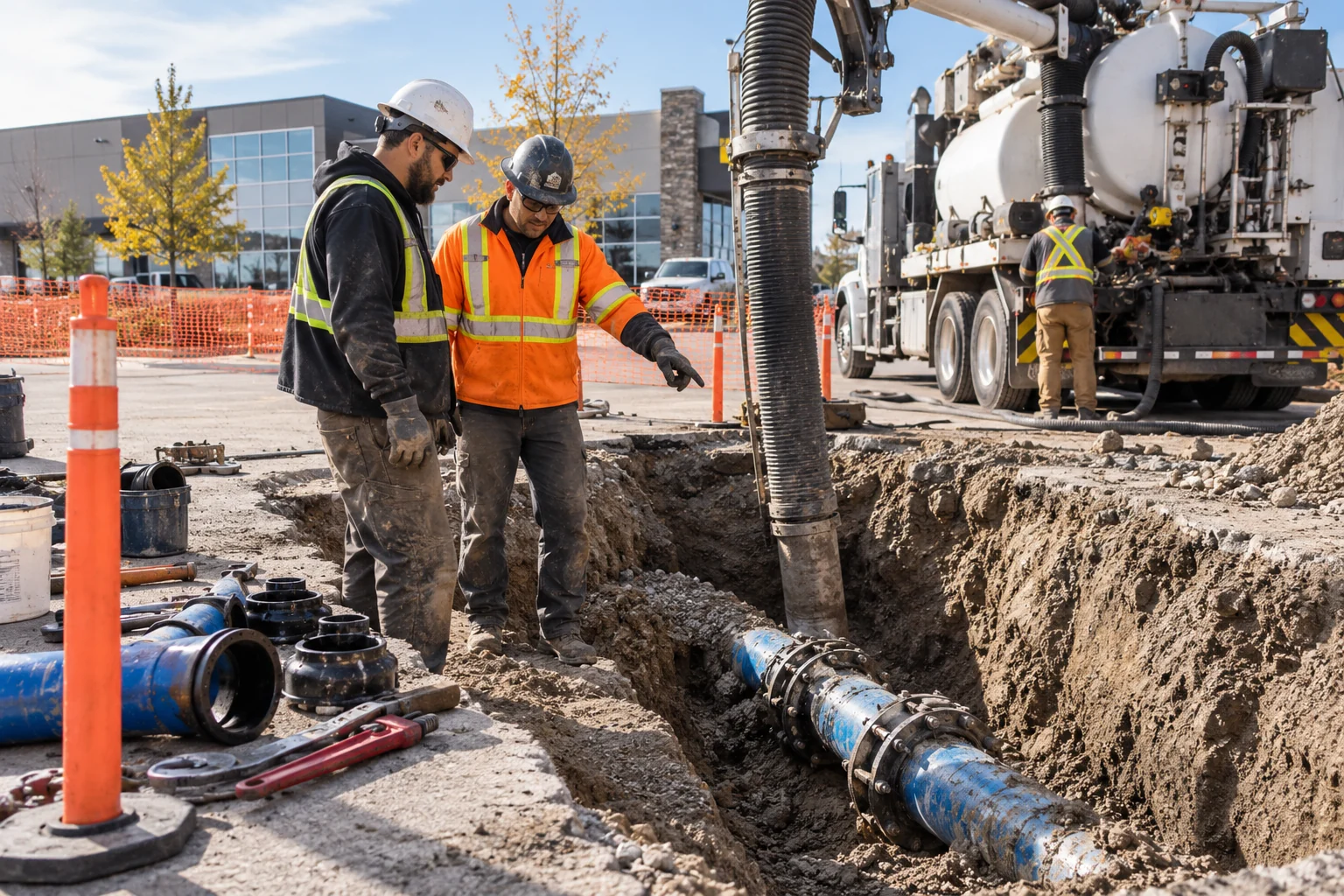
Agree before excavation who will assess and repair the exposed pipe, who controls the affected supply and who authorizes the work. A hydrovac crew may provide exposure while a plumber, utility or other appropriate contractor owns the pipe repair. The correct arrangement depends on the line and ownership; exposing it does not automatically transfer responsibility or complete the repair.
Name The Repair Contact Before Exposure
Ask at booking whether the excavation scope ends at exposure or includes any additional work. If a plumber or utility must receive the finding, identify the contact and how they will be notified. The building manager should understand that distinction before the crew arrives. Otherwise a successful exposure can leave everyone waiting for a repair that nobody has actually arranged.
Establish Which Line And Ownership Are Involved
Provide available line and ownership records, but mark uncertainty clearly. The boundary may require the appropriate property or utility contact to establish responsibility. Do not decide it from the location of surface water or the side of a fence. That finding affects who may authorize work and which repair process applies, so it belongs in the coordination record.
Coordinate Supply Control With The Repair
Tell the repair contact which supply controls have been operated and what effect was observed. Do not assume the excavation crew has isolated the line unless that is within the established plan and confirmed. A pipe becoming visible does not establish the service condition for handling it. Keep unauthorized staff from touching controls or exposed connections while the repair is being coordinated.
- Record which section was exposed and what defect is visible.
- Identify the person approving the pipe repair and any scope change.
- Keep access and supply restrictions clear until the repair is tested.
- Assign backfill and surface restoration separately from pipe work.
Provide A Clear Finding At Handover
The exposed location and visible condition should be communicated accurately, with safe photographs if appropriate. Visibility can help the next trade inspect the fault, but it does not replace that inspection. Record where the crew stopped and what access restriction remains. Avoid a handover that claims the pipe is ready for any repair without the relevant contractor reviewing the actual condition.
Confirm Changes To The Agreed Scope
If the exposed component is not what was expected, ask for the revised finding and proposed next step. A change can involve different repair authority, a larger area or another contractor. Keep approval and utility coordination attached to that change before proceeding. The fact that work already began should not become a reason to expand disturbance beyond the area addressed by the plan.
The hydrovac service crew can expose and clear the work area, while underground water-line repair addresses the confirmed pipe defect. Agree who handles the handoff before the first crew leaves.
Keep Site Restrictions In Place Between Trades
Name who maintains the barriers and communicates the site status while waiting between trades. Staff arriving later may see no active crew and assume access has reopened. Tell them that the exposure and repair are separate stages. Keep people out of the excavation and do not cover or rearrange it as an improvised way to restore an ordinary shortcut.
Ask Who Owns Testing And Approvals
Ask the repair contractor which checks and applicable approvals support completion of the actual pipe work. Keep that result distinct from the excavation crew’s completed scope. A quotation or photograph does not itself prove a repaired connection is ready for normal operation. The handover should state whether the supply can resume and whether any separate examination or approval remains.
The excavation-to-repair handoff should include utility markings that remain relevant around the exposed pipe. Utility Safety Partners’ ground-disturbance guidance explains the ground-disturbance process for the work area.
Assign Reinstatement And The Final Update
Arrange the ground or surface task explicitly, including who receives the repair result and communicates reopening. A functioning line can coexist with an unfinished access area. Keep that remaining condition visible to the manager and occupants. Once each stage is completed, retain the findings together so a future contractor can understand the line exposed, work performed and final reinstatement.
Use A Handoff With Named Recipients
| Record Or Decision | Useful Detail |
|---|---|
| Exposure result | The excavation lead identifies the location and extent exposed, the observed condition and any unexpected finding. The repair lead receives that information and states what inspection or further access is needed. |
| Repair authorization | The property or utility contact confirms who may approve the pipe work and any change. Record a pending decision as pending rather than treating a crew's attendance as authorization. |
| Supply status | The responsible contact states what is known about the affected supply and who controls it. Carry that information into the repair plan; do not infer the operating condition from the visible pipe. |
| Site completion | Assign the remaining ground or surface work and the person communicating access restrictions. Keep pipe testing and reopening of the work area as separate entries where they have different owners. |
For example, an exposure crew may report that the requested section is visible while the repair contractor has not yet attended. The manager's update should name the waiting repair contact and the maintained site restriction. ‘Excavation finished’ is an accurate status for that crew's scope, but it leaves the water-line incident open. Record the next agreed contact or action without promising an unconfirmed completion time.
Before the first crew leaves, ask whether the receiving contractor has the location, records and access information it needs. If further exposure is requested, take it back through the responsible planning and approval process. The handoff should close communication gaps without giving site staff authority to extend excavation or handle the exposed service themselves. Include the incident reference, names of both crew contacts, observation time and agreed next action in the transfer record. Ask the receiving contact to confirm that it has the information rather than rely on an unattended email. If nobody has accepted the next task, leave it clearly unassigned for the manager to resolve.
When arranging help, give the crew the exposed defect, site contact and remaining water-use restriction. Ask who accepts the repair handoff and which pipe or surface tasks remain assigned. Request service or call (587) 333-7742.