Who Gets Told About Water Between Condo Floors In Calgary?
When water travels between floors in a Calgary condo, notify building management or its emergency contact, the responsible unit owner where applicable and the appropriate plumbing help. Report the unit, room, timing and hazards rather than blaming an upstairs resident before the source is confirmed. Management can coordinate common systems and suite access. Contact emergency or utility assistance for immediate hazards, and notify the relevant insurer with accurate observations and later findings.
Start with the person responsible for the building response
Use the management or emergency contact supplied for the property. Tell them where water is visible and whether it continues. A building contact can gather reports from other units and arrange access to shared service areas. If the premises have an on-site security or concierge team, explain their role in reaching management and admitting the contractor under the building's procedure.
Do not assume a daytime office number is monitored overnight. Keep the current emergency contact available before an incident happens. If nobody answers while water or danger is escalating, arrange the appropriate assistance rather than wait without reporting the changing condition. A resident should not enter a restricted mechanical room or operate an unfamiliar common valve as a substitute for reaching the responsible people.
Describe the affected unit without diagnosing another resident's plumbing
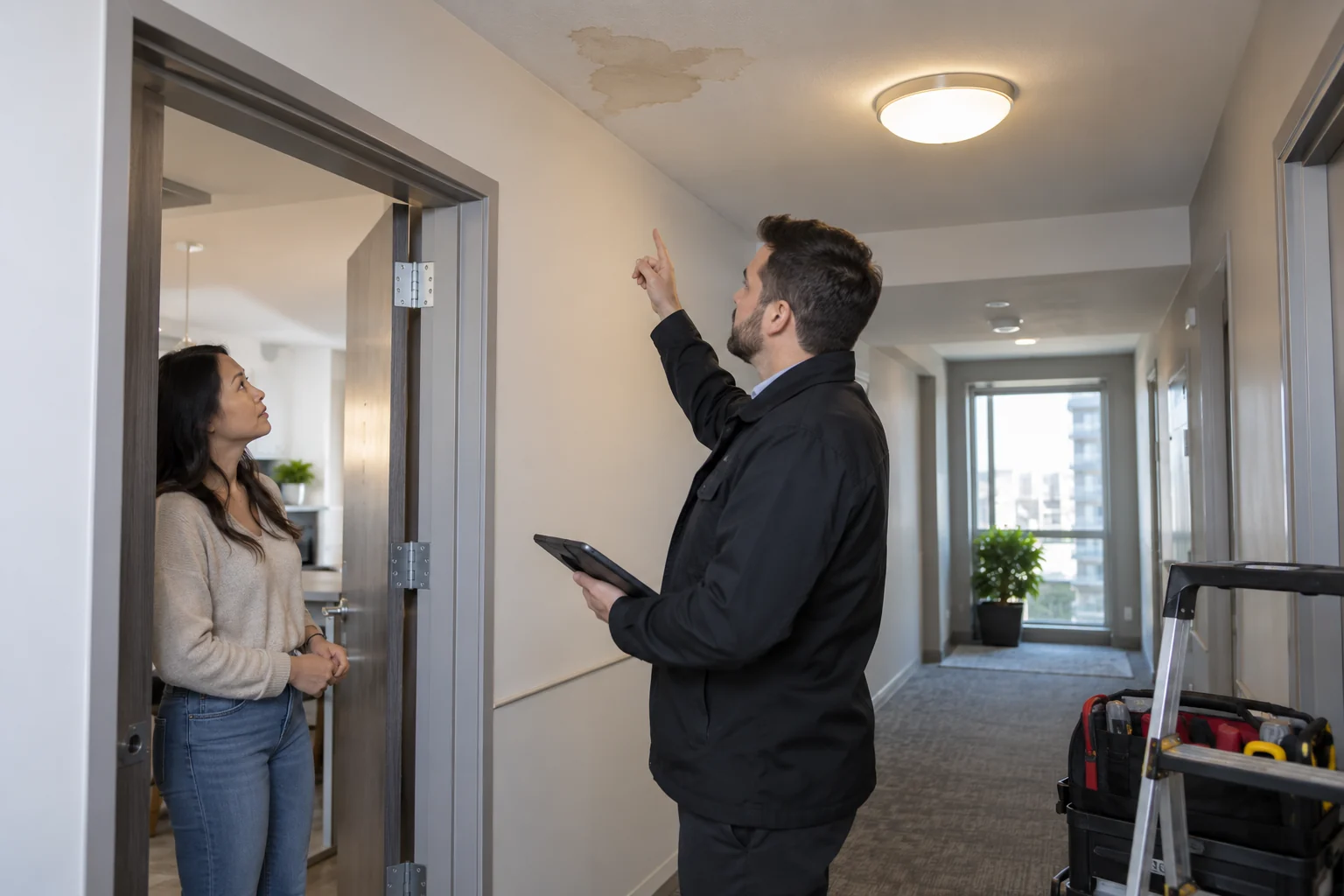
Give the suite number, floor and room where water first appeared. Say whether it is dripping through a ceiling, running along a wall or appearing below flooring. Mention any visible fixture involvement inside your own unit. The fact that water arrives from above does not establish which upstairs pipe or activity caused it. A shared riser leak can affect several suites even when the first stain appears in only one.
A riser, branch, drain or another building source can produce wetness between floors. A factual report lets management and the plumber trace the actual source. Avoid confrontations or entering another suite to investigate. Access to other units should be coordinated through the responsible building arrangements. A neighbour's information can be passed to management, but it should remain an observation rather than a claim of fault.
Tell the right contact about an immediate hazard
Water near electrical fixtures or equipment needs appropriate electrical or emergency attention, not a resident walking through it to reach a switch. A sagging or damaged ceiling needs people kept away from below it. Call for the relevant immediate assistance from a safe place. The property-management report and plumbing call do not replace a response to a person in danger.
Alberta's flood recovery guidance discusses checking affected utilities before use. Tell each professional about water exposure and work already done. Do not assume that repairing a pipe also clears a wet light, appliance or room for normal use. Those are different checks and may involve different qualified people.
Give the plumbing contractor the shared-building context
For Calgary riser pipe leak repair, state whether management is involved and who can authorize common access. Explain known controls already used and their actual effect. A unit valve that did not stop the water is useful information, but it does not identify the source on its own.
Calgary's home plumbing guidance provides source-control context. Use only known safely reachable controls appropriate to your unit and instructions. Do not force a stiff handle or test shared valves to see whose water stops. The plumber and management should establish the actual system boundary and coordinate any wider interruption with affected occupants.
Use this notification list for the actual incident
- Building management: common access, shared systems, other unit reports and building coordination.
- Unit owner: authority and communication where the resident is a tenant.
- Plumbing contact: source investigation and the defined repair scope.
- Emergency or utility help: immediate danger or affected utilities requiring that response.
- Insurer: the relevant policy's reporting, documentation and authorization questions.
- Cleanup or restoration provider: affected materials and recovery work outside source repair.
- Incoming occupants or staff: current restrictions and safe access instructions.
Not every contact performs every role. Name one person coordinating the updates so contractors and residents do not receive contradictory accounts. Keep a simple timeline of who was contacted, instructions received and changes in the condition. That is more useful than several independent conversations with no common incident record.
Notify insurers with facts, not coverage assumptions
Ask the responsible owner or manager which policies and reporting process apply, and notify your own insurer where appropriate. Give the observed water entry and confirmed source when available. If the source is still uncertain, say so. Do not alter the description to fit a hoped-for coverage category or assume the upstairs owner's insurer automatically handles everything.
Keep photographs from safe locations, the contractor's findings and any management report. Ask the insurer about required documentation and approvals. Coverage and legal responsibility depend on actual policies, agreements and circumstances. A plumbing contractor can document the failed component and repair; that does not decide responsibility between unit owners, residents and the condominium or guarantee payment for the loss.
Make access and temporary restrictions visible
Management may need another suite, a service chase or a locked room opened. Explain your availability and entry arrangements. A contractor should not be asked to gain access through an unauthorised workaround. If an opening in your wall or ceiling is proposed, clarify who approves it and who handles the finishes afterward.
If water is isolated temporarily, record what remains unavailable and who can authorize reopening. Tell every resident who may use the fixture or equipment. A control left closed without explanation can be reopened by someone who thinks service was accidentally interrupted. Our shared-building emergency plumbing service can discuss the private work with the responsible management contact.
Continue reporting meaningful changes after source control
New wetness in another room or unit should be passed to management with the time and location. It may reflect water already moving through the building or a separate source needing inspection. Do not diagnose a failed repair from appearance alone, but do not dismiss the new report because the plumber has left. The contractor needs the actual change to advise on follow-up.
Keep source repair, material recovery and utility checks separately identified in the final record. The incident is easier to manage when each remaining job has an owner. For Calgary condo residents, clear notification means reporting safely, involving management for shared systems and giving professionals consistent facts. It avoids asking occupants to solve building access, liability and concealed plumbing while water is still travelling between floors.