Why Did Sewage Pass A Backwater Valve In Calgary?
A backwater valve may fail to prevent a backup because of its condition, obstruction, installation or because the water is entering through a route it does not protect. Sewage can also accumulate from internal use while a valve is closed. Stop affected use and arrange inspection; the presence of a valve is not a guarantee against every flooding source.
Identify The Water Route Before Blaming The Valve
Report where wastewater first appeared and which fixtures were being used. A valve cannot protect a drainage route it is not installed to serve. The inspection should establish the building layout and release path.
Make a timeline using the first wet location, preceding fixture use and any valve indication already observed. If water appeared in a drain that is not known to be protected, explain that uncertainty. The technician should map the relevant connections before assigning the fault to the valve. A drawing or previous installation record can help without staff opening the system to investigate.
Distinguish External Backflow From Internal Discharge
A closed valve may restrict wastewater leaving from inside the building. Continued fixture use can then create a different problem from sewage entering from outside. Describe use before the backup without assuming the direction of flow.
Tell the contractor whether affected fixtures continued to be used while a closure alarm was present. That fact matters without assigning blame to an occupant. Staff may not have known that the system was restricted. Stop further discharge into the affected route and record the notice. The investigation should distinguish the water’s origin rather than assume every backup passed through a valve that failed open.
Ask About The Valve’s Physical Condition
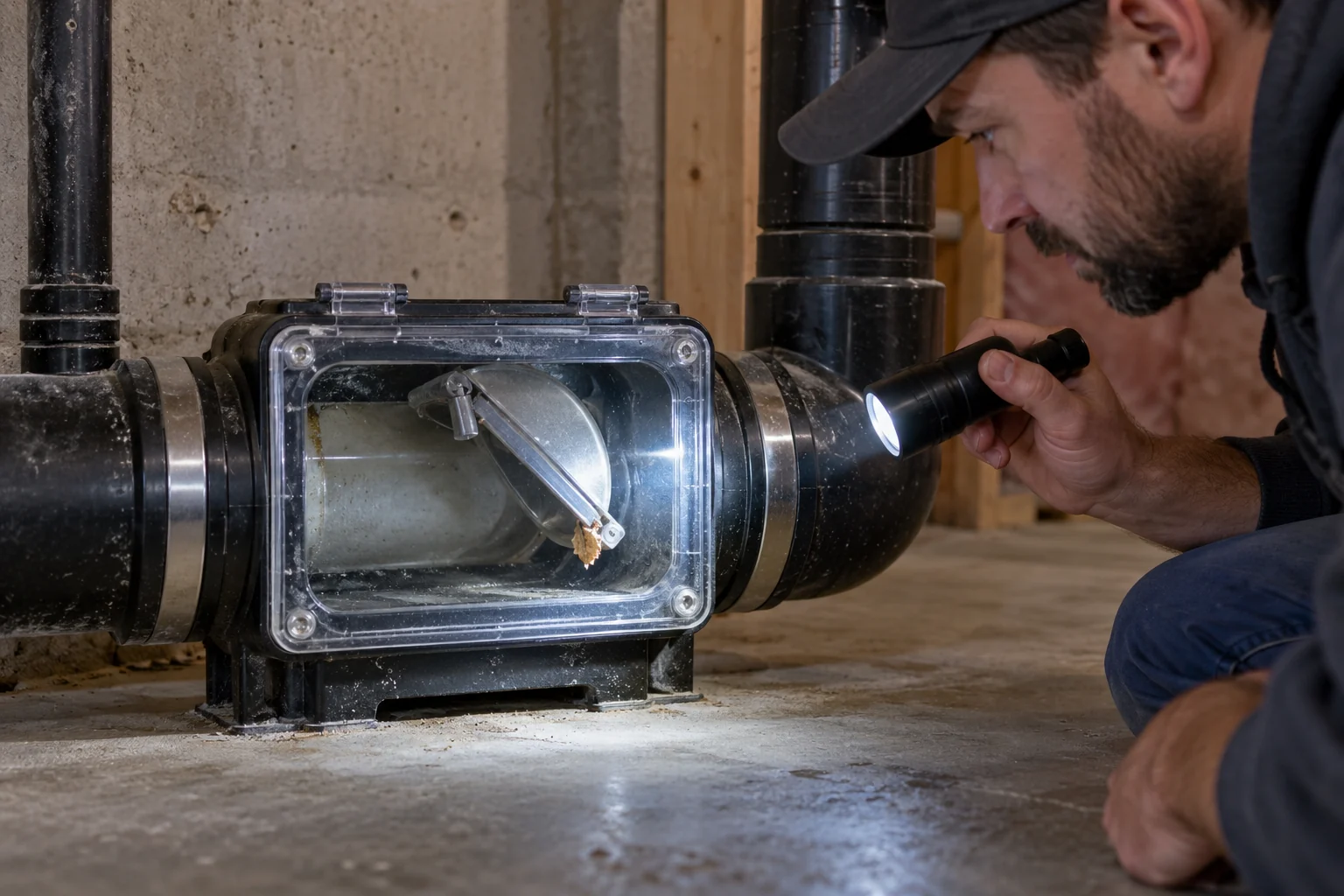
Debris, damaged components or a closure problem can matter, but the actual finding needs inspection. Do not remove a cover during an active backup to verify a suspected obstruction yourself.
A suspected obstructed flap or damaged seal needs an examined finding. Do not remove parts during an active event to see whether debris is present. Give the service provider any earlier maintenance record and the present symptom. The correct repair can depend on the actual model and condition, so avoid selecting replacement components before those details are established.
- Document where wastewater appeared and which fixtures were in use.
- Ask whether the installed valve protects those exact openings.
- Have the valve condition and downstream route investigated separately.
- Keep cleanup and fixture restrictions in the handover after plumbing work.
Review Installation And Protected Connections
Ask which drain or branch the valve protects and whether the actual arrangement matches the intended design. A valve model and its location both matter; a generic backflow label does not describe every connected fixture.
Ask the contractor which fixtures and drain sections the installed valve protects. If the answer is uncertain, arrange verification rather than rely on the equipment’s label. A valve on one branch does not describe the whole building layout. Retain the resulting explanation so future staff know what a closure warning affects and which other routes require their own investigation.
Separate Sewage Backup From Other Floodwater
Water from a supplied pipe, seepage or another source is not necessarily controlled by a wastewater valve. Describe the material and location as observed. Do not expect replacing the valve to address every wet basement condition.
Describe whether the observed water appeared from a drain, a supplied connection or a wall or floor area. If the origin is hidden, leave it unknown. This helps prevent a valve replacement being treated as the solution to an unrelated pipe leak or seepage condition. Multiple water sources can require separate work even when their effects are visible in one basement room.
A valve defect belongs in backwater-valve repair; a separate line restriction belongs in sewer-backup repair. The finding should explain why this installation did not protect the affected opening.
Use Records Without Assuming Maintenance Was Complete
Provide the model, previous service findings and any documented inspection. A recent visit can be relevant, but it does not prove the current flap, seal or surrounding drainage route is functioning as intended.
Look for an actual service description, not only a date in the calendar. Ask what was inspected, cleaned or repaired and whether a recommendation remained open. A maintenance appointment does not by itself prove that every part and connected drain was functioning when the new event occurred. Provide the record to support the inspection without using it to rule out a present fault.
Ask For The Confirmed Repair Scope
The remedy should address the source and the established valve or drainage fault. Ask which components were checked and whether additional work remains. Installing a new valve alone is not a diagnosis of the original backup.
Request a written scope identifying the confirmed source, the valve condition and any connected drainage work required. If immediate work controls the event but a further investigation remains, keep that distinction clear. Ask who is responsible for the next step. Source control, valve repair and the cleanup of escaped sewage should not be combined into a single unexplained status of completed.
If a valve is moved, repaired or replaced, ask how the proposed work fits the existing drainage layout. Calgary’s plumbing and gas permit guidance provides Calgary's permit framework; the installed route still needs a site-specific check.
For the valve's intended protection and upkeep, review federal backwater-valve guidance alongside the installed location and the actual backup route.
Keep The Prevention Plan Specific
Retain the inspection and maintenance instructions for the actual valve and a response plan for closure or backup. Make sure occupants know which use restrictions apply. Avoid treating ownership of a valve as permanent clearance to ignore drain symptoms.
Keep instructions for reporting another alarm or drainage symptom alongside the model’s maintenance information. Tell occupants how to communicate a restriction rather than rely on a technician’s record nobody sees. After repair, ask which observations should lead to stopping affected use again. A prevention plan is most useful when it names the actual protected route and actions, without promising immunity from every flooding source.
When arranging help, give the crew the valve position, affected opening and chronology of the backup. Ask which finding, test and remaining restriction will be recorded. Request service or call (587) 333-7742.