
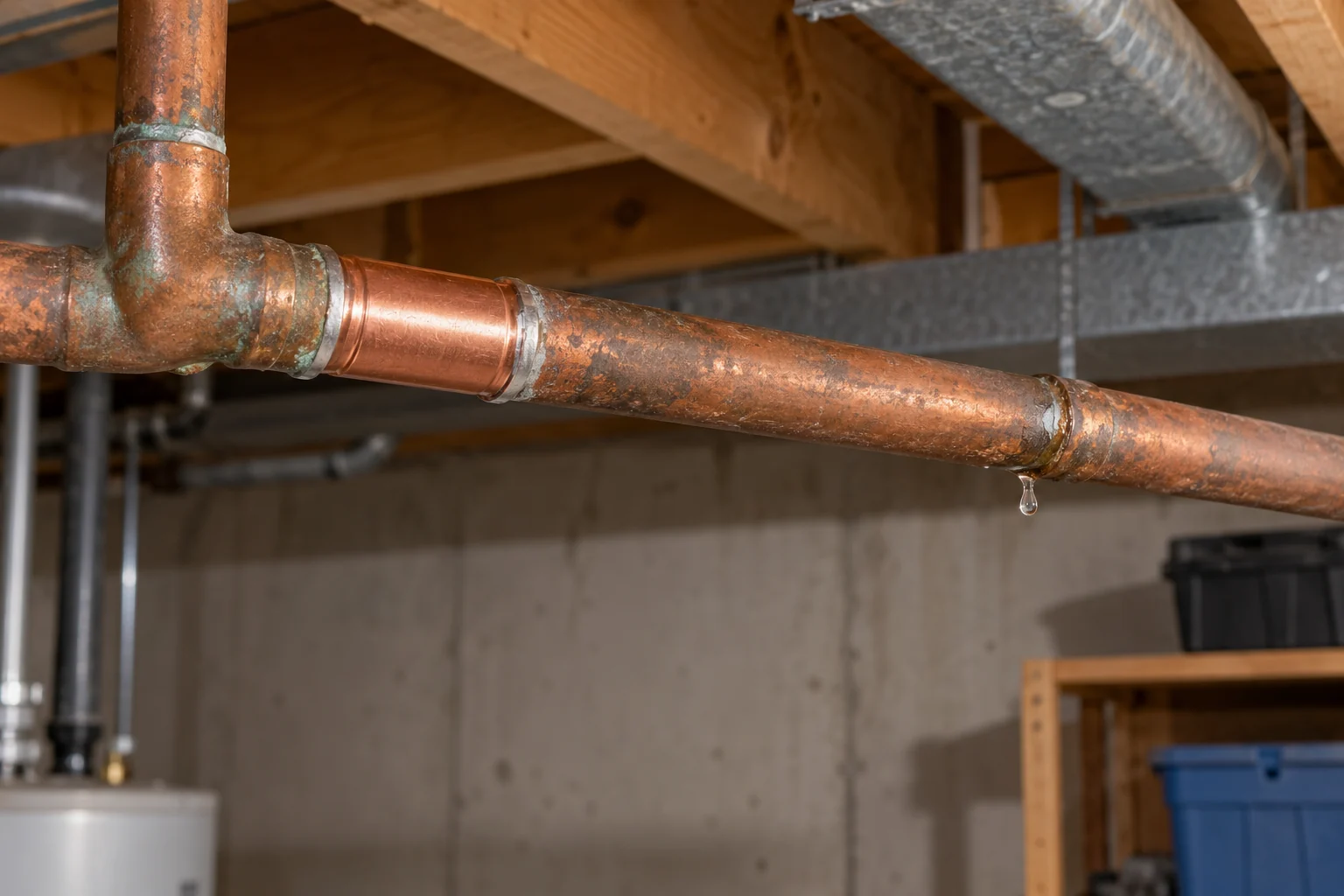
Why Did Another Pipe Leak After The First Repair In Calgary?
Another pipe can leak after a Calgary repair because it has a separate defect, a wider condition needs assessment or the source arrangement differs from what was initially understood. Timing alone does not prove the first repair caused the new leak. Report the new location and current conditions, retain the earlier repair record and ask what findings establish the relationship, if any. The article on why a pipe bursts without freezing explores another cause worth checking when failures recur.
Describe the new symptom separately
Identify where water now appears, when it started and what was operating. A new connection dripping beside the repaired area is different from wetness emerging in another room. Do not label it the same failure unless the component and source were confirmed. For Calgary water leak repair, the current observations help establish the next assessment. Keep access safe and report any electrical proximity or unstable finishes. The first useful step is to explain what changed, not to decide blame before the source is examined.
Keep the earlier repair scope available
Retain the component or section repaired, date, checks and any stated limitation. A localized source repair may not have assessed every hidden run. A temporary isolation stage also differs from a completed repair. Ask which outcome the earlier record established. The provider can then compare the new symptom with actual work instead of relying on a general statement that all plumbing was fixed. If the earlier description is unclear, seek clarification rather than broadening its meaning in the retelling.
Consider an independent source
Several fixtures can have separate connections, and water appearing after supply restoration does not automatically originate at the repaired part. A concealed leak may become visible at another point, or another system may be involved. Leak detection can help assess an uncertain source. Describe pressure, use and timing clues without deliberately repeating the leak. A professional should explain which finding supports a link or separation between the events, and what remains uncertain where access is limited.
Ask about wider condition without assuming whole-system failure
Recurring assessed faults can justify a conversation about surrounding pipe condition, material or operating concerns. That is not the same as declaring every section defective from two puddles. Ask which accessible evidence supports wider work and what retained sections remain outside assessment. If known Poly B is involved, Poly B leak repair provides a material-specific source discussion. Do not identify material from guesswork or assume a universal replacement rule. The scope should follow actual findings rather than a fear-based conclusion about the entire home.
A comparison record for the two incidents
| Record item | First incident | New symptom |
|---|---|---|
| Visible location | The original observed source or assessed area. | The current wet point, with source uncertainty preserved. |
| Timing and use | Known activity and isolation sequence. | New activity, restoration or recurrence already observed. |
| Confirmed work | The repaired section, checks and limitations. | Findings from the next assessment, not an assumed same cause. |
| Restrictions | Fixtures or rooms left unavailable. | Current safety, supply and access limits. |
Do not change controls to prove the relationship
Repeatedly cycling valves, tightening neighbouring fittings or running a suspected appliance can worsen the release and obscure the current condition. Explain any action already performed, then follow appropriate property-specific advice. Calgary's home maintenance information offers broader plumbing context, but is not a procedure for investigating a second active fault. The professional needs the actual pattern and relevant records, not a homeowner experiment intended to demonstrate that a previous repair must be responsible.
Clarify what changed when the supply returned
If the symptom followed water restoration, say when it appeared and which fixtures were used. That is useful chronology, not proof of an improper repair or a pressure-related cause. Ask what checks were completed and whether a different area now needs assessment. Keep the household's practical restrictions clear while the relationship is reviewed. A working tap does not establish that every branch or drain is ready, and restored pressure should not override an earlier instruction to keep a fixture isolated.
Separate source questions from damage recovery
Water from the new symptom can affect additional materials even while the first room is recovering. Keep the locations and timing distinct so the appropriate material assessment has an accurate record. A pipe repair addresses its identified source, not every consequence across both events. Do not use drying or an insurance discussion to settle the plumbing cause. Each assessment should state what it found and which scope it covers. This avoids merging two incidents into one unsupported explanation merely because they happened close together.
Ask what the second inspection found
After assessment, ask whether the new fault is related, separate or still uncertain, and why that conclusion is supported. A useful explanation can include limitations. Compare proposed localized repair and wider work by the actual outcome and assessed condition rather than by confidence of language.
Clarify authorization if new access or another section is proposed. The earlier scope may not automatically approve every later task. Keep records of any revised work and the responsible property contact, especially in a shared building where access affects another suite.
Finally, retain the completed findings without describing them as a guarantee against another future source. If the system needs follow-up, record what question that work addresses. A second leak deserves prompt source assessment and accurate documentation, while timing alone should not be promoted into proof of cause, liability or whole-property failure.
- Same visible component: ask whether the repaired part is actually leaking again or whether water is travelling onto it from elsewhere. Location alone can be misleading.
- Different nearby component: record the new point separately and ask what surrounding condition was previously assessed. Do not assume proximity proves one shared cause.
- Another room: identify the timing and use pattern so a concealed route can be investigated without treating every stain as recurrence at the first repair.
- Change during restoration: retain the controls and fixture sequence already observed, while avoiding another pressure or use experiment intended to prove the connection.
- Broader proposal: ask which findings support wider assessment or replacement and how that scope differs from repairing the newly confirmed component.
If a second pipe leaks, compare the two repair reports: locations, pipe materials, failed parts and pressure or condition observations. Give the new plumber that history, but let the current evidence establish whether the failures are related. A second leak may call for a broader inspection; it does not by itself prove that the first repair was done incorrectly.