Why Won't A Pump-Fed Basement Washroom Drain In Calgary?
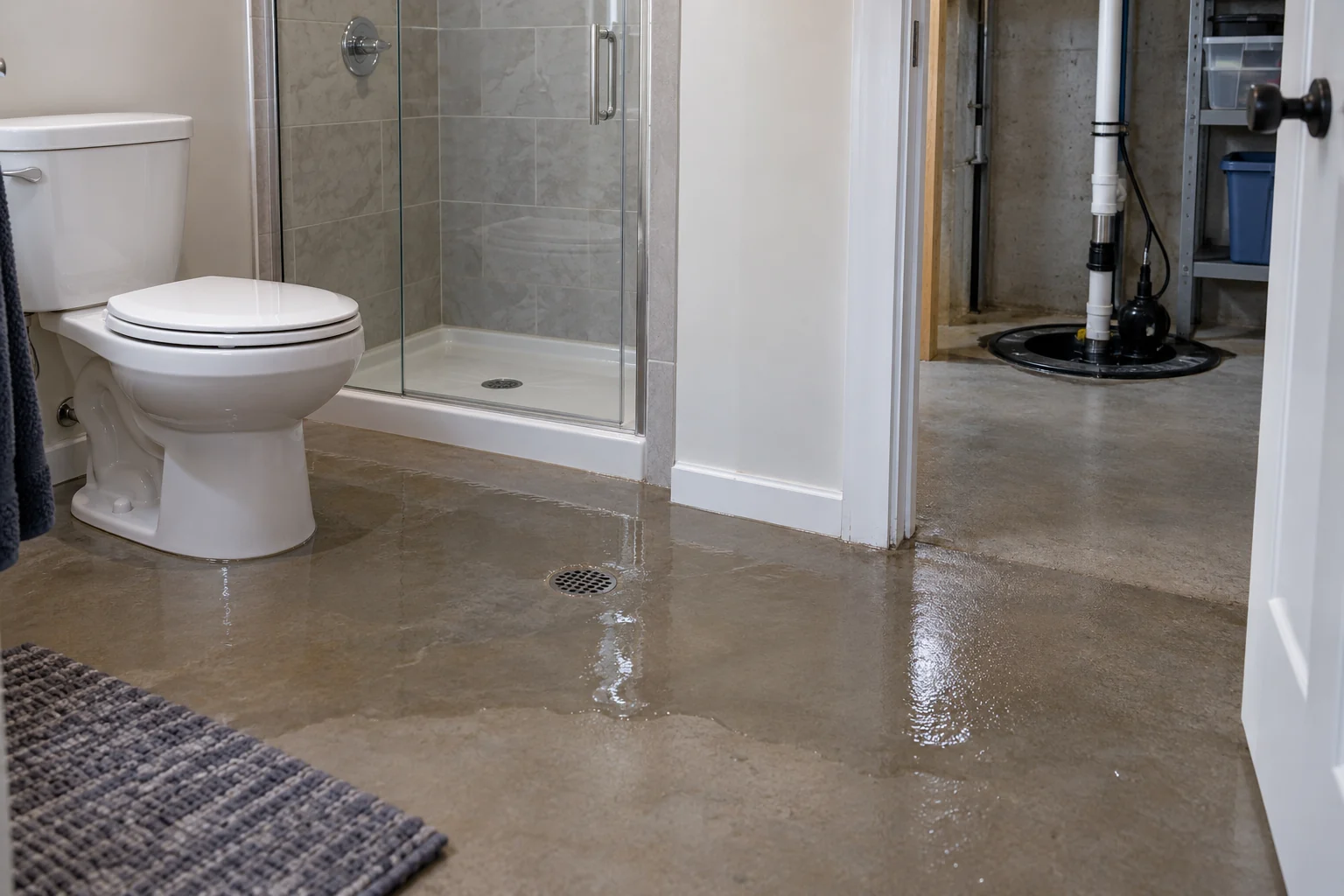
A basement washroom can stop draining when its fixtures rely on an ejector pump to lift wastewater to the discharge route and that pump is not removing it. Stop using fixtures connected to the affected system and arrange service. Continued flushing or sink use can add wastewater to the basin even while the pump is silent.
Understand Why The Basement Needs A Pump
Some low-level fixtures cannot discharge through the building’s normal gravity route without pumping. Their wastewater enters a holding basin before being lifted onward. A pump problem therefore affects drainage, not just the sound of equipment running.
This explains why water may stop leaving the washroom even though the building’s upper floors appear to drain. The relevant fixtures can depend on a pumped route that those other floors do not use. Do not assume the sewer is clear everywhere or that the toilet alone is faulty from this difference. Give the contractor the known connection layout and the places where symptoms occurred.
Stop Adding Wastewater To The Basin
Keep the connected toilet, sink and other affected fixtures unused. A basin can receive more wastewater even when the pump cannot move it away. Do not use a small flush as a test or assume a slow drain leaves enough room.
Post a clear instruction at the affected washroom and tell everyone who normally uses it. Include other fixtures known to enter the basin, such as a connected sink or laundry discharge. Avoid using those fixtures to see whether the restriction is real. Their wastewater can accumulate before a visible overflow appears, and silence from the pump does not provide available-capacity information.
Describe Which Fixtures Are Affected
Tell the contractor which basement fixtures are known to connect to the system. Mention symptoms elsewhere without testing more fixtures. A problem across several drainage areas may require a broader investigation than the pump alone.
Make the report specific: the toilet stopped draining, the sink drains slowly, an alarm sounded or water appeared at a particular floor point. If the system connections are uncertain, say so. The contractor should establish whether symptoms belong to the ejector installation or another drainage problem. Running upstairs fixtures as a comparison can add more water if a shared restriction also exists.
- Stop using fixtures that discharge to the affected basin.
- Report the basin level and whether the pump runs, hums or remains silent.
- Keep staff out of wastewater and away from wet electrical equipment.
- Ask which fault was found and what checks support restarting connected fixtures.
Keep The Basin Closed
Do not lift a sealed cover, reach inside or disturb pump wiring. Sewage equipment involves contaminated contents and electrical components. Provide access around the unit only from a safe area and leave technical inspection to the appropriate service process.
A basin cover may seal an installation rather than function as an ordinary inspection lid. Opening it can expose sewage and interfere with the installed arrangement. Keep the cover and connected parts in place. If stored belongings block dry access, remove only those safe loose items and tell the technician what remains obstructed. Do not enter or reach into the system.
Record The Alarm And Operating Pattern
Report an alarm, unusual sound, repeated cycling or silence if those were observed. State whether the problem followed a power interruption. None of these observations alone proves which pump, control or discharge component failed.
Record the order of events if known: power interruption, alarm, attempted use and the first drainage symptom. Describe an observed noise without claiming it proves motor failure. A control or discharge problem can require different work from a pump replacement. If someone reset an alarm or changed a control, include that action and its effect rather than leave it out of the report.
Use sewage-ejector pump repair for the pump and basin fault. If sewage is also returning from the building sewer, sewer-backup repair addresses that separate route.
Ask For The Whole Discharge Route To Be Considered
The pump, controls, discharge connections and downstream route may all matter. Ask what was checked before a replacement decision. A new pump should not be assumed to solve a separate restriction or connection problem without examination.
Ask the technician to identify the failed component or blocked route and explain what supports the proposed repair. A replacement chosen only because the basin is not emptying may overlook another issue. Keep the pump model and service history available for the discussion. The completed work should address the established condition and include the relevant checks, not simply make the equipment sound active again.
Keep Sewage Cleanup Separate From Pump Repair
If wastewater reached the room, restrict access and report the affected surfaces. Repairing the removal system does not clean contaminated materials or establish that wetted electrical equipment can be used.
Tell the contractor whether wastewater left the basin area or emerged at a fixture. Keep people away from contaminated water and wet electrical equipment. Separate the source record from cleanup and drying records so none of the work is assumed to cover the others. If an owner or insurer must be notified, provide the observed sequence rather than promise that a particular loss is covered.
If a sewage ejector fails and wastewater reaches a room, keep the pump diagnosis separate from exposure and cleanup. Alberta’s flood cleanup and utility-safety guidance covers flooded-area and utility precautions.
For equipment-specific access, alarms and service limits, consult manufacturer sewage-system manuals for the installed sewage system. Keep its instructions with the contractor's basin finding.
Resume Use Only After The Handover
Ask which fixtures are cleared for use and what was verified after the work. Keep any outstanding drainage or cleanup restriction visible to occupants. The absence of an alarm after silencing it is not clearance to resume flushing.
Request the completed diagnosis, any remaining restriction and instructions for reporting recurrence. Ask whether connected fixtures can resume normal use and whether another drainage task is outstanding. A dry room while the washroom remains unused does not prove that the system can remove new wastewater. Keep the handover available to anyone who may operate or maintain the basement system later.
When arranging help, give the crew the affected fixtures, basin level, alarm and visible operating status. Ask which finding, test and remaining restriction will be recorded. Request service or call (587) 333-7742.