Why Does My Kitchen Drain Reblock After Snaking In Calgary?
A kitchen drain may block again because a cable created only a passage through grease or food deposits, a downstream section remains restricted, or the pipe arrangement has another fault. A recurring problem deserves investigation of the shared route rather than repeated treatment of the sink opening alone. Note how quickly symptoms return and whether dishwasher discharge also causes the sink to rise.
Follow where the kitchen wastewater goes
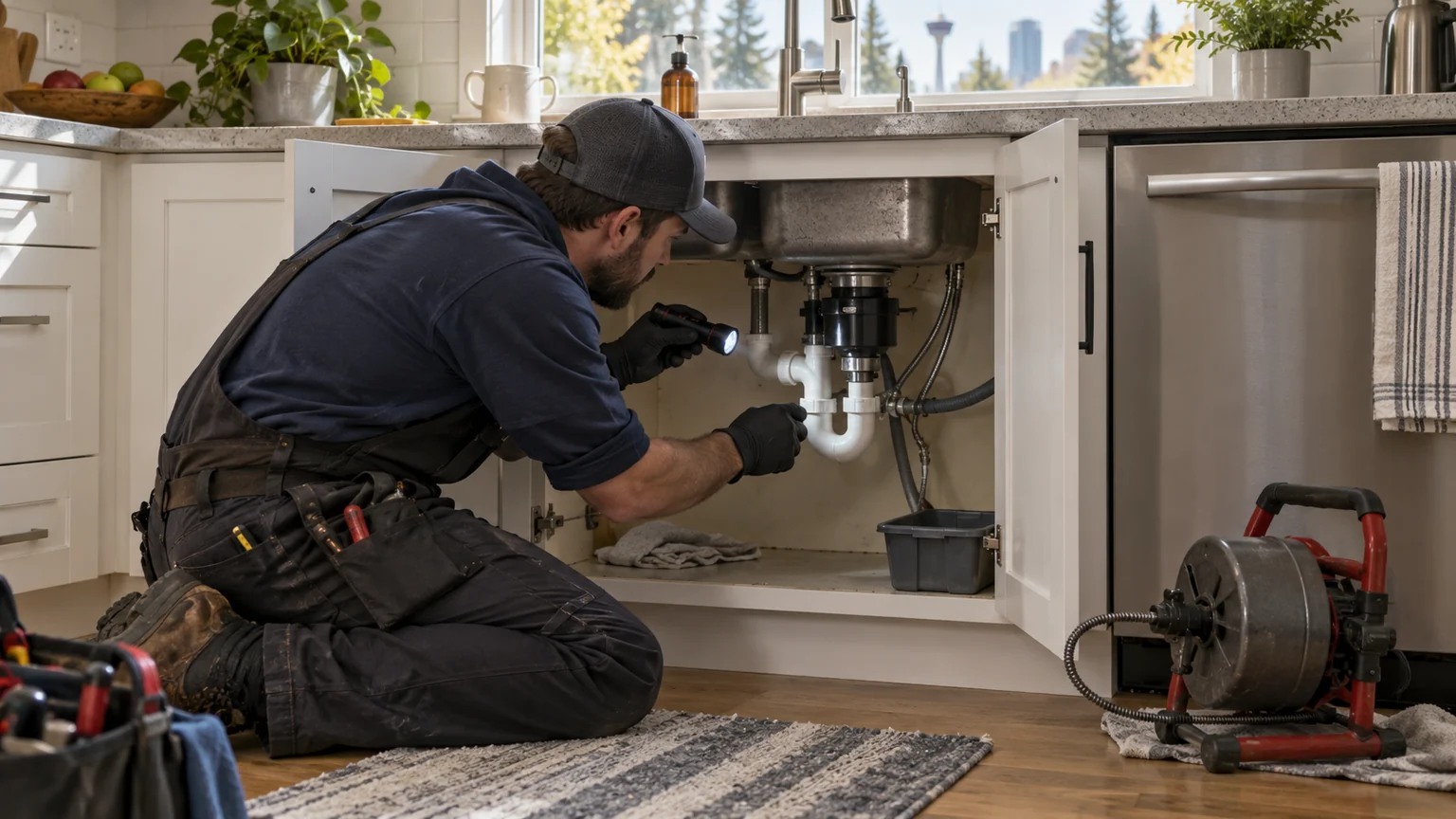
The trap beneath the sink is only the first part of the drainage route. In a double sink, both bowls may connect to a common trap or branch. A dishwasher can discharge into the same general system. When the downstream route is restricted, one bowl can rise while the other empties, or water can return during an appliance cycle.
Tell the plumber which bowl is affected and whether the dishwasher, nearby laundry or another fixture changes the symptom. These observations help distinguish a local restriction from a shared branch problem. Do not repeatedly run appliances to reproduce an overflow; a description of the earlier sequence is safer and often sufficient to guide the initial assessment.
A cable opening can leave surrounding buildup
Deposits may coat a length of pipe rather than form a single removable object. Depending on the equipment and access used, snaking can open a path while leaving material on the walls. That helps explain why modest flow works briefly before the drain slows under ordinary use. It does not prove every recurrence is grease, because pipe defects can create a similar pattern.
Ask what material was encountered during the previous visit, how far the route was assessed and what test followed. A report that identifies the access point and observations is more useful than simply recording that a snake was used. Supply any old footage or notes so the new investigation can build on them.
Cleaning choices depend on the pipe condition
Hydro jetting and drain cleaning may be considered for suitable accessible deposits, but the pipe must be assessed first. A damaged or displaced section can change the method. If inspection is appropriate, a camera view may help clarify the condition once the relevant route can be accessed and seen.
The aim is not to choose the strongest equipment available. It is to remove the identified restriction while accounting for the branch, connections and any defect. Discuss whether the work addresses only the kitchen branch or includes the downstream section responsible for the recurring symptom.
Stop feeding the overflow while arranging help
Avoid using the sink or dishwasher when wastewater is returning. Do not add chemical drain cleaner to a line that is already overflowing, and tell the technician about products previously used. Keep children and pets away from the spill. Water emerging from a drain can contain material from the drainage system even if it initially appears fairly clear.
The City's sewage backup guidance emphasizes avoiding fats, oils and unsuitable household items in drains. Improving disposal habits can reduce future buildup, but it does not remove deposits already present or repair a defective pipe. Do not treat prevention advice as a substitute for assessing an active recurring blockage.
Record the Kitchen's Trigger Pattern
A repeat kitchen blockage is easier to investigate when the timing is described precisely. Collect the following observations from normal use already witnessed; do not recreate an overflow deliberately. The sequence can help determine which branch and appliance connections need assessment.
- Tap flow: Was a small stream acceptable while a held basin drained slowly? Report the difference rather than summarizing both as intermittent trouble.
- Dishwasher discharge: Did water rise during the drain cycle, and which bowl filled first?
- Other fixtures: Did laundry or a nearby sink alter the symptom, suggesting a common route?
- Previous clearing: What access was used, what was reported removed and how long did the improvement last?
- Recent changes: Mention a replaced sink, disposer or appliance hose that could affect the connection arrangement.
These details do not diagnose grease or a particular pipe fault by themselves. Their value is selecting the relevant investigation and avoiding another limited treatment of the nearest opening while the recurring downstream condition remains unknown.
Match Prevention Advice to the Actual Finding
| Finding | Relevant follow-up |
|---|---|
| Deposits in a suitable kitchen branch | Discuss appropriate cleaning and disposal habits that reduce new material entering the route. |
| A damaged or displaced section | Assess a repair; changing disposal habits does not restore pipe structure. |
| An appliance connection problem | Correct that connection and verify the receiving drainage path. |
| An incomplete assessment | Define the further diagnostic question rather than declare the whole kitchen route clear. |
General prevention remains useful, but it should not be presented as the remedy for every documented fault. Scraping cookware and keeping grease out of drains address new material; they do not explain a misaligned joint or remove an existing obstruction without suitable work.
Ask whether the service record distinguishes the cleared section from the rest of the route. A kitchen drain can behave better after one local intervention even though the downstream branch remains partly restricted. Written scope makes the next visit less dependent on memory or a brief description of the equipment used.
When normal use resumes, follow the technician's restrictions and report a changed symptom promptly. A new external leak under the cabinet is a different observation from water rising in both bowls, even when both involve the same kitchen. Keeping that distinction helps the next assessment address the source that actually changed.
Verify the result against the original symptom
Ask how the kitchen route will be tested after the work and whether the dishwasher connection needs its own check. A sink that empties once with a small volume may not answer why an appliance cycle previously filled both bowls. Testing should be controlled by the technician and appropriate to the assessed drainage route.
Keep the findings and any restrictions in writing. If only a temporary opening was possible, know what follow-up investigation is recommended. For a Calgary sink that is overflowing now, overflowing sink repair addresses the immediate plumbing fault while the recurring cause is considered. For help choosing the next step, call (587) 333-7742 or request service.