Why Does A Leak Show Only When A Fixture Runs In Calgary?
A leak that appears only when a Calgary fixture runs may involve drainage, a use-dependent supply connection or water escaping around the fixture, but timing alone does not confirm the cause. Stop using the affected fixture if it releases water, record what was happening and arrange assessment. Do not repeat the leak to test a theory or open finishes before the source is understood.
Record which stage of use matters
Water appearing as a tap opens differs from water appearing as a full basin empties. A washing cycle can include filling and draining, and a shower can wet both plumbing and surrounding surfaces. Describe the stage already observed rather than recreating it. Note whether wetness appears immediately or after a delay and where it becomes visible. The details help frame the assessment, but a delay does not prove that a particular hidden joint has failed.
Keep supply and drainage possibilities distinct
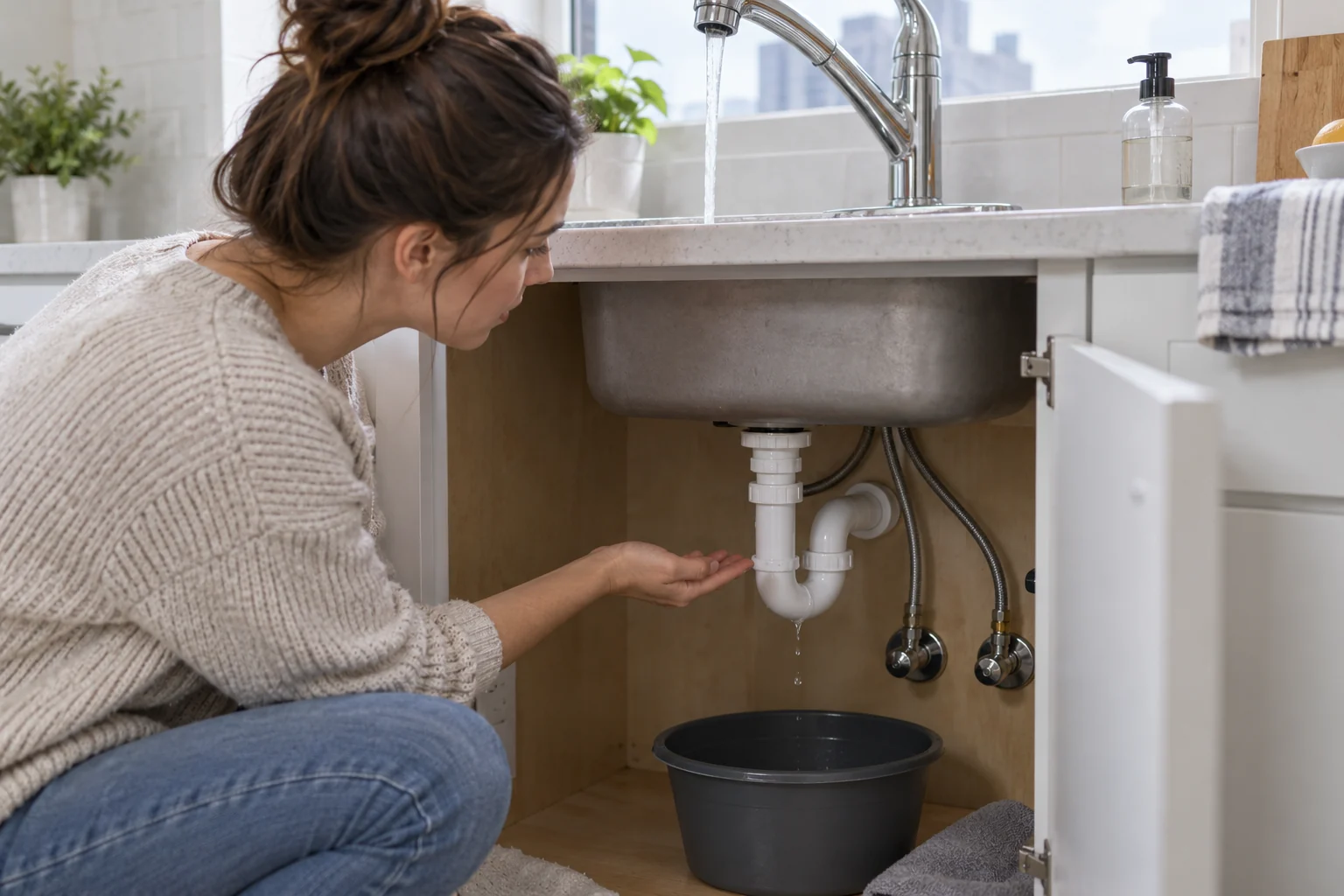
A pressurized connection can behave differently while a fixture operates, while a drain joint may release wastewater only as flow passes through it. Water can also come from around the fixture rather than within a pipe. For drain leak repair, the relationship to emptying a basin is useful context. Do not apply sealant, tighten fittings aggressively or disconnect the trap based solely on that timing; the actual wet point and arrangement need assessment.
Do not trust the first visible exit point
Water may travel along a pipe or behind finishes before emerging in another room. A ceiling stain below a shower does not establish the failed part without investigation. For Calgary leak detection, explain the fixture involved, affected room and interval between use and visible wetness. A photograph showing the wider layout can help, provided it is taken safely. Avoid opening the ceiling or removing a fixture panel just to locate the point by guesswork.
Stop the relevant use rather than repeated testing
If the fixture reliably creates a leak, leaving it unused can reduce additional water while advice is arranged. That does not repair the cause or establish that other connected fixtures are unaffected. Tell other occupants which fixture should not be used. If water continues after use stops, report that change. Do not assume the new dripping is harmless residue or repeatedly run the fixture to compare amounts, particularly when water is reaching concealed materials.
Account for appliances and connected drains
A sink filling during dishwasher drainage can involve a shared drainage route rather than the visible faucet. A laundry puddle can involve the appliance, supply hose or drain arrangement. Calgary's home maintenance information gives broader plumbing context. The repair conversation should identify what was operating and which connections are accessible, while preserving the distinction between an appliance fault and external plumbing work. A plumber's source assessment may identify a need for another specialist.
Report hazards and access before the diagnosis
Water near electrical equipment, sewage exposure or a damaged ceiling needs a safety-aware response regardless of whether the leak is intermittent. Do not stand beneath unsafe finishes to watch the next shower cycle or move a wet appliance to inspect behind it. Our article on Calgary ceiling leak response explains that boundary. Say which spaces cannot be approached safely so the assessment plan addresses the real conditions rather than only the fixture name.
Confirm both the repair and the use restriction
After the source is established, ask what component or route was repaired and what checks support resuming fixture use. Keep any restriction in place until the appropriate advice is given. The cessation of dripping while the fixture is off is not proof of completion. Material drying or reinstatement can remain separate. Record the original use pattern and final findings so a future symptom is compared with the assessed source rather than automatically assigned to the same fixture.
Record the use stage without recreating leakage
- Filling: note wetness noticed while a fixture or appliance takes water, leaving the exact supply component unconfirmed.
- Standing water: describe symptoms observed while a basin or fixture holds water rather than immediately assuming a drain joint.
- Emptying: record leakage noticed as water drains, including its visible location and any delay.
- Linked use: mention another fixture or appliance operating when symptoms appeared in the affected area.
- After use: say whether wetness continues or fades once the source activity stops.
- Idle recurrence: report symptoms returning without intentional use, while accounting for automatic equipment.
Compare fixture plumbing and surrounding-water possibilities
A shower-related ceiling stain can involve more than a single drain connection. The assessor may consider the fixture arrangement and how water is moving through or around it. A homeowner's observation that the stain followed a shower is useful, but it does not justify a predetermined cartridge, drain or surface repair.
A sink that leaks during emptying provides a different pattern from a supply hose releasing water while the tap is off. Describe both the use stage and the visible wet point. Do not tighten every connector in the area: an unnecessary adjustment can create another symptom while leaving the original source unresolved.
With appliances, record whether the event happened during filling or drainage if that is already known. Avoid restarting the cycle to be more certain. The plumbing assessment can identify whether an external connection is involved or whether another equipment specialist should assess the appliance. That distinction belongs in the scope.
Keep the affected fixture out of use when advised and tell other occupants. An intermittent symptom can disappear while the fixture is idle, but that is not a repair. If connected fixtures remain uncertain, ask which use restrictions apply rather than testing each one.
After work, retain the source findings and checks. A successful source repair may leave wet finishes requiring separate attention, and a source not reproduced during assessment should remain described with that limit. Useful documentation preserves the original timing pattern alongside what was confirmed, allowing later symptoms to be assessed without automatically assigning the same cause.
If the use-related release may contain wastewater, explain that concern and keep occupants away from the affected area. Do not assume a small amount is clean merely because it emerged from a concealed joint rather than a toilet. The source assessment and material recovery need the correct water context.