Why Does The Toilet Overflow When I Shower In Calgary?
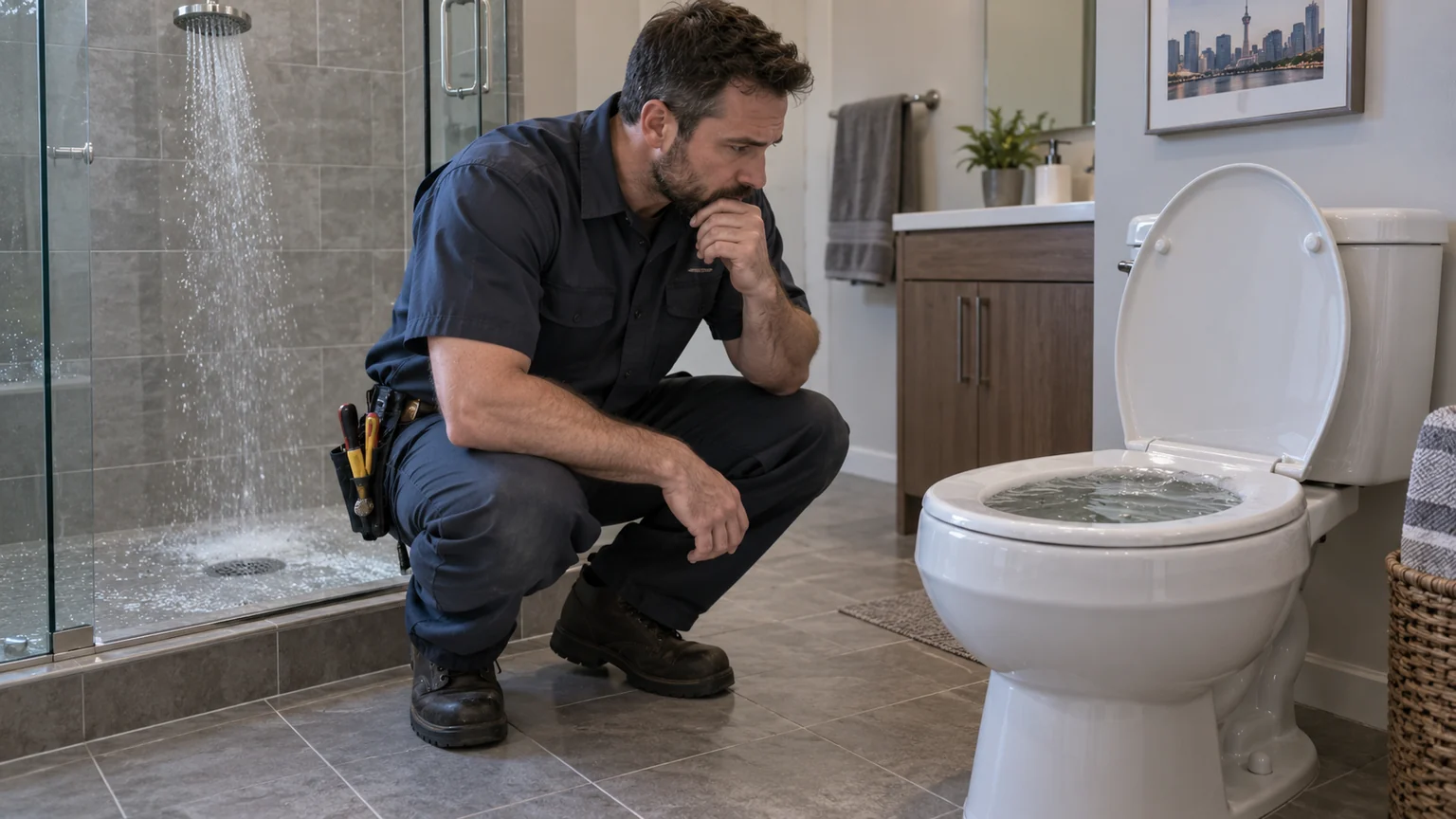
A toilet that overflows when a shower runs may be receiving wastewater from a restricted drainage route shared by the fixtures. The toilet supply mechanism is not the only possible cause, especially if its bowl rises without a flush. Stop using affected fixtures and arrange assessment of the common route. Turning off the toilet's supply alone may not stop wastewater returning from elsewhere.
The timing tells you which route to investigate
A shower adds water to its drain, which eventually connects to other building drainage. If that water cannot move freely downstream, it may return through another opening. The toilet bowl can become a visible symptom even though the shower was the source of the added water. Report that timing instead of describing the incident as an ordinary toilet clog.
Notice whether a bathtub or floor drain reacts as well. Multiple low openings responding to the same activity help establish the affected part of the system. Do not recreate the overflow with another long shower. A description of the previous event, including which fixtures were in use, can guide the initial investigation without adding wastewater to the room.
Stop water use across the affected fixtures
Pause showering and avoid repeatedly flushing the toilet. Laundry and dishwashing may also feed the same restricted route, so tell the plumber what else is operating. In a shared building, ask management to coordinate restrictions where appropriate; stopping one suite's water use may not stop discharge from another.
Closing the toilet's local supply valve limits its own refill but does not block reverse drainage through the bowl. If water continues rising, make that clear during the service call. An apparently successful valve shutoff should not be treated as resolution of the drainage condition, and a valve that is stiff or leaking should not be forced.
Why the cause cannot be read from the bowl
A restriction may involve accumulated material, an object, roots or a pipe defect. These possibilities can create similar symptoms from inside the bathroom. The relevant question is where the shared route is restricted and what evidence supports the cause. Treating only the visible toilet can leave the downstream problem unresolved.
Toilet repair assessment may establish the fixture's condition, while sewer backup assessment addresses a broader route when other fixtures are involved. If recurrence or structural damage is suspected, camera inspection may help once the pipe can be accessed and viewed adequately.
Keep away from the returned water
Water coming through the toilet may be contaminated even if it appears clear at first. Keep children and pets away and avoid tracking it into unaffected rooms. Water near electrical equipment or leaking into a ceiling below requires additional precautions. Do not enter a wet area to operate electrical controls or remove a loaded cleanout cap yourself.
The City's sewage backup guidance includes contacting 311 to help distinguish possible public infrastructure problems from private plumbing. Mention whether neighbours or other suites have similar trouble. The plumbing team and building management should have that information before assuming the problem is confined to one bathroom.
Trace the Shower-to-Toilet Sequence Without Repeating It
Write the sequence from the last event before it is forgotten. The order of symptoms can help the plumber select the route for assessment, while reproducing it can add more wastewater. Include what you know and leave unknown details identified as unknown.
- Start of use: Note whether the shower drained normally at first or water collected there before the toilet reacted.
- Toilet response: Describe a rising level, bubbling or an actual rim overflow, and whether anyone had flushed it.
- Other fixtures: Record any bathtub or floor-drain response already witnessed.
- After stopping: Say whether the levels fell, remained high or continued rising despite stopping your own water use.
- Building context: Identify shared units, recent drainage work or earlier events with the same trigger.
A slow drop after the shower stops is not proof that the blockage has resolved. It may indicate only that a limited passage can handle a smaller load. Keep affected fixtures out of use according to the assessment instructions rather than treating a falling bowl level as permission for another shower.
Why a Single-Toilet Fix May Be Too Narrow
| Proposed action | What to clarify |
|---|---|
| Adjusting refill components | Does this explain water arriving when the toilet was not flushed? |
| Clearing only the toilet outlet | Was the shared route receiving shower water assessed? |
| Inspecting a common drain | Which connected fixtures and sections are within the inspection scope? |
| Repairing a documented pipe fault | How does the finding connect to the original shower-triggered return? |
These questions help prevent one visible fixture from defining the whole job. The appropriate source can be nearby or farther along the shared route; its location needs evidence. If the investigation cannot establish the cause at the first visit, the report should explain what further access or preparation is needed.
After work, retain the test description and any remaining restrictions. A controlled check should be selected for the route that failed, while keeping contamination cleanup separate. In a condominium, give management the same scope so another suite's later symptom can be compared with the actual section inspected rather than a vague note that a toilet was fixed.
If the shower is in a different room or on another floor, include that location when describing the trigger. The relative positions help the assessment consider the common route. They do not by themselves prove how the pipes connect, especially where renovations have changed the original drainage arrangement.
Verification needs to address the original shower trigger
After the restriction or fault is addressed, ask how the shared drainage route was tested. A toilet flush by itself may not fully answer why shower discharge previously caused an overflow. The technician can select an appropriate controlled test for the route and explain any continuing limits.
Keep notes of what was found, what was cleared or repaired and which sections remain uninspected. If the issue returns, those details make a further investigation more precise. The aim is to restore reliable drainage for the connected fixtures, with a clear distinction between source repair and contamination cleanup. For Calgary assistance, call (587) 333-7742 or request service.