Why Does A Filter Housing Leak After A Change In Calgary?
A filter housing may leak after a cartridge change because its seal, seating, threads or housing condition is not correct, but the actual cause requires assessment. Stop using the affected installation and safely isolate its supply when possible. Do not keep tightening the bowl or open it while the system can remain pressurized.
Explain Exactly What Was Changed
Keep the replacement cartridge packaging and the unit model available if those items can be collected safely. A product that fits into the bowl is not necessarily the correct cartridge for the installed model. Record whether the original seal was reused or changed, but do not reopen the leaking housing to check. The service provider can verify the parts and assembled condition.
Describe The First Wet Point
Say whether the leak appears at the bowl seam, a pipe connection or a visible damaged area. Water travelling down the outside of the housing may make the final drip location misleading. Describe what was observed before tightening or other changes, if known. The technician needs the release point established, not simply an instruction to reseal whichever joint looks lowest.
Avoid Additional Tightening As A Diagnosis
Do not keep turning the bowl with a wrench in response to the drip. More force may damage the housing or connected parts and can obscure the original problem. Tell the contractor how the housing was assembled and whether extra tightening was already attempted. An examination should determine the sealing condition, suitable parts and any damage before deciding how to correct it.
- Record which cartridge was changed and where water first escaped.
- Keep the housing connected until the correct model procedure establishes safe handling.
- Ask whether the part, seal and housing condition match the installation.
- Confirm any model-specific flushing or return-to-use instruction after repair.
Account For Pressure Before Opening Anything
A whole-home supplied filter can remain connected to pressurized plumbing even after one control changes position. Model procedures may involve more than closing a valve, and unfamiliar controls should not be used as guesses. Leave the housing connected and obtain the correct service guidance. Do not loosen the bowl or connector to establish whether the water supply has been successfully isolated.
Keep The Old Parts And Model Information
If a service technician changed the cartridge, keep the date and description of that visit. If the household performed the work, provide the same factual information about the parts and instructions used. Do not discard safely available packaging before the fault is examined. Equally, do not enter a wet hazardous area to recover evidence that can be obtained another way.
| Visible clue | What to report | What not to assume |
|---|---|---|
| Water at the housing seam | Give the cartridge and seal history when known. | Do not keep tightening the bowl without identifying the problem. |
| Water at a nearby fitting | Describe the first wet connection and any recent disturbance. | Do not automatically attribute the release to the cartridge itself. |
| A whole-home filter is isolated | Tell occupants which water supply is restricted. | Do not assume an unfamiliar bypass restores every use safely. |
A post-change leak can be assessed through water-filter leak repair. If a different under-sink pipe released water, use the service overview to identify that separate work.
Ask About Seal And Housing Condition
Ask whether the housing can be returned to service or whether the component needs replacement. A damaged body, thread problem and incorrectly seated seal are not interchangeable findings. The proposed work should address the diagnosed condition and compatible parts. If other connections were disturbed during the change, ask whether their condition was checked as part of the repair.
Clarify Household Water Restrictions
Explain whether the filter serves one outlet or the entire home, because the practical restriction differs. Tell occupants which supply is affected and which controls should remain untouched. Do not promise that an unfamiliar bypass arrangement leaves every household use unchanged. If a shared building supply may be involved, coordinate the appropriate manager rather than operate a valve without authority.
A filter housing leak may continue after the cartridge change is reversed or the feed is closed. Alberta’s flood cleanup and utility-safety guidance helps with water-damage precautions, while the unit's manual governs the filter repair and return to use.
Which Filter Arrangement Is Installed?
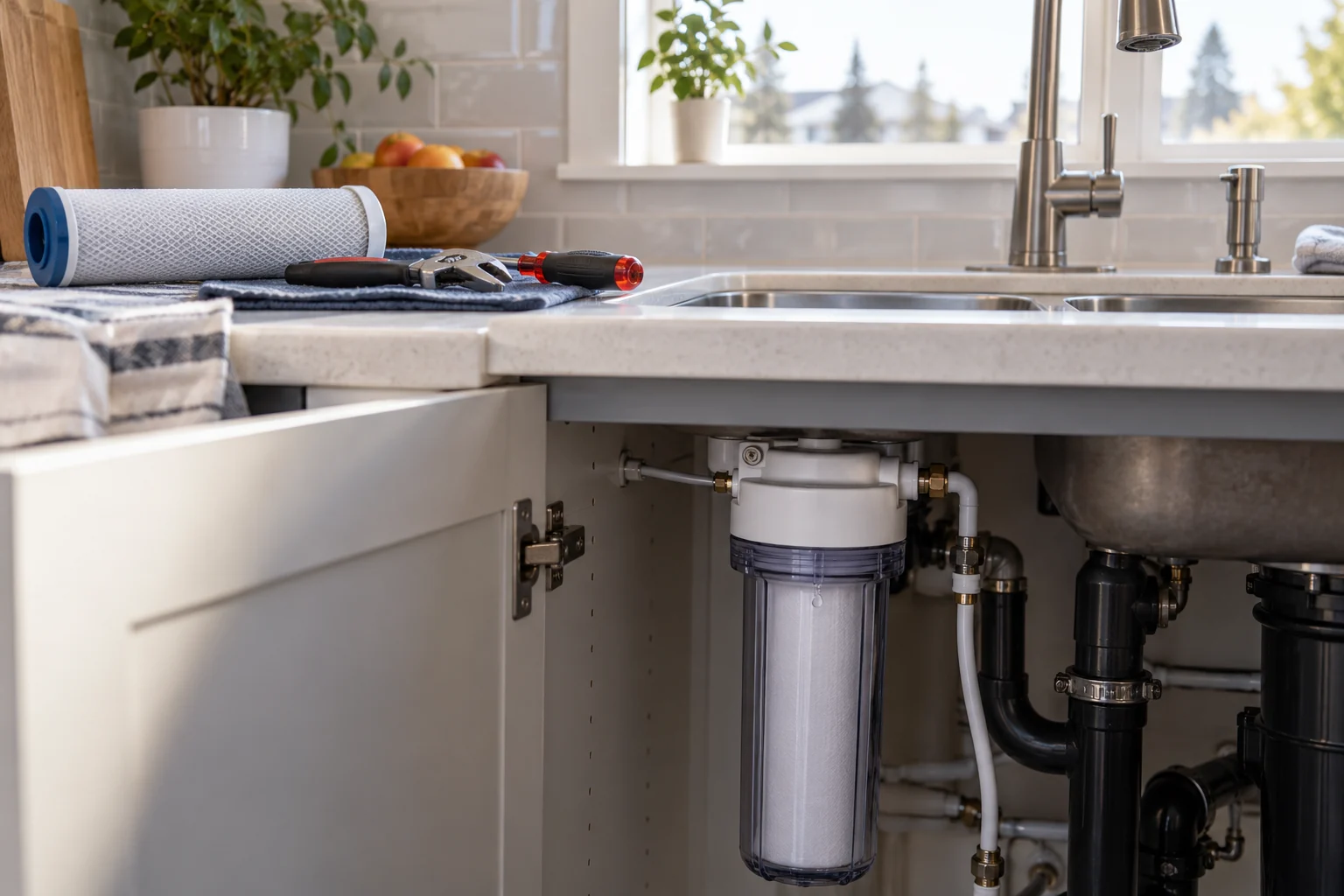
A single-bowl sediment filter, a multi-stage under-sink system and a whole-home treatment unit do not have the same connections. Tell the plumber which bowl was opened and whether the unit has other cartridges, a storage vessel or powered treatment equipment. On a multi-stage assembly, label the stage from the existing markings rather than the colour of a replacement cartridge. A photo showing the full installation can be more helpful than a close-up of the drip.
Ask the technician to distinguish the cartridge from the pressure-containing housing. The cartridge treats the water; the bowl, head and their seal keep supplied water inside the assembly. Replacing the treatment element does not necessarily replace a damaged bowl seal. The connector at the head can also have been disturbed while the bowl was handled, leaving a separate leak even when the cartridge is correct.
When reviewing a repair recommendation, ask whether the seal is a separate replaceable part, whether the head and bowl remain compatible, and whether any damage makes housing replacement necessary. Do not buy a look-alike bowl or seal by appearance alone. Give the supplier the manufacturer and model, because a matching outside diameter is not evidence that a component is suitable for that pressurized unit.
A Useful Post-Change Timeline
Write down the last time the unit was dry, the cartridge change, the first leak and any later intervention. For example: “Bowl opened yesterday; water first seen at the seam after service resumed; extra tightening attempted once; supply now restricted.” This is a sample record, not a recommended service procedure. It tells the technician which condition existed before another action could have changed it.
If the drip appears only after other taps are used, include that sequence without attempting to prove it by repeating the test. If water stops while the supply is restricted, record the observation; it does not settle which interface failed under pressure. After service, retain the compatible cartridge reference and technician instructions so the next scheduled change begins with the correct parts and maintenance procedure.
Verify The Completed Installation
Request a handover describing the repaired interface and checks with the installation in its intended condition. Ask about the correct return-to-use steps for the model after the work. A housing that is dry while isolated has not demonstrated its normal supplied performance. Keep the repair finding so a future leak can be compared with the correct component and service history.
When arranging help, give the crew the filter model, changed part, leak timing and first wet connection. Ask which finding, test and remaining restriction will be recorded. Request service or call (587) 333-7742.