Why Does My Shower Drip After I Close It In Calgary?
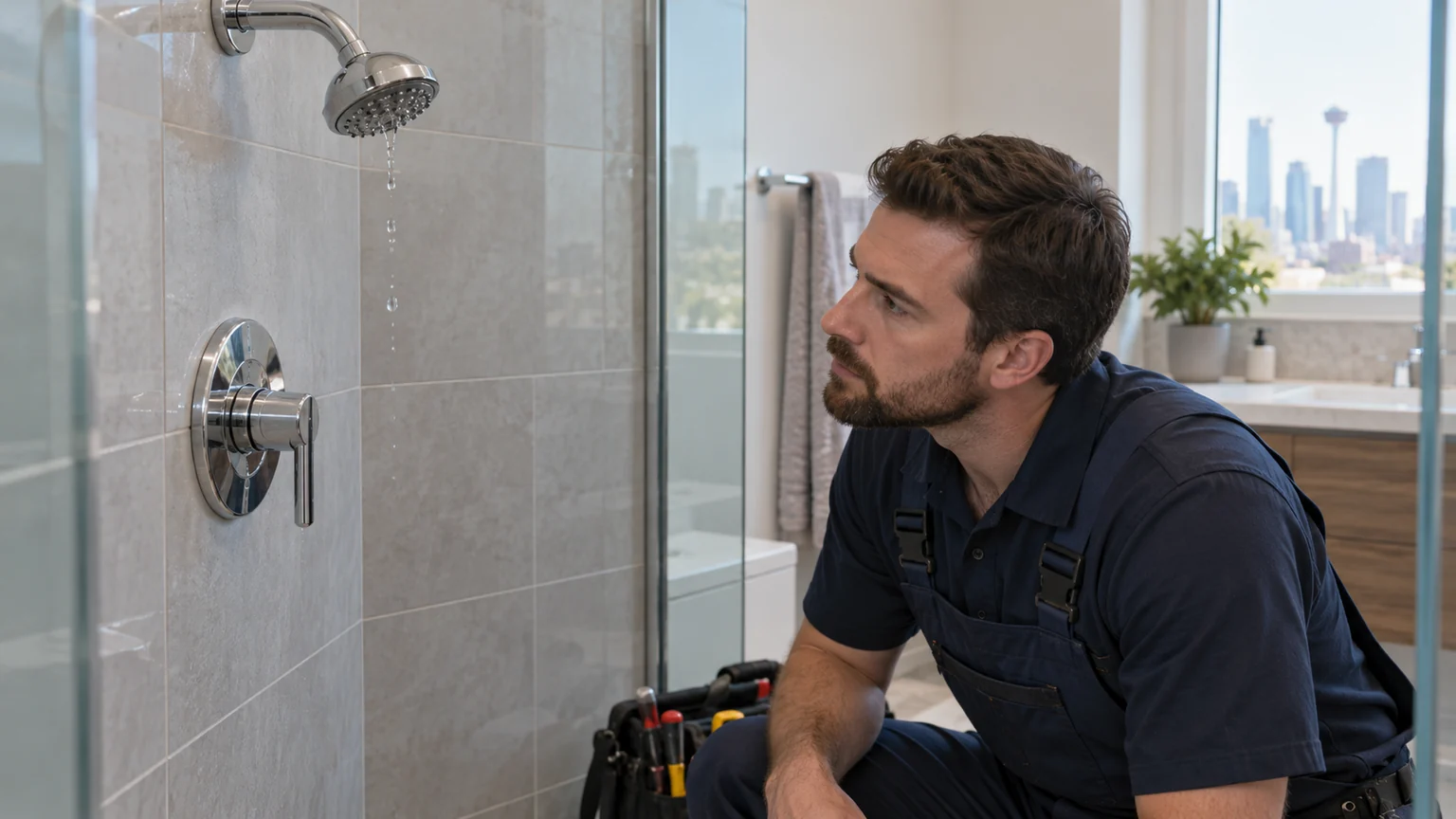
A shower that continues dripping after normal residual water has drained may have a control or cartridge that is not shutting the supply off properly. The exact component depends on the fixture design, and a drip alone does not identify the replacement part. Note whether flow persists, whether the handle operates normally and whether water also escapes around the control before arranging assessment.
Distinguish brief drainage from continued supplied water
Some water can remain in a shower head or hose after use and drain out afterward. Persistent or recurring flow needs a different explanation. Tell the plumber whether the drip stops completely, continues steadily or starts again when another fixture operates. These observations help assess the control without dismantling it.
Report whether the handle position has changed since the drip began and whether earlier repairs altered its travel. Do not force the handle past its normal stop to make it seal. Resistance or unusual movement can be part of the fault, and extra force can damage a component. If flow becomes substantial or cannot be stopped, arrange help with source control and leave the shower out of use until instructions are clear.
Fixture identification affects the repair
Shower valves and cartridges differ across manufacturers and models. A part that looks similar is not necessarily interchangeable. Provide a photograph of the visible control, any model information and the history of previous replacement work. A plumber may need further identification before selecting an appropriate component.
Shower cartridge assessment should establish what is defective and whether adjacent seals or the valve body need attention. Replacing a cartridge by name without confirming the design can leave another problem unresolved. Ask how the chosen part matches the actual fixture.
A head drip and a concealed control leak are separate observations
Water leaving the shower head differs from water escaping around the handle, behind the trim or into the wall. Report both if present. A concealed supply leak can continue affecting material even when the visible shower stream appears small. Do not assume that the head drip accounts for a damp wall or ceiling below.
If moisture reaches another room, leak source assessment may be needed alongside control repair. Source correction and assessment of concealed finishes are separate tasks. Keep away from affected electrical equipment or unstable ceilings rather than entering wet areas to trace the route yourself.
Watch for temperature or operating changes
Unexpected temperature swings, unusual handle travel or reduced flow can be useful information, but they do not prove one cartridge fault. A plumber needs to consider the fixture and the hot and cold supplies. Explain whether the symptom affects only this shower or other taps as well.
Do not deliberately expose someone to unstable or excessively hot water to demonstrate the problem. Stop using the fixture if temperature control is unsafe. If other outlets have a hot-water issue, water heater assessment may be relevant to a different part of the system rather than assumed to be the shower repair.
A Shutoff-Performance Checklist for the Shower
Describe the drip in relation to ordinary operation rather than forcing the handle or dismantling the controls. The following observations help the technician distinguish retained water from a persistent supplied flow and identify any additional leak path.
- Duration: Does the drip end completely after use, or continue without stopping?
- Recurrence: Does water begin again without another shower use?
- Handle behaviour: Is travel different, unusually stiff or dependent on a workaround?
- Leak location: Does water leave only the head, or also appear at the trim, wall or room below?
- Other outlets: Are temperature or flow symptoms limited to this shower or present elsewhere?
- Fixture identification: Provide visible manufacturer information and previous repair records.
These details do not establish a replacement part remotely. Their value is selecting an appropriate component and source assessment. If the shower cannot shut off or temperature control is unsafe, keep it out of use and describe that condition clearly rather than continuing with a temporary handle position.
What to Confirm After a Control Repair
| Reported complaint | Verification question |
|---|---|
| Persistent head drip | Was normal shutoff performance checked rather than only the feel of the handle? |
| Water around the control | Was the actual external or concealed leak path assessed? |
| Temperature instability | Was the fixture behaviour evaluated separately from the drip? |
| Moisture in another room | What source findings and separate material assessments remain relevant? |
A component replacement should be matched to the identified fixture. Keep the model and part information so later work does not rely on a similar-looking cartridge. If the repair addressed only one symptom, the handover should not imply that every supply or temperature concern was established resolved.
Ask whether any inspection limits remain behind the trim or within the wall. A dry visible face does not establish the condition of an inaccessible connection where moisture had been reported. Access and follow-up should be explained against the evidence rather than assumed from a new handle assembly.
For a shared household, communicate any restriction on use and the symptoms that should be reported. A different resident may notice a recurrence that was absent during the service check. A clear record of what was repaired and tested helps distinguish that new observation from the original complaint without automatically blaming either the cartridge or the water heater.
If replacement work has changed the handle or trim appearance, retain the identification of the valve behind it. Decorative parts alone may not establish the internal model. A future service call can be more precise when the visible control and the actual repaired component are recorded together.
Check shutoff performance after the work
Ask how the shower was checked for normal operation, shutoff and leaks at the repaired connection. Verification should reflect the original complaint and any additional moisture found during the visit. A handle that feels smoother is not by itself proof that the control seals correctly under normal use.
Keep the fixture model and the repaired-part record. If dripping continues with the handle closed, report how often it occurs and whether it comes from the spout, showerhead or both. That pattern is more useful than assuming the replacement cartridge failed. The City of Calgary home maintenance guidance offers broad home-care guidance. For a Calgary shower that will not stop dripping, call (587) 333-7742 or request service.