Why Does My Washer Leak While Draining In Calgary?
A washer that leaks during draining may have a discharge hose problem, a restricted standpipe or drain, or an internal appliance fault. The timing narrows the investigation but does not prove which part failed. Stop further cycles and describe exactly where water first appeared rather than rerunning the washer to reproduce the leak.
Use The Cycle Timing As Evidence
Use the sequence you remember: the washer was filling normally, then water appeared when it began to empty. Include whether the machine stopped on its own or whether you stopped it. If you do not know the stage, say so. The technician can inspect the discharge arrangement without you supplying a confident but uncertain explanation or adding another load as a demonstration.
Distinguish Standpipe Overflow From Hose Leakage
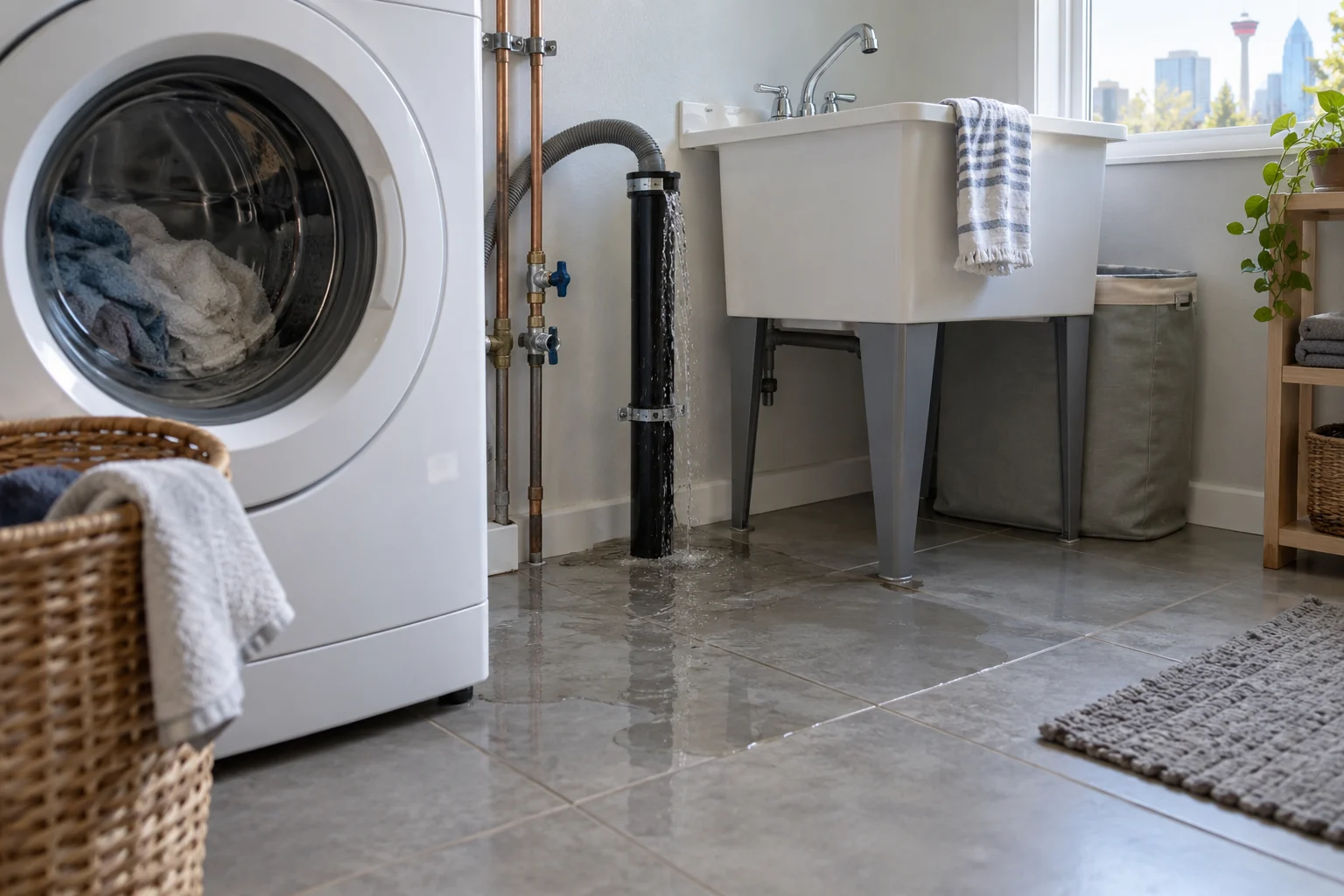
Describe overflow from an opening separately from a drip beneath a connection. If water first rose around the hose at the standpipe, mention that explicitly. Do not pull the hose out or reach into the opening; the drainage system may contain wastewater, and disturbing the hose can redirect the next release. A nearby wet patch alone does not identify the receiving drain as the source.
Check The Pattern At Nearby Fixtures
Shared fixture symptoms can point to a broader drainage restriction. Tell the contractor whether a laundry sink drained slowly before the event or whether another fixture backed up at the same time. Do not test all nearby fixtures while a restriction may remain. Historical observations are useful without adding new water. If several fixtures are affected, arrange drainage assessment rather than assume replacing the washer discharge hose will resolve the whole problem. The explanation of water rising through a basement floor drain helps describe a connected-drain symptom alongside the washer overflow.
- Stop the cycle without reaching through water or moving the connected washer.
- Recall whether water appeared while the machine filled or discharged.
- Describe whether water escaped at the hose, standpipe or floor drain.
- Ask how the receiving route was tested before another laundry cycle.
Avoid Another Full Discharge
Keep the washer unused until the source is explained. A partial load, rinse-only cycle or empty test can still produce a substantial discharge. If clothing remains in the machine, ask how it should be handled under the circumstances rather than override a cycle or open a component blindly. Managing the inconvenience should not send more water into the unresolved discharge route.
Explain Any Recent Appliance Work
Give the installation date or approximate timing of a recent move, if known. Mention a new receiving drain, altered hose position or appliance replacement without claiming that any one change caused the release. If instructions or an installer’s record are available, provide them. The inspection should compare those details with the actual installation and the point where water escaped.
A discharge problem belongs in washing-machine leak repair when the appliance connection is involved. A separate branch or floor-drain restriction should be identified through the service overview before normal laundry use resumes.
Choose Assessment Based On The Source
Ask the first contractor to state what was found and what remains outside their scope. If the building drain is functioning but an internal appliance component is leaking, the next step may be appliance service. If the standpipe overflows, drainage work may be needed. The goal is a clear handoff based on an examined condition, rather than alternating between trades with only a puddle description.
Document Moisture Below The Laundry
Water beneath a laundry floor may become visible elsewhere after the washer has stopped. Tell the owner or manager about new ceiling marks or drips below, and keep people away from wet electrical areas. Do not treat the absence of another discharge as confirmation that the affected materials have dried. Source correction and the moisture response may involve different work and different records.
A laundry discharge spill can reach outlets or a room below even after the cycle stops. Alberta’s flood cleanup and utility-safety guidance helps plan safe cleanup and utility checks while the receiving drain is investigated.
Verify The Repair Under Appropriate Conditions
Ask whether the relevant discharge path was checked after the work and whether the appliance itself remains restricted. A cleared building drain will not repair a separate machine leak, and an appliance repair will not remove an unrelated drain obstruction. The handover should explain which problem was confirmed, which work addressed it and which symptoms should lead you to stop use again.
If the standpipe overflows, report whether the water rose from its opening or escaped from a loose hose. The distinction changes where the technician starts. Keep nearby floor drains in the account too; a receiving drain that reacts during discharge can indicate a route problem beyond the machine connection.
Compare The Three Main Investigation Routes
| Observation already made | Question it raises | Information to bring |
|---|---|---|
| Water rose around the hose at the standpipe opening. | Can the receiving drain carry the discharge? | Which other drains have been slow or backed up, and when that began. |
| Water escaped from a visible length of discharge hose. | Is the hose or its connection damaged? | The visible release point and any recent installation or movement. |
| Water appeared under the cabinet, with no visible overflow. | Is the source inside the washer or hidden behind it? | The cycle stage, model and any displayed error, without opening the machine. |
These are starting questions rather than conclusions. For example, “The standpipe overflowed when draining began; the laundry sink was slow yesterday” is a more useful booking note than “The pump is broken.” If no one saw the first release, state that the puddle was found after the cycle and its origin is unknown.
Before a second trade is booked, obtain the first contractor's findings. A note identifying a clear receiving drain but an unresolved internal leak lets an appliance technician start with the remaining question. A note identifying an overflowing standpipe keeps the next visit focused on drainage.
When arranging help, give the crew the cycle stage, first overflow point and any other drain reacting. Ask which finding, test and remaining restriction will be recorded. Request service or call (587) 333-7742.