Why Does The Drain Leak When I Empty The Basin In Calgary?
A drain that leaks only when a basin empties may have a defective connection, damaged component or arrangement that leaks under that particular flow. A full basin can load the drainage route differently from a small tap stream. Stop using the fixture and have the drain assessed; the timing points toward drainage but does not identify the exact joint or prove the supply side is sound.
Explain the difference between tap flow and bowl release
A basin holding water releases it differently when the stopper opens. That can reveal a leak not obvious under a modest continuous stream. Tell the plumber whether the drip begins as soon as water is released, whether it stops when the basin is empty and whether the same pattern happens at both bowls of a double sink.
Do not fill the basin repeatedly to demonstrate the event yourself. More water can spread into the cabinet or flooring. A written description of the sequence and photographs from a dry location help the initial assessment without exposing another volume of water to the suspected fault.
Follow the source above and below the trap
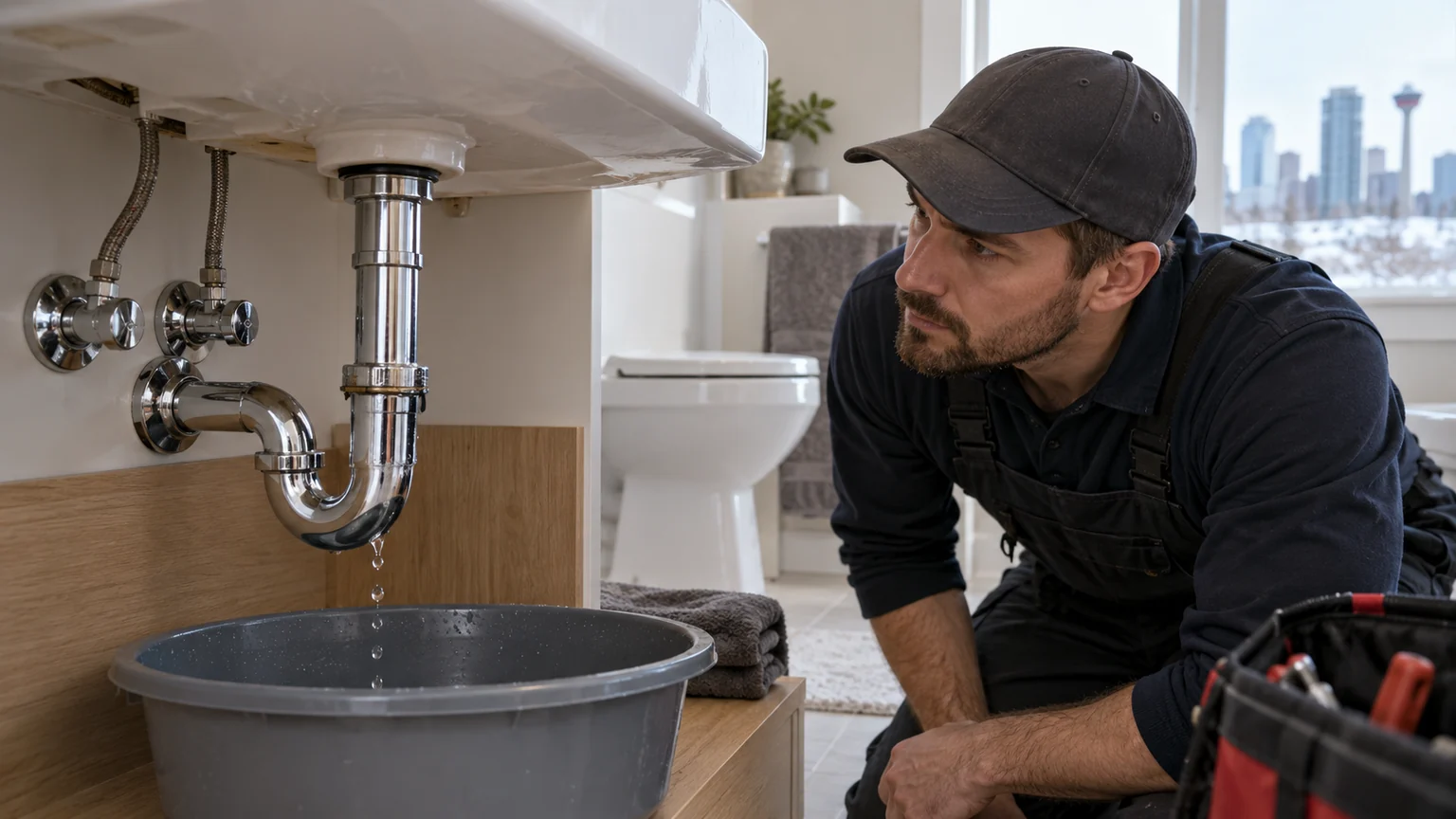
Water can escape at the basin drain body, a connecting piece, the trap or a downstream joint. It can also run along the outside of a component before dropping elsewhere. The point where the cabinet gets wet is therefore not necessarily the failed connection. Ask what the technician directly observed before choosing parts.
Describe whether the leak began immediately after a stopper replacement or appeared without any plumbing changes. Recent changes matter. A new sink, altered stopper, replaced trap or appliance connection can affect the arrangement. Provide that history and any earlier work notes. A misaligned or unsuitable assembly should be addressed as a system of connections rather than solved by tightening one visible nut more forcefully.
Slow drainage can change the investigation
If the basin empties slowly, gurgles or sends water into another bowl, the receiving branch may also be restricted. A leaking joint and a blockage can coexist. Correcting the joint alone does not explain the slow drain, and clearing the branch does not prove the component is leak-free.
Drain leak assessment can identify the escaping connection. Where water rises into the bowl, overflowing sink assessment addresses the drainage route as well. Recurring deposits in a suitable branch may lead to a cleaning discussion, but the method should follow the actual findings.
Limit use while protecting the surrounding materials
Leave the basin and any appliance sharing the suspected route out of use until instructions are clear. Report whether a dishwasher or another fixture also triggers the leak. Do not disconnect a water-filled trap or add drain chemicals to a system already spilling under the cabinet.
Cabinet surfaces can conceal further spread, especially beneath stored items or adjacent flooring. Source repair and assessment of wet materials are separate tasks. If water has reached electrical equipment or a ceiling below, stay away from the unsafe space and arrange appropriate assistance rather than entering to retrieve belongings.
Record the Basin-Release Pattern
The difference between a small tap stream and a held volume draining can guide a useful assessment. Record the pattern from the last incident without filling the basin again. The aim is to explain the flow condition that exposed the leak, not add more water to a damaged cabinet.
- Before release: Was any fitting already wet while the stopper remained closed?
- At release: Did the drip begin immediately or only after water reached a particular connection?
- After emptying: Did leakage stop, continue briefly or remain ongoing without use?
- Other inputs: Did another bowl or dishwasher produce the same symptom?
- Drain performance: Was the basin slow, gurgling or transferring water to another opening?
- Recent changes: Mention a replaced stopper, basin, trap or appliance connection.
Where the timing is uncertain, leave it identified as uncertain. A later wet cabinet can hide the initial route, and recollection of the final puddle should not be presented as direct observation of the source. A controlled test can be selected by the technician once the immediate leak is addressed safely.
Compare Source Correction and Flow Correction
| Issue | What a complete explanation should address |
|---|---|
| A connection leaks during release | The failed component and how its assembly or condition was corrected |
| The branch receives water slowly | The relevant route and whether a restriction remains beyond the repaired joint |
| Water escapes after a fixture change | The actual current arrangement, without assuming the change is necessarily the cause |
| Moisture persists between uses | Whether a supply leak, retained water or another input needs further assessment |
These issues can coexist. A repaired joint is not proof of adequate downstream drainage, while an opened drain is not proof that the joint seals correctly under the reported flow. Ask for the verification to state which result was checked.
Retain any recommendation for further access or inspection. If only the visible connection could be evaluated, the report should not imply that concealed branch pipe was established sound. For a shared building, clarify whether another fixture or unit can feed the route before residents interpret their own basin being unused as complete source isolation.
Keep the findings linked to the original timing so a future leak can be compared accurately. A drip during refill, for example, is a different observation from a drain connection leaking during bowl release and may require a different next investigation.
If the basin serves a busy shared bathroom, communicate the use restriction before another resident releases a held bowl. A tap that runs briefly without a drip may appear reassuring to someone unaware of the original trigger. Keep the relevant flow pattern and completed check visible in the handover.
Verify the repair against the original flow pattern
After correction, the plumber can select a controlled check that reflects the reported basin release. Ask whether the surrounding connections were examined and whether slow drainage remains unresolved. A successful small tap stream alone may not address a symptom seen only when a held volume is discharged.
Tell the plumber whether the leak starts when the basin is full, while it empties or when another fixture drains. The timing can locate a drain-side joint that stays dry while the tap runs gently. Keep the sink out of use until the affected route is checked under the conditions that caused the leak. The City of Calgary home maintenance guidance covers general upkeep; for a Calgary basin-drain leak, call (587) 333-7742 or request service.