Why Does Wastewater Rise Into The Bathtub In Calgary?
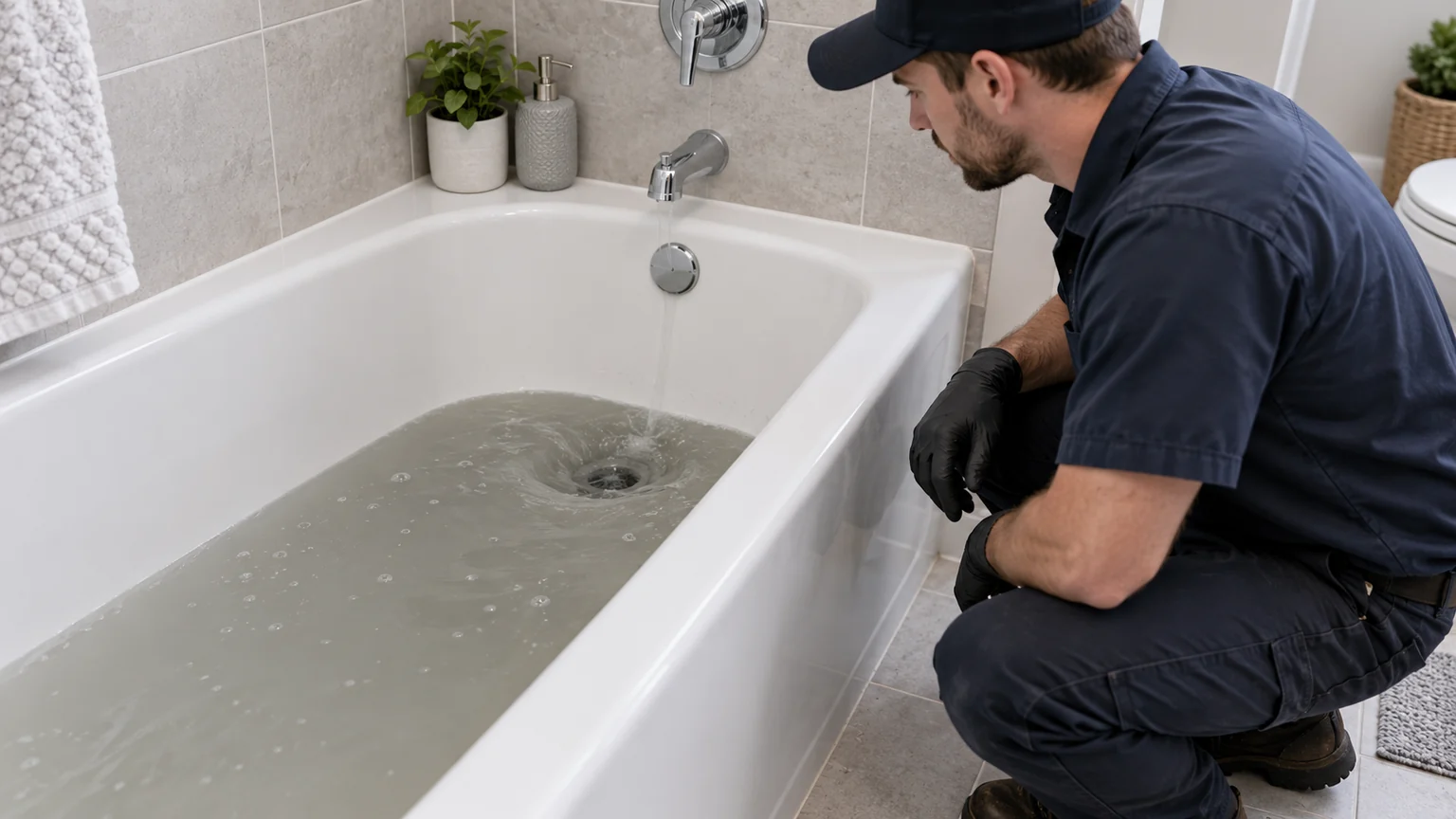
Wastewater rising into a bathtub usually means the connected drainage route cannot carry incoming water away, allowing it to return through a low opening. The bathtub may be the outlet of a shared blockage rather than the source of the fault. Stop using affected fixtures, keep people away from the returned water and arrange assessment of the common route before trying to drain the tub repeatedly.
The bathtub is a low point in the connected system
A tub drain can become visible first because of its position relative to other fixtures. A toilet flush, shower or laundry discharge may raise water in the tub if the downstream pathway is restricted. Tell the plumber which activity preceded the return; this helps trace the route without assuming the tub trap itself caused the problem.
Record whether the returning water appears while your own household is using no fixtures. Notice whether the toilet gurgles or a floor drain also rises. Multiple symptoms can indicate a common section needs investigation. One bathtub that drains slowly without return from other fixtures may have a local restriction, but wastewater entering it during unrelated use deserves a broader explanation.
Stop adding water to the affected route
Pause connected fixtures, including appliances where they may feed the same drain. Do not repeatedly flush to see whether the tub clears. Closing a bathtub faucet does not prevent wastewater from arriving through the drain from another connection. In a shared building, notify management because another suite's use may continue to load the line.
Do not loosen a cleanout cap or disconnect a tub drain to release the water yourself. A backed-up route may hold more wastewater than is visible in the bathtub. Share the location of known access points and any renovation history with the responding team so access can be planned.
Returned water is not bathwater
Keep everyone out of the tub and away from the spill. It may contain waste from the drainage system even when its appearance is not obviously dirty. Avoid carrying contaminated items through otherwise unaffected rooms. Do not add cleaners to a full backed-up fixture and report any products already used.
If water is overflowing into floors or the ceiling below, source control and material assessment are separate tasks. A functioning drain does not establish that concealed finishes are dry or uncontaminated. Tell the assessment team how long the event was observed and which rooms the water reached, without entering unsafe areas to investigate.
Assessment should explain why flow reversed
Bathtub overflow assessment can evaluate the fixture and connected route. Sewer backup investigation may be needed where several fixtures are involved. The findings should distinguish a local obstruction, a common restriction and any suspected structural condition rather than label all events as a bathtub clog.
The City of Calgary sewage backup guidance describes local reporting and how 311 can help consider private plumbing versus a possible municipal issue. Mention if neighbouring properties or other units have trouble. Those observations help coordinate the investigation but do not establish the ownership boundary by themselves.
Trace the Fixture Pattern Without Adding Wastewater
The bathtub is often where the return becomes visible, but the contributing flow may start elsewhere. Record what happened during ordinary use and keep affected fixtures paused. Deliberately flushing or running laundry again can add contamination without resolving the source question.
- First trigger: Was there a toilet flush, shower or laundry discharge immediately before the tub level changed?
- Other symptoms: Note gurgling, slow drains or water at a floor drain already observed.
- Continued return: Say whether water kept entering after your own household stopped using fixtures.
- Building route: Mention shared units and management instructions where another resident may still contribute discharge.
- Previous events: Provide clearing records or footage so recurrence can be compared with the actual inspected route.
Do not describe an unobserved connection as confirmed simply because the timing suggests it. The technician should establish the relevant branch or common route and explain what remains uncertain. This avoids a repair recommendation based only on the lowest visible opening.
Compare the Drainage and Room-Use Decisions
| Question | Relevant evidence |
|---|---|
| Why did wastewater enter the tub? | The fixture pattern and assessment of the receiving route |
| Can the affected fixtures be used? | Completed plumbing work and instructions matched to the finding |
| Does the line need further inspection? | Recurrence, observed deposits or damage, and limits on the current view |
| Can the bathroom return to normal use? | Separate consideration of contamination, access and affected materials |
One completed task does not answer the whole table. Removing standing wastewater or opening a passage can help the incident, but it is not a room clearance or proof of every pipe's condition. Ask each assessor to state what their work establishes.
Keep the written instructions available to all residents. Someone may see an empty tub and assume the bathroom is restored, while the drain remains restricted or contamination assessment is unfinished. Clear boundaries reduce confusion about which fixtures and rooms can be used.
If the return happens again, compare the trigger and the completed scope rather than treating the tub location as proof of the same fault. A low outlet can reveal different downstream conditions at different times. Detailed records help the next investigation avoid repeating a limited local treatment without accounting for the broader route.
If the tub was used for storing belongings, keep those items out of normal use until their exposure is assessed appropriately. An empty bowl afterward does not establish the condition of items contacted by returned wastewater. This is a contamination decision separate from the repair that restores drainage.
Follow-up depends on recurrence and visibility
If the line has backed up repeatedly, discuss camera inspection once access and visibility permit. A cleared passage can improve flow while leaving deposits or a defect that needs further attention. Ask what was observed, how much of the route was inspected and whether any sections remain unassessed.
Before normal use resumes, clarify which fixtures have been checked and whether restrictions remain. Keep reports and any cleanup recommendations so everyone involved understands what the plumbing visit accomplished. For wastewater returning into a Calgary bathtub, reduce water use and arrange help with the source: call (587) 333-7742 or request service.